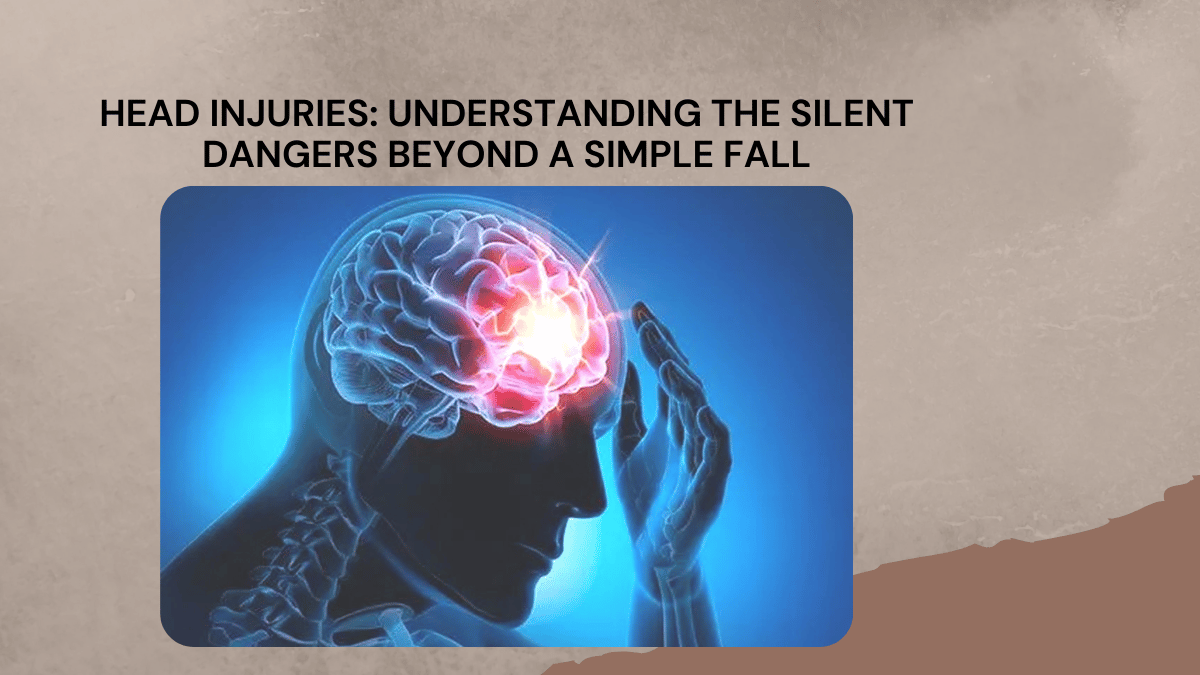
I often meet patients who walk into my clinic saying, “Doctor, it was just a small fall, I don’t think it’s anything serious.” Yet, in neurosurgery, I’ve learned that what looks minor on the outside can sometimes hide silent dangers inside the brain. Head injuries are unpredictable, and underestimating them can cost precious time — and sometimes, even lives.
Why a Minor Fall Can Be More Serious Than You Think:
Not every head injury results in bleeding, swelling, or obvious symptoms right away. In fact, some of the most dangerous cases I have treated were patients who initially felt fine but deteriorated hours later. Conditions like internal bleeding, brain swelling, or delayed hematomas can quietly progress without external signs. A simple bump can trigger a chain of events that silently threaten brain function.
The Silent Dangers Inside the Brain:
One young man I treated had slipped in the bathroom, laughed it off, and continued with his day. A few hours later, he collapsed due to a subdural hematoma — bleeding between the brain and its outer covering. Another patient, a school-going child, appeared normal after a sports injury but developed severe vomiting and confusion later, revealing dangerous brain swelling.
These stories are not meant to alarm, but to remind us that the brain doesn’t always show its distress immediately. Sometimes the damage is delayed, which is why every head injury deserves careful attention.
Warning Signs You Should Never Ignore
If you or someone you know suffers a head injury, look out for these red-flag symptoms:
- Persistent or worsening headache
- Repeated vomiting or nausea
- Sudden drowsiness or difficulty staying awake
- Memory loss or confusion
- Seizures or jerking movements
- Any weakness, numbness, or slurred speech
👉 Even if just one of these signs appears, it should not be ignored. They often indicate that the brain is under stress and needs urgent medical evaluation.
The Role of Modern Diagnostics:
One of the biggest challenges is that serious damage is often invisible without proper tests. That is why I rely on CT scans and MRIs to uncover hidden bleeding or swelling. These tools give us the chance to intervene before complications become irreversible. Patients sometimes ask, “Is a scan really necessary for just a fall?” My answer is simple: a quick scan can be life-saving.
Why Consulting a Neurosurgeon Matters:
As a neurosurgeon, my role is not just to perform surgeries, but to guide patients and families through the uncertainty of head injuries. Early evaluation allows us to make informed decisions — whether that means close observation, medication, or immediate surgery. Every patient’s case is unique, and a timely consultation ensures the safest path forward.
Final Thoughts:
Head injuries may look harmless on the surface, but they can hide dangers that only reveal themselves too late. My message is clear: never dismiss a head injury, no matter how small it seems. Seek medical attention, get the right scans, and let an expert evaluate the situation. In neurosurgery, early action is often the difference between full recovery and life-threatening complications.

Add a Comment