Hello! I am Dr. Balachandra.
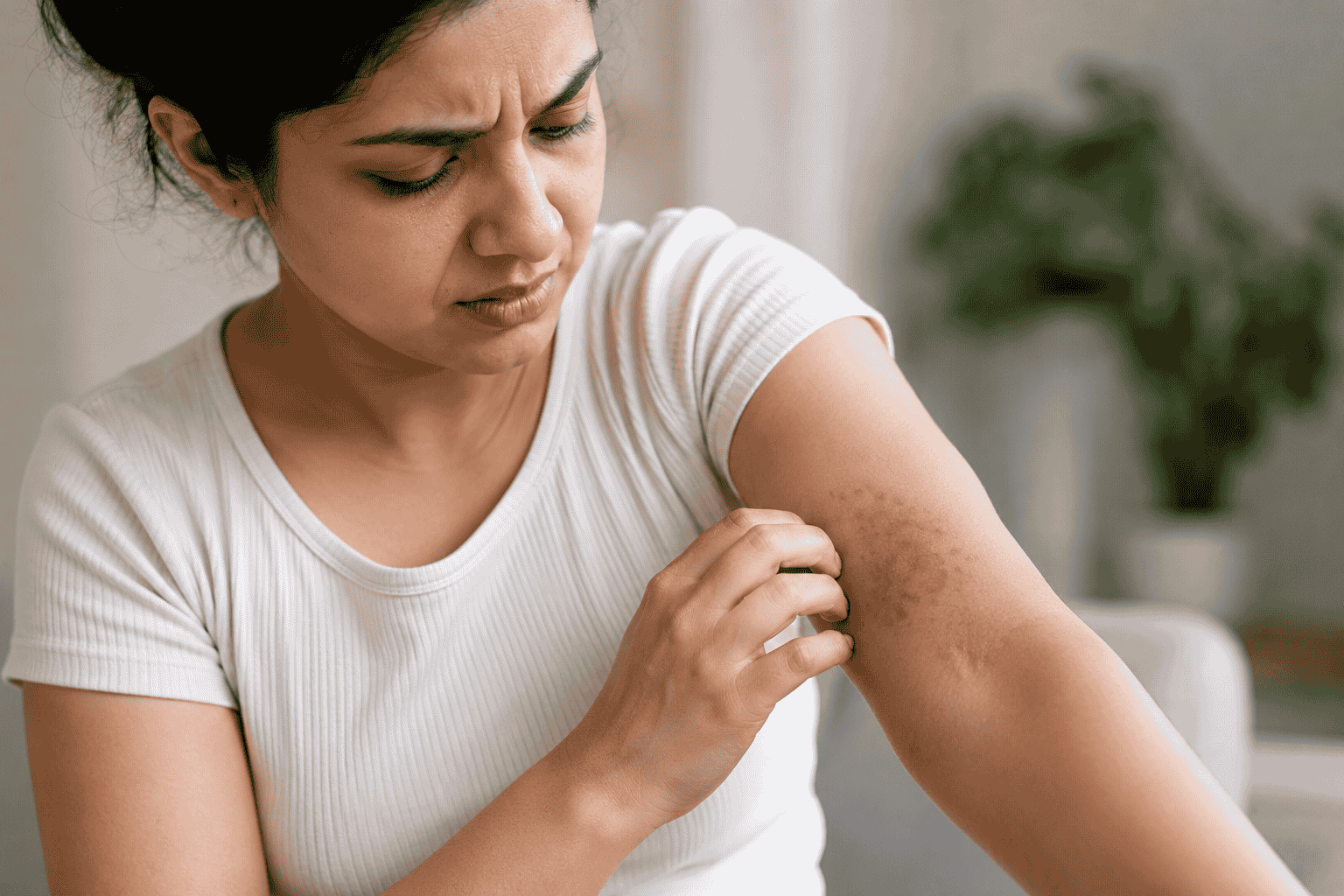
Have you ever noticed an itchy, red rash appearing exactly where your watch, jewellery, soap, or perfume touched your skin?
Many people assume it is an allergy, but that's not always the case.
This condition is called Contact Dermatitis, and it simply means your skin has reacted to something that came into direct contact with it. Understanding the type of reaction helps us choose the right treatment and, more importantly, prevent it from happening again.
Two Types of Contact Dermatitis
1. Allergic Contact Dermatitis
This occurs when your immune system becomes allergic to a particular substance.
Even a tiny amount of that allergen can trigger redness, itching, swelling, or a rash after contact.
Common causes include:
- Artificial jewellery containing nickel
- Leather products
- Perfumes and fragrances
- Hair dyes
- Cosmetics and skincare products
Once you become allergic, the skin may react every time you come into contact with that substance.
2. Irritant Contact Dermatitis
Unlike an allergy, this is caused by direct damage to the skin.
Harsh chemicals, repeated exposure to water, soaps, or detergents weaken the skin's protective barrier, leading to irritation.
- Common examples include:
- Frequent hand washing
- Cleaning products and detergents
- Acidic or alkaline substances
- Nappy rash in babies
- Occupational exposure to chemicals
Anyone can develop irritant contact dermatitis if the exposure is frequent or severe enough.
How Is the Cause Identified?
Sometimes the trigger is obvious.
However, if the rash keeps returning or the cause is unclear, your doctor may recommend a Patch Test to identify the exact allergen responsible.
Once the trigger is identified, avoiding it is the most effective treatment.
Your doctor may also recommend:
- Regular use of moisturizers to repair the skin barrier
- Protective gloves when necessary
- Medicated creams to reduce inflammation during flare-ups
- Switching to products that do not contain the offending chemical
Frequently Asked Questions (FAQs)
What is Contact Dermatitis?
Contact Dermatitis is an itchy skin rash that develops after the skin comes into contact with an irritant or an allergen.
What is the difference between allergic and irritant contact dermatitis?
Allergic Contact Dermatitis is caused by an immune reaction to a specific substance, while Irritant Contact Dermatitis results from direct damage to the skin by harsh substances.
What are the most common causes of Contact Dermatitis?
Nickel jewellery, perfumes, cosmetics, hair dyes, soaps, detergents, cleaning products, and repeated exposure to water are common causes.
How is Contact Dermatitis diagnosed?
A detailed history and examination often identify the cause. A Patch Test may be recommended if an allergy is suspected.
Can Contact Dermatitis be cured?
The rash usually improves when the trigger is identified and avoided, along with proper skincare and prescribed treatment.
Final Thoughts
Contact Dermatitis is common, but it doesn't have to become a recurring problem.
The key is to identify what is triggering your skin, avoid further exposure, protect your skin barrier with regular moisturization, and seek medical advice if the rash keeps returning.
Early diagnosis and the right treatment can help keep your skin healthy, comfortable, and free from repeated flare-ups.
Contact Chirayu Multispeciality Clinic
Dr. Balachandra B V
Consultant Pediatrician & Allergy Specialist
Kasturi Nagar, Bangalore
If you have recurrent itchy rashes, suspected Contact Dermatitis, or need a Patch Test to identify the exact cause of your skin allergy, schedule a consultation with Dr. Balachandra B V for a comprehensive evaluation and personalized treatment plan.


Add a Comment