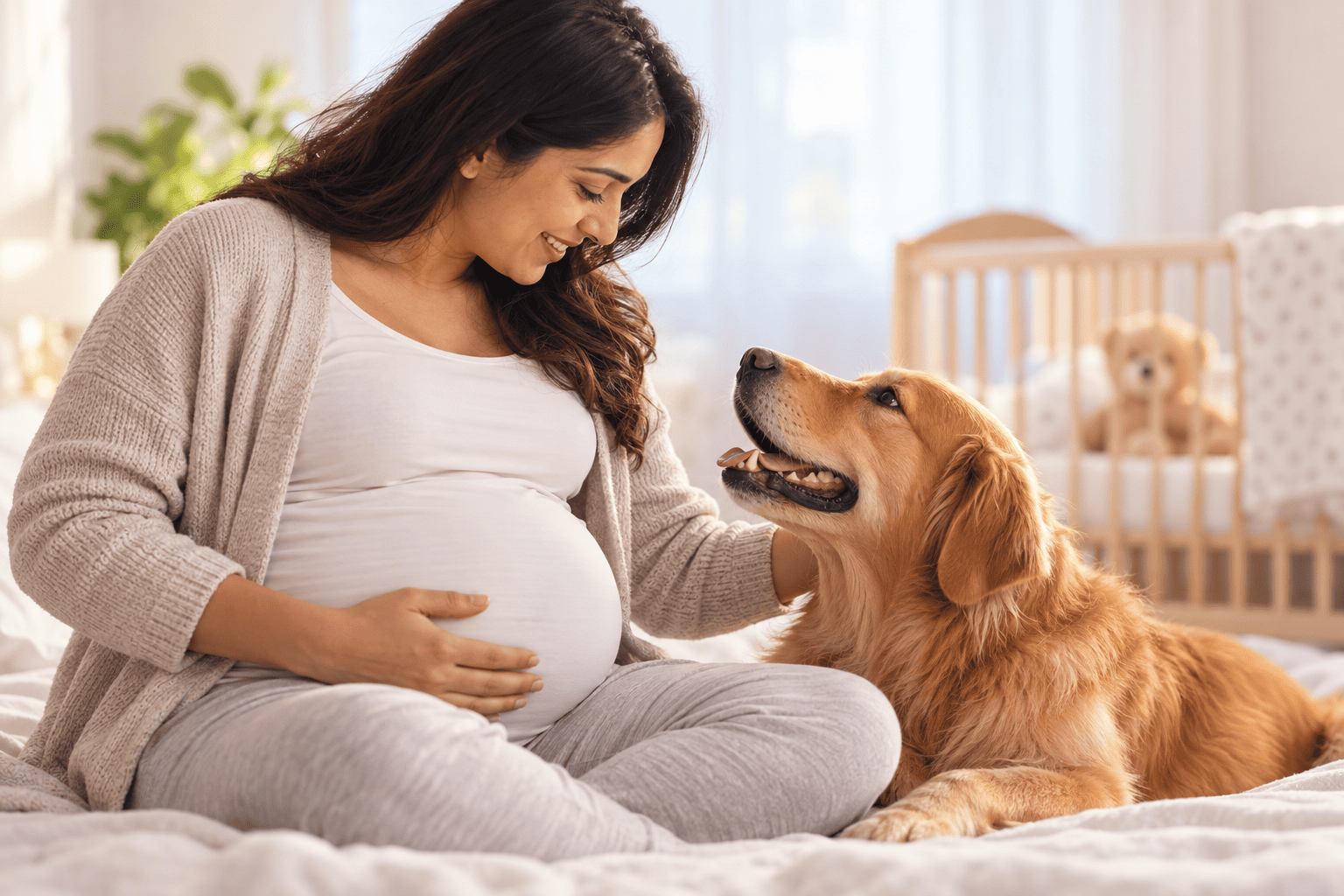
If you are expecting a baby and already have a dog at home, you may have wondered whether growing up around pets could help protect your child from allergies.
Interestingly, some research suggests a possible connection. However, the answer is not as simple as saying that every family should have a dog to prevent allergies.
What Does the Research Say?
Some observational studies have found that children exposed to dogs during pregnancy or early infancy may have a lower risk of developing certain allergic conditions, including eczema and asthma.
A 2023 study using data from the Danish National Birth Cohort found that prenatal dog exposure was associated with modestly lower risks of childhood eczema and asthma.
Researchers believe that exposure to a wider range of environmental microbes may influence how a baby's developing immune system responds to its surroundings. However, this proposed explanation is still being investigated.
Importantly, not all studies show the same results. Findings may differ depending on the type of allergy, family history, timing of exposure and environmental factors.
Should You Get a Dog During Pregnancy to Prevent Allergies?
No. A dog should not be acquired solely to prevent allergies in your baby.
Although some findings are promising, there is not enough evidence to recommend pet ownership as a proven allergy-prevention strategy.
If you already have a dog and your family is comfortable caring for it, the available evidence does not suggest that you must give it up simply to prevent allergies in your baby.
However, families with existing pet allergies or poorly controlled asthma should discuss their individual circumstances with their healthcare professional.
What Else Can Parents Do to Support Their Baby's Health?
- Avoid smoking and second-hand smoke exposure during pregnancy and after birth.
- Follow routine antenatal and paediatric care.
- Discuss infant feeding and the age-appropriate introduction of allergenic foods with your paediatrician.
- Maintain a clean, comfortable home without excessive use of irritating cleaning products.
- Seek medical advice if your child develops persistent eczema, wheezing, recurrent nasal symptoms or suspected food reactions.
The Bottom Line
Having a dog during pregnancy may be associated with a lower risk of certain childhood allergies, but it has not been proven to prevent them. Do not get a pet solely for this purpose, and do not remove an existing family pet out of fear of allergies without a specific reason.
Every child's risk is different, particularly when there is a family history of asthma, eczema or allergic disease.
Frequently Asked Questions
1. Does having a dog during pregnancy prevent allergies in newborns?
No. Some studies suggest a possible protective association, but there is insufficient evidence to conclude that having a dog during pregnancy prevents allergies.
2. Is dog exposure better than cat exposure for preventing allergies?
Some studies have found more consistent protective associations with dogs, but the findings are not uniform. Neither dog nor cat ownership is recommended solely for allergy prevention.
3. If parents have asthma or allergies, should they avoid dogs during pregnancy?
Not necessarily. The decision should consider the parents' symptoms, existing pet allergy, asthma control and household circumstances. Seek individual medical advice if pet exposure triggers symptoms.
4. Can a baby develop a dog allergy even if the family has had a dog since pregnancy?
Yes. Early exposure does not guarantee protection. Genetic predisposition and other environmental factors also influence allergy development.
5. What is the best way to prevent allergies in a newborn?
There is no single guaranteed prevention method. Avoid tobacco smoke, follow recommended infant feeding guidance, maintain routine healthcare and seek professional advice when symptoms suggest an allergic condition.
For evidence-based information about allergies and asthma, consult Dr. Balachandra BV at Chirayu Multispeciality Clinic, Kasturi Nagar, Bengaluru.
This article is for general educational purposes. Individual risk and prevention advice should be discussed with a qualified healthcare professional.

Add a Comment