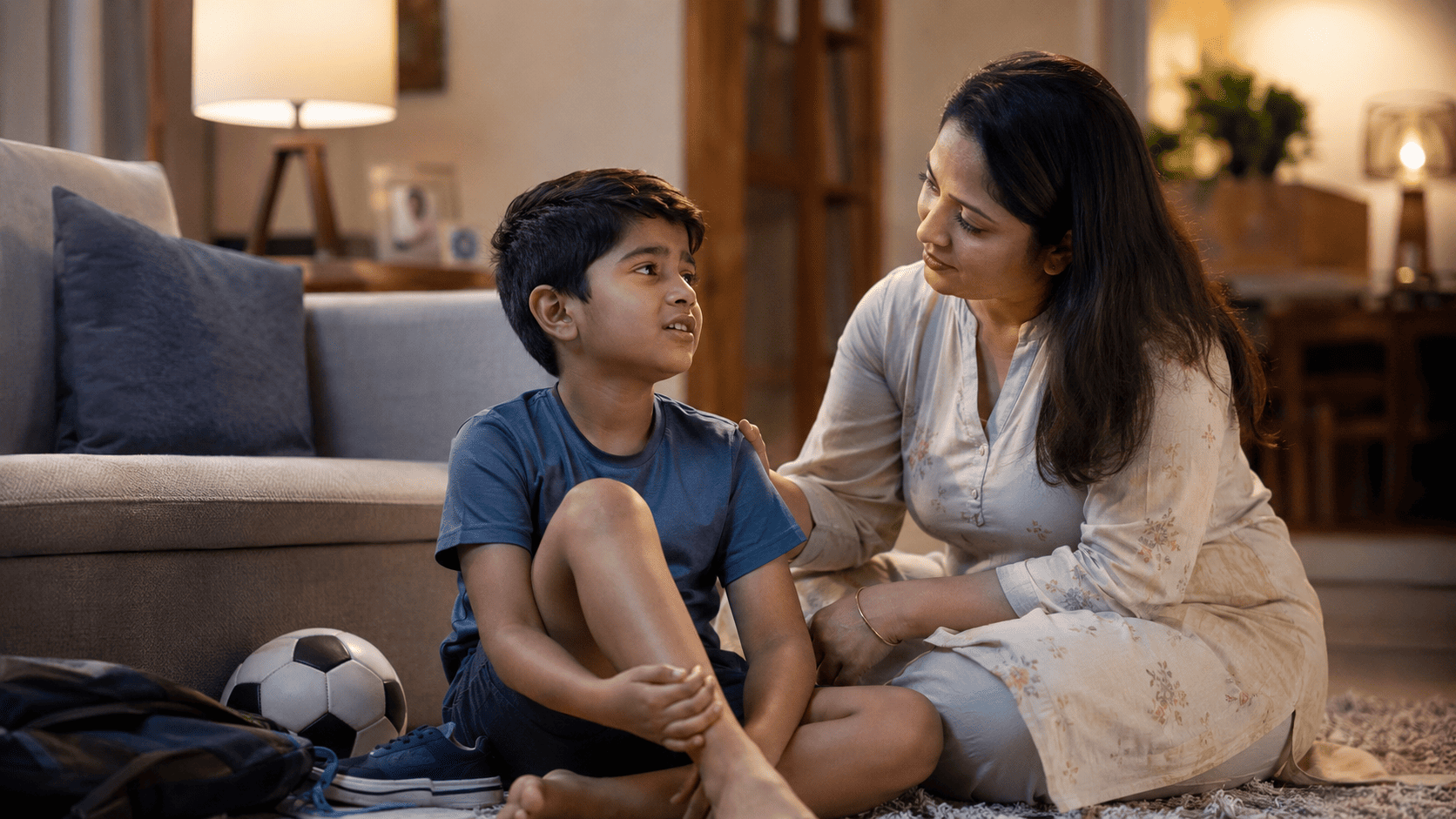
Many parents worry when their child complains of leg pain, especially at night. The good news is that some children experience a common pattern called growing pains.
Despite the name, growing pains are not actually caused by bones growing. They are usually described as muscle aches, often after a long, active day of running and playing.
What Do Growing Pains Feel Like?
Typical growing pains have a fairly recognizable pattern:
• Pain affects both legs, usually the thigh or calf muscles.
• It commonly occurs in the late afternoon, evening, or overnight.
• The pain is not usually felt inside the joints.
• By morning, the pain has completely disappeared.
• Your child should be able to wake up, stand, walk, and play normally.
• Episodes may come and go over weeks or months, with completely pain-free days in between.
How Can Parents Help at Home?
After an especially active day, gentle measures may help:
• Gently massage the thigh and calf muscles.
• Try gentle stretching.
• Apply a warm heating pad wrapped in a towel.
• Check your child's movement the following morning.
If your child wakes up pain-free, walks normally, and returns to normal activities, home care can usually continue while you mention the recurring pattern during routine check-ups.
When Is Leg Pain Not Typical Growing Pain?
Parents should arrange a medical evaluation if:
• Pain occurs in one leg only.
• Pain is present in the morning or during the daytime.
• Your child develops a limp or refuses to bear weight.
• Pain is inside the knee, ankle, or hip joint rather than the thigh or calf.
• There is swelling, redness, or warmth around a joint.
• Fever occurs along with leg pain.
These features do not necessarily mean something serious, but they deserve proper assessment rather than being automatically labelled as growing pains.
Frequently Asked Questions
What are growing pains in children?
Growing pains are recurrent muscle aches, typically affecting both legs and occurring in the evening or at night.
Are growing pains caused by growth?
Despite the name, growing pains are not considered to be caused directly by bones growing. They are commonly associated with muscle aches after active days.
Where do growing pains usually occur?
They typically affect the thigh or calf muscles rather than the joints.
When should I take my child to a doctor for leg pain?
Seek medical evaluation if the pain is one-sided, persists into the morning, causes limping, affects a joint, or occurs with swelling, redness, warmth, or fever.
Can growing pains be managed at home?
Typical episodes may improve with gentle massage, stretching, or a warm compress, particularly after an active day.
Final Thoughts
Most typical growing pains are temporary and follow a predictable pattern. The most important thing is to recognize what is normal for growing pains—and what is not.
If your child's leg pain keeps returning or does not follow the usual pattern, don't simply assume it is growing pains. A pediatric assessment can provide reassurance and identify when further evaluation is needed.
Consult Dr. Balachandra B V at Chirayu Multispeciality Clinic, Kasturi Nagar, Bangalore for evaluation of recurrent or unexplained leg pain in children.




Add a Comment