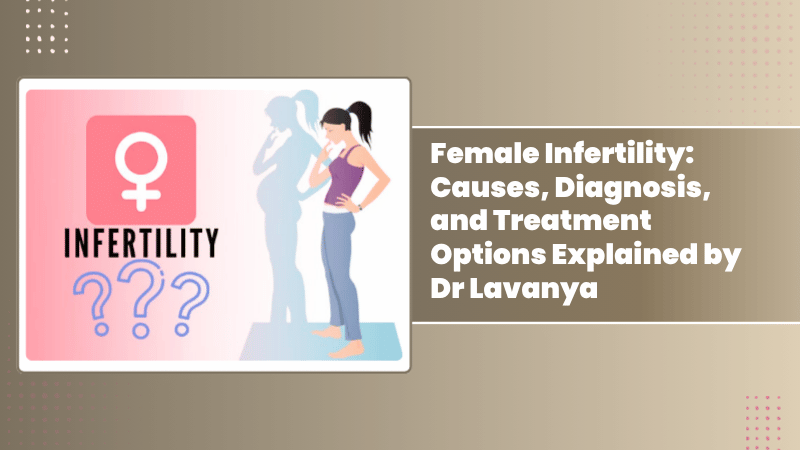
Infertility is one of the most common reproductive health concerns affecting couples today. In my practice, I often meet women who have silently struggled for years before seeking help. Female infertility is medically manageable in many cases, and early evaluation can help identify treatable causes sooner. Understanding what affects fertility is the first step toward making informed and confident decisions about treatment.
How Common Is Female Infertility and Why Is It Rising?
Female infertility is becoming increasingly common due to changing lifestyle patterns, delayed pregnancies, stress, metabolic disorders, and reproductive health conditions such as endometriosis and polycystic ovarian syndrome. Many women today choose to plan pregnancy later in life, but fertility naturally declines with age, particularly after 35 years.
Environmental factors, sedentary lifestyles, obesity, smoking, untreated infections, and hormonal imbalance also contribute to fertility challenges. In many cases, infertility may involve both partners, which is why a couple-based evaluation is always important.
According to international reproductive health data and Indian fertility guidelines, infertility affects a significant percentage of couples globally, making early fertility awareness extremely important.
What Are the Most Common Causes of Female Infertility?
Female infertility can result from several medical, hormonal, anatomical, or age-related factors. Some conditions affect egg release, while others interfere with fertilization or implantation.
Ovulatory Disorders
Ovulatory dysfunction is one of the leading causes of female infertility. Conditions such as polycystic ovarian syndrome can disrupt regular ovulation and reduce the chances of conception.
Women with ovulatory disorders may experience:
- Irregular menstrual cycles
- Missed periods
- Hormonal imbalance
- Weight fluctuations
- Difficulty predicting fertile windows
Treatment often includes lifestyle correction, hormonal regulation, and ovulation induction medications.
Tubal Factor Infertility
Blocked or damaged fallopian tubes can prevent the sperm and egg from meeting naturally. Tubal damage may occur because of:
- Pelvic inflammatory disease
- Previous pelvic infections
- Tuberculosis
- Prior abdominal surgery
- Endometriosis
Tubal evaluation is an important step in fertility assessment because some women may not have obvious symptoms despite significant tubal disease.
Endometriosis
Endometriosis occurs when tissue similar to the uterine lining grows outside the uterus. It can affect the ovaries, fallopian tubes, and pelvic cavity, leading to pain, inflammation, scarring, and infertility.
Common symptoms include:
- Severe menstrual pain
- Pain during intercourse
- Chronic pelvic pain
- Painful bowel movements during periods
- Difficulty conceiving
In selected patients, minimally invasive and robotic-assisted surgical treatment may help improve reproductive outcomes. My experience as a robotic surgery proctor allows me to manage complex fertility-preserving procedures with precision whenever surgery is clinically indicated.
Diminished Ovarian Reserve
Ovarian reserve refers to the quantity and quality of eggs remaining in the ovaries. Fertility naturally declines with age, but some women may experience reduced ovarian reserve earlier than expected.
Risk factors include:
- Increasing maternal age
- Family history of early menopause
- Previous ovarian surgery
- Chemotherapy or radiation exposure
- Smoking
Ovarian reserve testing helps determine reproductive potential and guides fertility treatment planning.
Uterine Factors
Structural abnormalities within the uterus can interfere with implantation and pregnancy progression.
Examples include:
- Fibroids
- Uterine polyps
- Congenital uterine abnormalities
- Intrauterine adhesions
Many uterine conditions can be diagnosed and treated effectively through hysteroscopy or minimally invasive surgery.
Unexplained Infertility
In some couples, all fertility investigations appear normal despite difficulty conceiving. This is called unexplained infertility.
These situations can be emotionally frustrating because there is no single identifiable cause. However, treatment pathways are still available and may include ovulation support, intrauterine insemination, IVF, or individualized regenerative medicine protocols.
My fellowship training in Infertility and Regenerative Medicine in India and training in other countries like Germany and Israel has contributed significantly to my approach toward selected patients with unexplained infertility and repeated IVF failure.
How Is Female Infertility Diagnosed?
Fertility evaluation involves understanding menstrual patterns, hormonal health, reproductive anatomy, ovarian reserve, and partner factors. A structured evaluation helps identify the underlying cause and prevents unnecessary treatment delays.
Hormonal Profiling
Hormonal blood tests help assess ovulation, ovarian reserve, thyroid function, and other endocrine conditions affecting fertility.
Common tests include:
- AMH
- FSH
- LH
- Estradiol
- Thyroid profile
- Prolactin
These tests are usually interpreted along with age, menstrual history, and ultrasound findings.
Ultrasound Evaluation
Pelvic ultrasound helps assess ovarian morphology, follicular development, fibroids, endometrial thickness, and ovarian reserve indicators.
Serial follicular monitoring may also help track ovulation timing during treatment cycles.
Tubal Testing
Tubal patency testing helps determine whether the fallopian tubes are open. Common investigations include:
- HSG (Hysterosalpingography)
- Sonosalpingography
- Diagnostic laparoscopy in selected cases
Tubal testing is especially important in women with previous infections, pelvic pain, or endometriosis.
Partner Evaluation
Infertility assessment should always include male partner evaluation because fertility challenges may involve both partners.
A semen analysis helps assess sperm count, motility, morphology, and overall sperm health. Addressing both partners together helps create a more accurate and effective fertility treatment plan.
What Are the Treatment Options for Female Infertility?
Treatment depends on age, ovarian reserve, duration of infertility, medical history, sperm parameters, and reproductive goals. Fertility care should always be individualized rather than protocol-driven.
Ovulation Induction
Ovulation induction medications help stimulate egg development in women with irregular or absent ovulation. Treatment is often combined with follicular monitoring, timed intercourse guidance, lifestyle correction, and hormonal optimization.
This may be effective in selected women with PCOS or mild ovulatory dysfunction.
Intrauterine Insemination (IUI)
Intrauterine insemination involves placing processed sperm directly inside the uterus around the time of ovulation.
It may be considered in mild male factor infertility, ovulatory disorders, unexplained infertility, and early-stage endometriosis. Success depends on several factors including maternal age, ovarian reserve, sperm quality, and duration of infertility.
In Vitro Fertilization (IVF)
IVF is one of the most established fertility treatments available today. It involves fertilization of eggs outside the body followed by embryo transfer into the uterus.
IVF may be recommended in tubal blockage, severe endometriosis, advanced maternal age, repeated IUI failure, male factor infertility, or reduced ovarian reserve. Treatment outcomes depend on age, egg quality, sperm health, embryo development, and the underlying fertility diagnosis.
My advanced training in oocyte and tissue cryopreservation in Denmark has strengthened my approach toward fertility preservation and individualized IVF planning.
Surgical Treatment for Fertility Conditions
Surgery may help improve fertility in selected women with endometriosis, fibroids, ovarian cysts, tubal disease, or uterine abnormalities.
Minimally invasive surgery and robotic-assisted techniques can reduce recovery time while preserving reproductive anatomy whenever possible.
Regenerative Medicine in Fertility Care
Regenerative medicine is an evolving area in reproductive medicine and may be considered in carefully selected cases such as repeated implantation failure or unexplained infertility. These approaches are individualized and should always be guided by clinical suitability, evidence-based assessment, and detailed counselling.
Egg Freezing and Fertility Preservation
Egg freezing allows women to preserve fertility potential for future family planning. It may be considered in delayed pregnancy planning, reduced ovarian reserve risk, cancer treatment planning, or medical conditions affecting fertility.
Early fertility preservation counselling can help women make informed reproductive decisions before fertility declines significantly.
What Does the Fertility Journey Look Like at Lakshya Fertility Centre?
Many couples seek fertility treatment after months or years of uncertainty, confusion, and emotional stress. One of the most important parts of fertility care is helping patients feel informed, supported, and medically guided throughout the process.
At Lakshya Fertility Centre, the approach focuses on detailed fertility assessment, transparent counselling, individualized treatment planning, evidence-based reproductive care, and long-term reproductive health support.
With more than 20 years of clinical experience, I believe fertility care should combine scientific precision with emotional sensitivity. Every couple's journey is unique, and treatment decisions should always reflect medical need, reproductive goals, and patient comfort.
When Should You Stop Waiting and Seek Fertility Evaluation?
Many couples delay evaluation because they assume conception will happen naturally with time. However, seeking help early can improve treatment planning and avoid unnecessary delays.
You should consider fertility evaluation if:
- Pregnancy has not occurred after 12 months of regular unprotected intercourse
- You are above 35 years and trying for more than 6 months
- Menstrual cycles are irregular
- There is severe menstrual pain or suspected endometriosis
- There is a history of miscarriage
- Previous fertility treatment has failed
- There is known male factor infertility
Early fertility assessment often helps identify reversible or treatable causes sooner and allows couples to understand all available reproductive options clearly.
Related Reading
- PCOS and Fertility: Understanding Ovulation Problems
- What Is IVF and When Is It Recommended?
- Egg Freezing Explained: Who Should Consider It?
- Endometriosis and Infertility: What Women Should Know
- Recurrent IVF Failure: Causes and Treatment Approaches
References
- International Committee for Monitoring Assisted Reproductive Technologies (ICMART)
- Federation of Obstetric and Gynaecological Societies of India (FOGSI)
Dr. Lavanya Kiran
Fertility Specialist and Reproductive Medicine Expert
Book a Fertility Consultation
If you have been trying to conceive without success, early fertility evaluation can help identify the cause and guide appropriate treatment options. Consult Dr Lavanya for personalized fertility assessment, IVF guidance, fertility preservation, and reproductive care tailored to your needs.
Consultation Locations:
- Vijayanagar — Jeevasare Healthcare, 9th Cross Road, Bengaluru
- Electronic City — KIMS Lakshya, Hosur Road, Bengaluru


Comments
GAJENDRA V
Posted on: September 03,2026 Published
A HIGHY SKilled and compassionate fertility doctor dedicated to helping couples achieve their dream of parent
Add a Comment