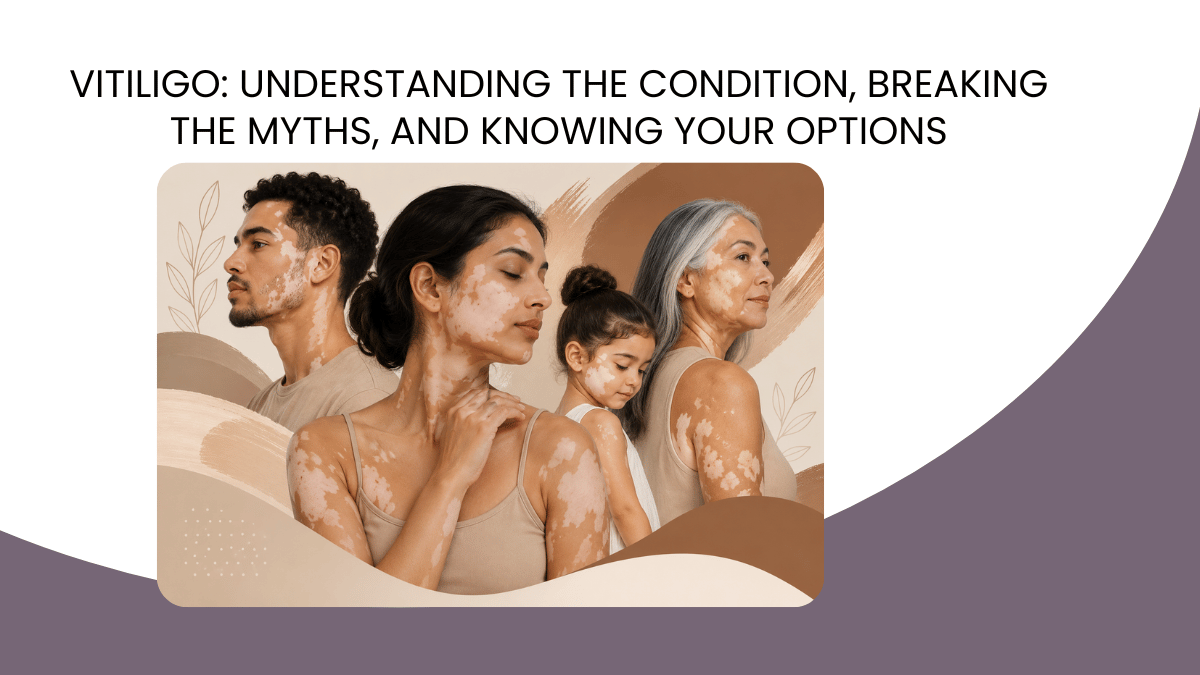
Vitiligo is one of the conditions I see regularly in my dermatology practice, and also one of the most misunderstood. On World Vitiligo Day, observed every year on June 25th, I want to address some of the most common questions and misconceptions I encounter from patients seeking vitiligo treatment in Bengaluru.
What is vitiligo?
Vitiligo is a skin condition characterised by depigmented patches on the skin and mucous membranes. The worldwide incidence is 0.5 to 2 percent. Its clinical course is unpredictable and it is usually associated with comorbidities such as autoimmune thyroid disorders, diabetes, and IBD.
What causes vitiligo?
Causes for vitiligo include:
- Genetic predisposition
- Autoimmune factors
- Environmental or chemical triggers
What are the types of vitiligo?
Vitiligo can be segmental, where a small segment is involved, or non-segmental, where multiple areas are involved.
What is the aim of treatment?
The aim in treating vitiligo is to arrest active depigmentation and stimulate repigmentation. Vitiligo is surrounded by misconception and social stigma. The psychosocial burden of vitiligo is profound, especially in darker skin types, affecting daily activities, social life, and career options.
What are the common facts about vitiligo?
- This condition is non-infectious and is not transmitted by touch, sharing personal items, or physical contact
- There is no clinical evidence that certain foods such as fish or citrus fruits consumed with fish cause vitiligo
- All white patches are not vitiligo
What treatment options are available?
Treatment options are varied and include topical creams, systemic immunosuppressives, narrow band UV therapy, and surgical options such as skin grafts.
World Vitiligo Day is observed annually on June 25th. It is dedicated to raising awareness and supporting people affected by the condition. Early intervention with medical treatments, behavioural therapy, and mindful stress reduction will help patients lead a better quality of life.
If you have white patches or are concerned about vitiligo, a proper dermatological evaluation can help confirm the diagnosis and discuss the most appropriate management for your skin type and extent of involvement. To consult Dr Meenakshi K, call +91 6361319178 or visit linqmd.com/doctor/meenakshi-k
Written by Dr Meenakshi K, MBBS, DVD (Bangalore Medical College), Dermatologist, Spectrum Diagnostics Subramanyanagar / Skin Affair Clinic Mahalakshmipuram / Kaya Sadashivanagar, Bengaluru.




Add a Comment