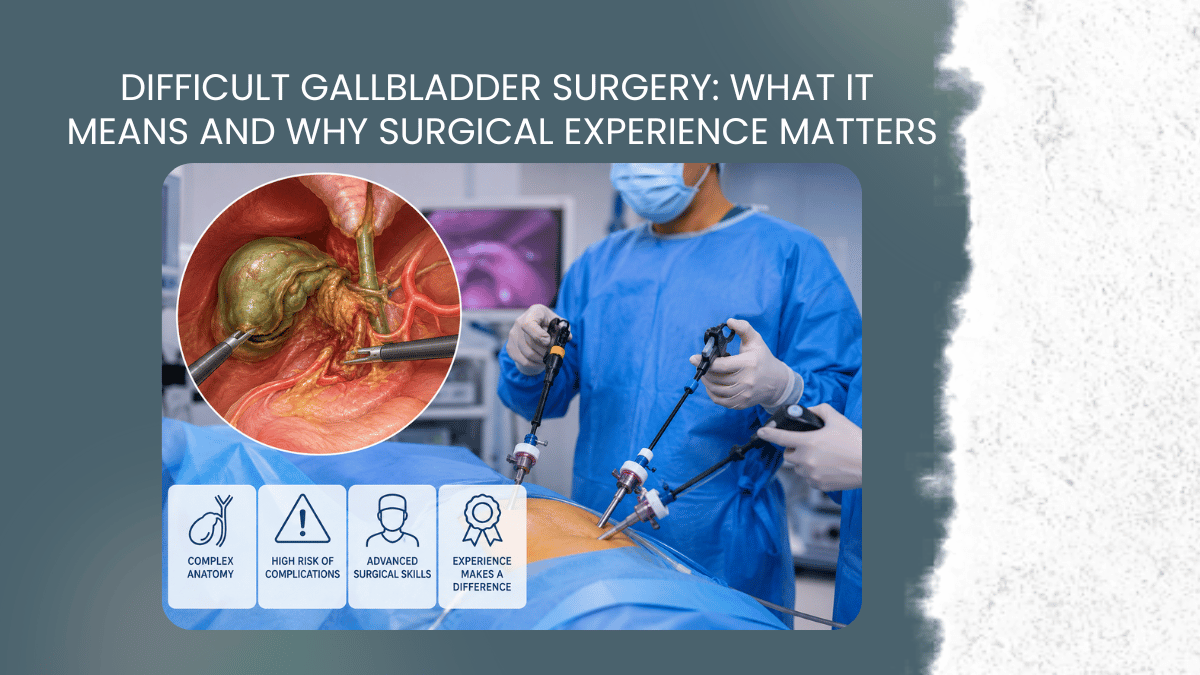
Not all gallbladder surgeries are the same. Most laparoscopic cholecystectomies, the standard surgical removal of the gallbladder, follow a predictable course and are completed safely in under an hour. But a significant proportion of patients arrive with a gallbladder that has been inflamed repeatedly, has dense adhesions to surrounding structures, or has undergone changes that make the standard surgical approach genuinely dangerous. These are what surgeons call difficult gallbladder cases, and managing them safely requires a level of operative experience that not every surgical team has.
What makes a gallbladder difficult to remove?
A gallbladder becomes surgically difficult when repeated episodes of inflammation, infection, or impacted stones have caused it to become densely adherent to the liver, the bile duct, or the surrounding bowel and omentum. The critical structure at risk in any gallbladder surgery is the common bile duct: injury to the bile duct during cholecystectomy is one of the most serious complications in laparoscopic surgery, and it is significantly more likely when the anatomy has been distorted by chronic disease. Identifying a difficult gallbladder before and during surgery, and knowing how to proceed safely when the anatomy is unclear, is the most important determinant of a safe outcome in these cases. My published research in the Journal of Gastroenterology and Hepatology on laparoscopic subtotal cholecystectomy - a technique specifically designed for cases where complete gallbladder removal is not safe - reflects my specific interest in and experience with these complex presentations.
What is subtotal cholecystectomy and when is it the right choice?
Laparoscopic subtotal cholecystectomy is a technique in which, when the anatomy cannot be safely defined and the cystic duct cannot be safely clipped, the gallbladder is partially removed rather than attempting a complete resection that risks bile duct injury. The remaining gallbladder wall is sutured or closed, and the patient is protected from the catastrophic consequences of bile duct injury while still achieving relief from the gallbladder as the source of symptoms and infection. This is a deliberate, evidence-based decision made by the surgeon intraoperatively, not a complication. In patients with Mirizzi syndrome, gangrenous cholecystitis, or dense adhesions from multiple prior episodes of inflammation, it is often the safest option. In my practice at NiSH Clinic, Jayanagar, I take particular care with complex gallbladder surgery in high-risk patients, including those with diabetes, cardiac conditions, or prior abdominal surgeries, where the margin for error is smaller.
If you have been told that your gallbladder surgery is complex or that previous attempts were abandoned, or if you have had multiple episodes of gallstone-related pain and want a proper assessment of your surgical risk and options, a consultation with a surgeon experienced specifically in difficult gallbladder cases is the appropriate next step.
To book a consultation with Dr Moksha Gowda at NiSH Clinic, 48, 7th B Main Rd, 4th Block, Jayanagar, Bengaluru 560011, call +91 9008315624.
Written by Dr Moksha Gowda, MBBS (Rajiv Gandhi University of Health Sciences), DNB General Surgery (National Board of Examinations, New Delhi), Consultant General and Laparoscopic Surgeon, NiSH Clinic, Jayanagar, Bengaluru.
Related reading
Gallbladder Stones: Symptoms, Treatment, and When to Consider Surgery – A Guide by Dr. Moksha Gowda
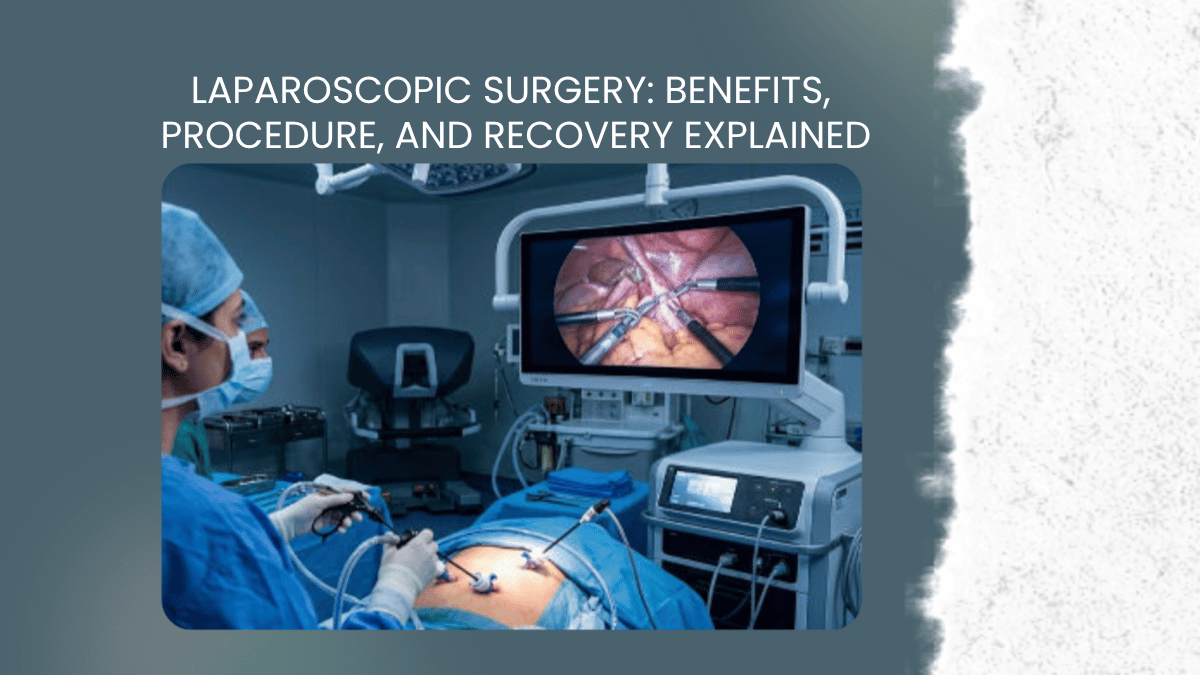
Laparoscopic Surgery: Benefits, Procedure, and Recovery Explained by Dr. Moksha Gowda

Add a Comment