Hearing the words "brain tumour" is frightening. For most people, the diagnosis brings an immediate flood of questions: Is it cancer? Does it need surgery? What happens next? The reality is that brain tumours vary enormously in type, behaviour and outlook. Many are benign and grow slowly. Others require prompt treatment but respond well when caught early. Understanding what a brain tumour is, what symptoms to watch for, and what modern neurosurgery can offer is the first step toward making informed decisions.
Dr. Goutham Cugati, Consultant Neurosurgeon and Spine Surgeon at DRM Multispeciality Hospital and Impulse Medical Centre, Mysuru, has performed over 6,000 neurosurgical procedures and holds advanced fellowship training in micro-neurosurgery. This guide covers everything a patient or family member needs to know about brain tumours — in plain language.
What Is a Brain Tumour?
A brain tumour is an abnormal growth of cells within the brain or its surrounding structures. Tumours that start in the brain itself are called primary brain tumours. Those that spread to the brain from cancer elsewhere in the body (such as the lung, breast or kidney) are called secondary or metastatic brain tumours.
Brain tumours are also classified as:
- Benign (non-cancerous): These grow slowly, do not invade surrounding tissue and do not spread to other parts of the body. However, even a benign tumour can cause serious problems depending on where it sits in the brain.
- Malignant (cancerous): These grow more quickly, can invade nearby brain tissue and are harder to treat completely.
The grade of a tumour (Grade I to IV) indicates how aggressively it is likely to behave. A Grade I tumour grows slowly and is usually curable with surgery. A Grade IV tumour is highly aggressive and requires a combination of treatments.
Common Types of Brain Tumours
There are over 120 types of brain tumours, but some are seen far more often than others. Here are the most important ones:
Gliomas
Gliomas arise from the glial cells that support and protect neurons. They include glioblastoma (Grade IV, the most aggressive), astrocytoma and oligodendroglioma. Glioblastoma multiforme (GBM) is the most common malignant primary brain tumour in adults.
Meningiomas
These grow from the meninges, the protective membranes surrounding the brain and spinal cord. Most meningiomas are benign and slow-growing. They are the most common benign brain tumour and are more common in women. Many are found incidentally on scans done for other reasons.
Pituitary Adenomas
These arise from the pituitary gland at the base of the brain. Most are benign but can cause hormonal problems, vision disturbances or headaches as they grow. Pituitary tumours are often treated with minimally invasive endoscopic surgery through the nose, without any incision on the head.
Acoustic Neuromas (Vestibular Schwannomas)
These are benign tumours that grow on the nerve connecting the brain to the inner ear. They typically cause gradual hearing loss on one side, ringing in the ear and balance problems. Skull base surgical techniques allow these to be removed with minimal disruption to surrounding structures.
Skull Base Tumours
Tumours at the base of the skull present particular surgical challenges because of the critical nerves and blood vessels in the area. Dr. Goutham Cugati has specialised training in skull base neurosurgery, which allows complex tumours in this region to be approached safely using microsurgical techniques.
Metastatic Brain Tumours
When cancer spreads from another part of the body to the brain, it forms metastatic deposits. Common sources include lung cancer, breast cancer, melanoma and kidney cancer. Treatment depends on the number, size and location of the deposits, as well as the status of the primary cancer.
Symptoms of a Brain Tumour: What to Watch For
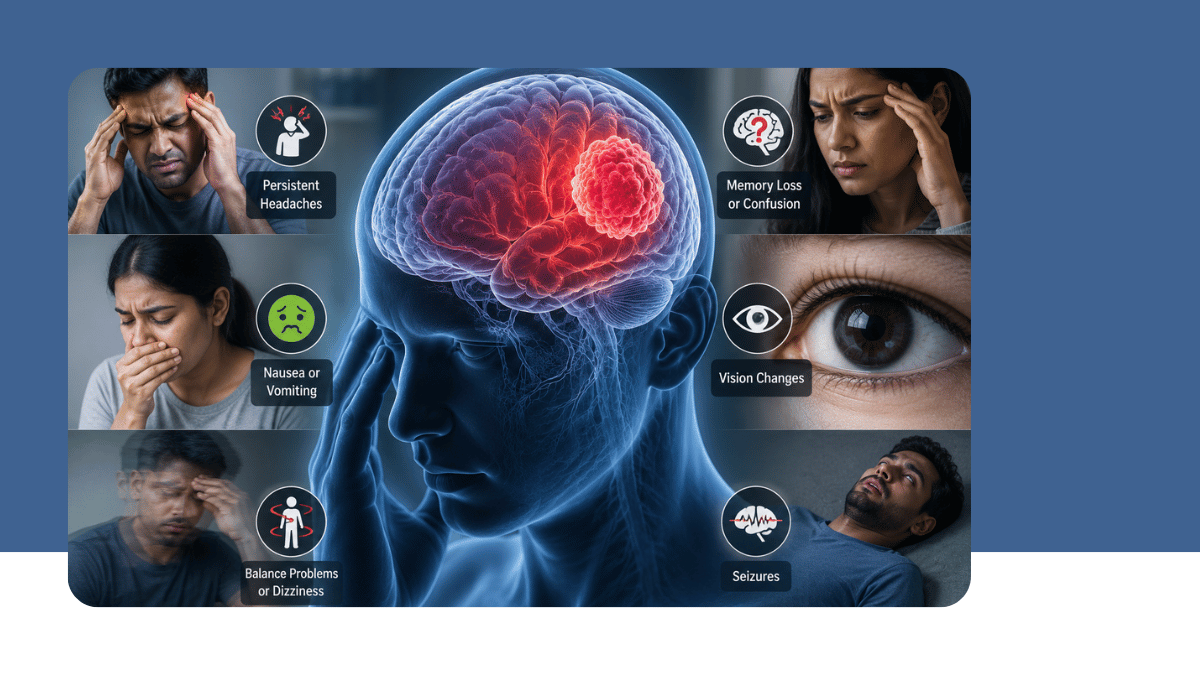
Brain tumour symptoms depend on the tumour's size, type and location. Because the brain controls every function of the body, a tumour in different areas causes different problems. The following symptoms should prompt a medical evaluation, particularly if they are new, persistent or worsening:
- Headaches that are new in character, worst in the morning, or wake you from sleep
- Seizures (fits) occurring for the first time in an adult with no prior history of epilepsy
- Progressive weakness or numbness in one arm or leg
- Changes in vision, including double vision, blurred vision or loss of part of the visual field
- Difficulty with speech, understanding language or finding words
- Memory problems, personality changes or unusual behaviour
- Loss of balance, unsteady walking or coordination problems
- Nausea and vomiting, particularly in the morning or without an obvious cause
It is important to know that not every headache or episode of forgetfulness signals a brain tumour. However, symptoms that are progressive, unexplained and accompanied by neurological changes should always be investigated promptly.
How Is a Brain Tumour Diagnosed?
Diagnosis involves a combination of clinical assessment and imaging. Here is how it typically unfolds:
Neurological Examination
The neurosurgeon assesses reflexes, strength, coordination, vision, speech and cognitive function. This helps localise which part of the brain may be affected before any scan is ordered.
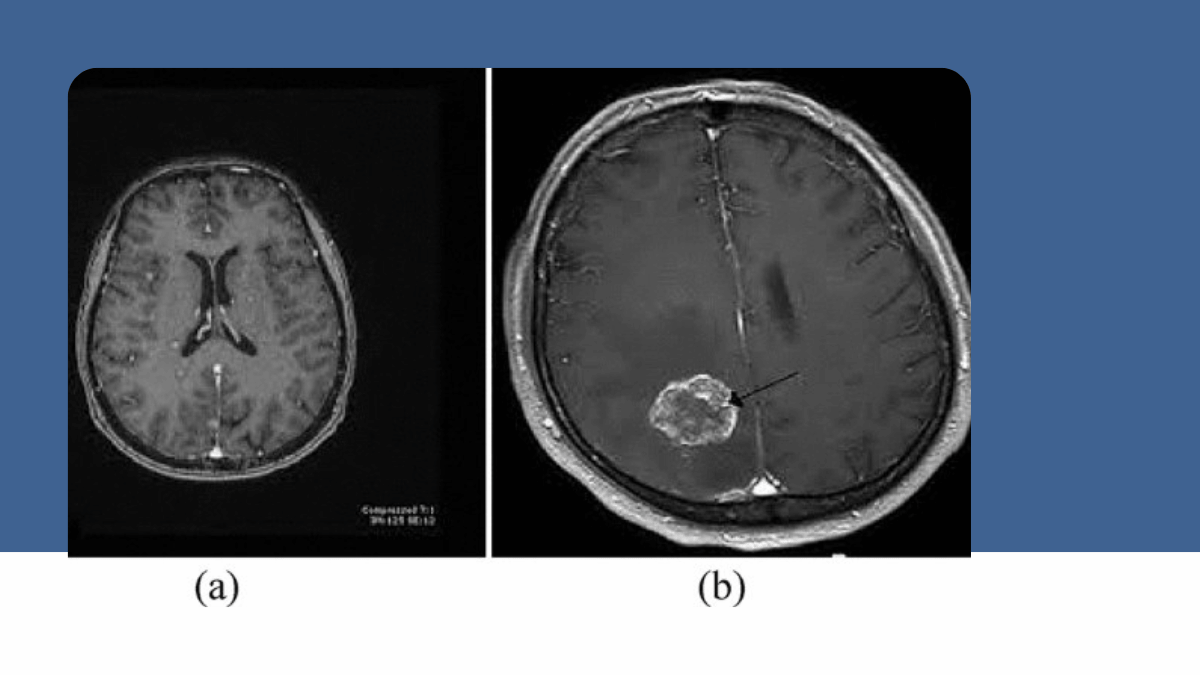
MRI Brain (with contrast)
An MRI with gadolinium contrast is the gold standard for imaging brain tumours. It provides detailed images of the tumour's size, location, blood supply and relationship to surrounding structures. Different MRI sequences help distinguish tumour types and assess swelling around the tumour.
CT Scan
A CT scan is faster and is often the first investigation in an emergency setting, such as after a seizure or sudden neurological deterioration. It is also useful for assessing bony structures of the skull.
Biopsy
In many cases, a tissue sample is needed to confirm the tumour type and grade. This can be done through a stereotactic (needle) biopsy under imaging guidance, or as part of the surgical removal. The biopsy result guides treatment decisions after surgery.
Functional MRI and Neuronavigation
For tumours near critical areas of the brain controlling speech, movement or vision, functional MRI maps these areas before surgery. Neuronavigation uses this data during the operation to guide the surgeon precisely, reducing the risk of injury to important brain functions.
Treatment Options for Brain Tumours
Treatment depends on the tumour's type, grade, size and location, as well as the patient's age and overall health. The main options are:
Surgery
Surgery is usually the first step for most accessible brain tumours. The aim is to remove as much of the tumour as safely possible (maximum safe resection) while preserving neurological function. Dr. Goutham Cugati performs microsurgical brain tumour removal using high-powered operating microscopes and neuronavigation. For pituitary tumours, a minimally invasive endoscopic approach through the nose avoids any head incision entirely.
Key benefits of surgery include:
- Confirmation of the exact tumour type through biopsy
- Immediate relief of pressure on the brain
- Reduction in tumour size before radiotherapy or chemotherapy
- Potential cure in the case of benign tumours
Radiotherapy
Radiotherapy uses targeted radiation to kill tumour cells or stop them from growing. It is used after surgery for malignant tumours, or as the primary treatment when surgery is not possible. Stereotactic radiosurgery (such as Gamma Knife or CyberKnife) can deliver a highly focused radiation dose to small tumours without open surgery.
Chemotherapy
Certain brain tumours, particularly glioblastoma, are treated with chemotherapy alongside radiotherapy after surgery. The most commonly used agent is temozolomide, which is taken in tablet form. Chemotherapy may also be used for metastatic tumours depending on the primary cancer type.
Observation (Watch and Wait)
For small, slow-growing benign tumours discovered incidentally in older patients without significant symptoms, active treatment may not be the right immediate step. Regular MRI scans are used to monitor the tumour, with treatment initiated if it shows signs of growth or causes new symptoms.
What to Expect After Brain Tumour Surgery
Recovery varies depending on the tumour's location and how much surrounding brain tissue was involved. Most patients can expect the following:
- A hospital stay of 3 to 7 days for most elective brain tumour surgeries
- Some temporary neurological symptoms (weakness, speech changes, fatigue) that improve over weeks as brain swelling settles
- Medications including steroids to reduce swelling and anti-epileptic drugs if seizures were part of the presentation
- Physiotherapy, speech therapy or occupational therapy as part of rehabilitation for patients with functional deficits
- Follow-up MRI scans at intervals to monitor for recurrence or residual tumour
Modern microsurgical techniques, neuronavigation and intraoperative monitoring have significantly improved the safety and outcomes of brain tumour surgery. The goal is always to achieve the maximum possible removal while protecting the patient's quality of life.
When Should You See a Neurosurgeon?
You should seek a neurosurgical opinion if:
- An MRI or CT scan has shown an abnormality in the brain that needs expert evaluation
- You or a family member has developed new seizures without a prior diagnosis of epilepsy
- There is progressive weakness, vision change, speech difficulty or personality change with no clear explanation
- A tumour has been diagnosed and you want to understand the surgical options available
- A previously diagnosed tumour is being monitored and you have concerns about new symptoms
At DRM Multispeciality Hospital and Impulse Medical Centre, Mysuru, Dr. Goutham Cugati offers comprehensive neurosurgical assessment for patients with brain tumours and other complex neurological conditions. With fellowship-level training in micro-neurosurgery and skull base surgery, patients in Mysuru and across Karnataka have access to specialised neurosurgical care close to home. Early evaluation, accurate diagnosis and a personalised treatment plan make a significant difference to outcomes in brain tumour care.
Written by: Dr. Goutham Cugati, MBBS, DNB (Neurosurgery), Fellowship in Micro-Neurosurgery, PGDCR, Consultant Neurosurgeon and Spine Surgeon, DRM Multispeciality Hospital and Impulse Medical Centre, Mysuru.
Related reading: linqmd.com/doctor/neurosurgery-mysuru-goutham-cugati/blog/brain-tumour-symptoms-types-surgery-neurosurgeon-mysuru

Comments
No comments yet.
Leave a comment
Sign in with Google to comment. Your comment appears after the doctor approves it.