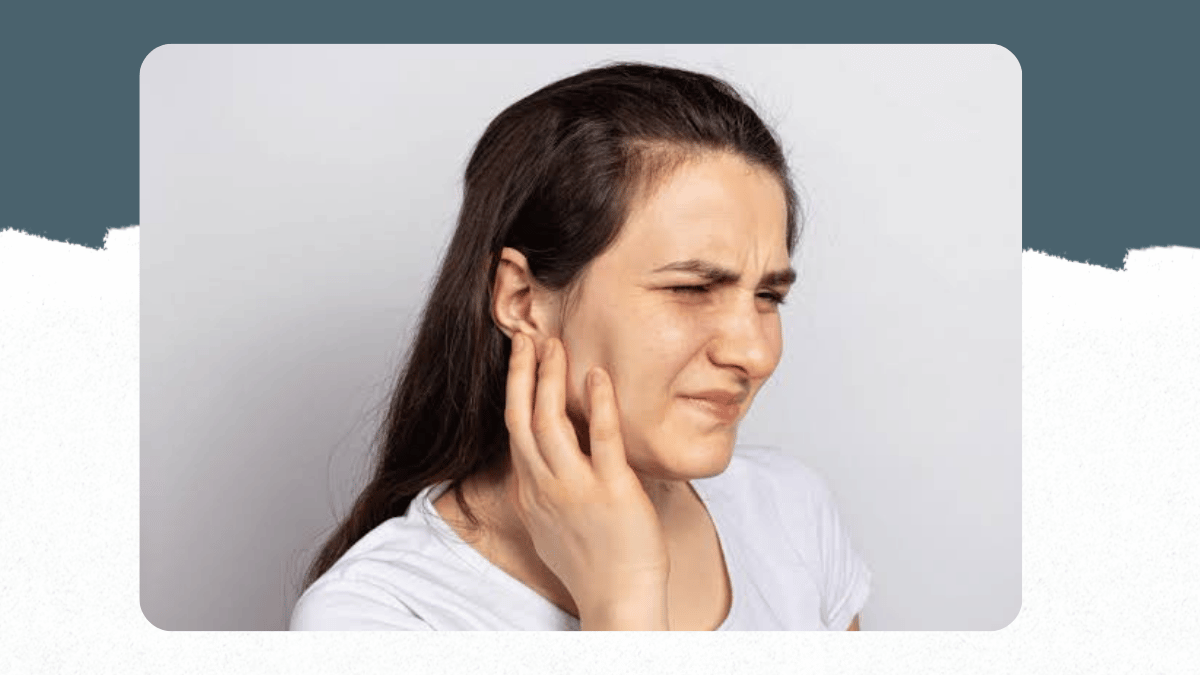
The ear is a compact anatomical system in which the outer ear canal, the tympanic membrane, and the middle ear are closely related, connected through narrow anatomical pathways whose health is interdependent. An infection of the outer ear canal affects the tympanic membrane at the canal's medial end. Middle ear disease can produce changes visible at the tympanic membrane. The Eustachian tube, which connects the middle ear to the nasopharynx, links middle ear pressure to nasal and pharyngeal health in a way that makes what happens in the nose directly relevant to what happens in the ear. In my ENT practice at Dr. Nivedeeta's ENT and Allergy Center, Madgaon, Goa, ear presentations are shaped by Goa's specific environment in ways that are clinically distinct from the ear disease pattern of a landlocked city. The coastal setting, with its sea swimming, water sports, monsoon humidity, and the combination of warm temperatures and high ambient moisture, creates conditions for specific ear conditions that are far more prevalent in Goa than elsewhere in India. Understanding ear disease in the Goan context requires knowing which conditions the coastal environment predisposes to and how the allergy component that my AASC and AAAIC training identifies contributes to ear problems that may appear purely structural.
Otitis Externa: Goa's Swimmer's Ear and How to Distinguish It from Middle Ear Disease
Otitis externa, the infection of the outer ear canal produced by the warm, moist environment that water trapped after swimming creates, is one of the most common presentations at my Madgaon clinic among Goa's sea-swimming and water sports population. In Goa, where sea bathing at Benaulim, Colva, and the other South Goa beaches is part of daily life for a large proportion of residents, and where water sports at Baga, Calangute, and Candolim bring a constant flow of tourists with no established ear hygiene routine for sea swimming, otitis externa is a year-round but particularly monsoon-season presentation. The clinical distinction from otitis media, the middle ear infection, is essential because the treatment is different. Otitis externa presents with ear pain that is characteristically worsened by pulling the outer ear (the pinna) or pressing the small cartilaginous projection in front of the canal opening (the tragus) , the canal's skin is the site of infection and is tender to this external manipulation. There is typically no fever, and the hearing loss, if present, is from canal swelling and debris obstructing the ear canal rather than from middle ear involvement. Discharge from the canal is visible and typically clear or whitish at first, turning purulent as the infection progresses. Otitis media by contrast produces pain that is behind the eardrum, is associated with fever in acute bacterial cases, and does not produce tenderness on pulling or pressing the outer ear. Management of otitis externa begins with aural toilet, the careful cleaning of the canal using microsuction or ear wicking to remove debris and discharge, followed by topical antibiotic and steroid ear drops for one to two weeks. Keeping the ear dry throughout treatment, with ear plugs or a cotton ball lightly coated with petroleum jelly for any water exposure, is essential for recovery. For regular Goa swimmers, prophylactic acidified ear drops applied after each swimming session maintain the mildly acidic canal environment that inhibits Pseudomonas and other water-associated organisms from establishing infection.
The Allergy-Eustachian Tube Connection: Why Treating Nasal Allergy Changes the Ear
Otitis media with effusion, the accumulation of fluid in the middle ear without active infection, is the most common cause of conductive hearing loss in children and is encountered regularly in adults in Goa, particularly those with untreated allergic rhinitis. The mechanism is the Eustachian tube, which connects the middle ear to the nasopharynx and serves the critical function of equalising middle ear pressure by opening briefly during swallowing and yawning to admit air from the nasopharynx. When allergic rhinitis produces chronic mucosal swelling at the nasopharynx, this swelling directly affects the Eustachian tube opening, which is surrounded by the same contiguous mucosal tissue. The tube becomes narrower and its opening mechanism is impaired. Negative pressure develops progressively in the middle ear as the air inside is absorbed and cannot be replenished. The patient notices this as ear fullness, a blocked sensation, muffled hearing, and sometimes a popping or crackling when swallowing that provides brief and incomplete relief. If the dysfunction persists, fluid produced by the middle ear mucosal lining accumulates in the middle ear cavity, producing the dull, flat tympanic membrane appearance on otoscopy and the flat tympanogram that confirm the diagnosis. Children with this condition may show declining school performance because of the conductive hearing loss, which is frequently not connected by parents or teachers to an ear problem. Treating the underlying allergic rhinitis, with appropriate intranasal corticosteroid and allergy assessment at Dr. Nivedeeta's ENT and Allergy Center, Madgaon, reduces the nasopharyngeal mucosal swelling around the Eustachian tube opening, restores normal tube function, allows the middle ear pressure to equilibrate, and the fluid to resorb. This is the allergy-ear connection that my AASC training makes me assess and treat in every patient with recurrent middle ear problems in Goa, rather than defaulting to grommets for a problem whose underlying driver has not been identified.
To book a consultation with Dr. Nivedeeta Pereira at Dr. Nivedeeta's ENT and Allergy Center, Shop No. 4, Golden Castle, opposite KTC Bus Stand, Madel, Madgaon, Goa 403601 (Monday to Friday, 9:00 AM to 12:00 PM and 3:30 PM to 6:00 PM), call 8007048189.
Written by Dr. Nivedeeta Pereira, MBBS (SDM College of Medical Sciences and Hospital, Dharwad), DLO (Diploma in Otorhinolaryngology, JJM Medical College, Davangere), AASC (Advanced Allergy and Asthma Specialist Course, Medtrain, 2025), AAAIC (Advanced Allergy and Asthma in Clinical Immunology, Medtrain, 2026), International Certification in Vestibular Rehabilitation, Medical Institute of Balance, ENT Specialist, Allergy, Asthma and Upper Airway Care and Vertigo Specialist, Dr. Nivedeeta's ENT and Allergy Center, Shop No. 4, Golden Castle, opposite KTC Bus Stand, Madel, Madgaon, Goa 403601. Monday to Friday, 9:00 AM to 12:00 PM and 3:30 PM to 6:00 PM. 11+ years. 10,000+ patients. Phone: 8007048189.
Related reading
Meet Dr. Nivedeeta Pereira: ENT Care With an Allergy Perspective in the Heart of Goa



Add a Comment