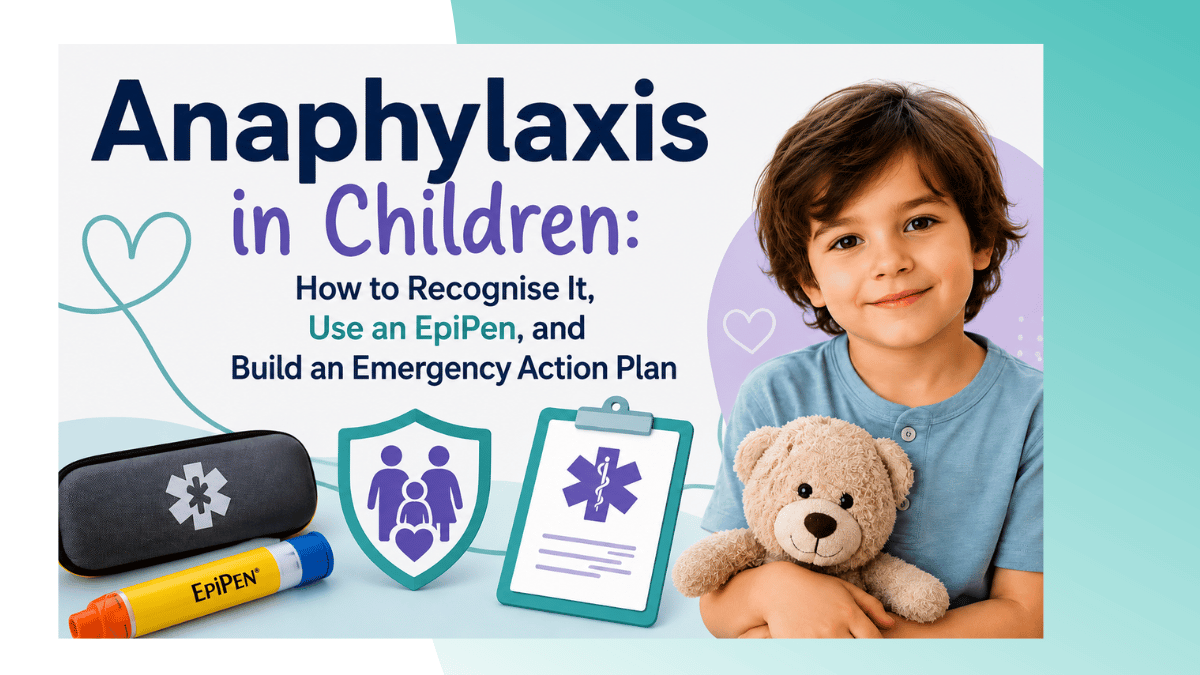
Parents of children with a known severe allergy often ask me the same question: how will I know if this is anaphylaxis rather than a mild allergic reaction. The distinction matters because anaphylaxis requires immediate treatment, and delay can be dangerous.
What is anaphylaxis and how is it different from a mild allergic reaction?
Anaphylaxis is a severe, rapid allergic reaction that affects more than one body system at once. A mild reaction might cause localised hives or itching. Anaphylaxis involves the skin together with breathing difficulty, throat tightness, persistent vomiting, a drop in blood pressure, or a sense of impending collapse. It typically develops within minutes of exposure to the trigger, most commonly a food, insect sting, or medication.
What are the warning signs parents should never wait on?
Sudden swelling of the lips, tongue, or throat, difficulty breathing or wheezing, a hoarse voice, persistent vomiting, dizziness or fainting, and a feeling of doom in an older child are all signs that demand immediate action. If a child has hives along with any one of these symptoms after a known or suspected allergen exposure, this is treated as anaphylaxis until proven otherwise.
How does an EpiPen work and when should it be used?
An EpiPen delivers a fixed dose of adrenaline into the muscle of the outer thigh, reversing the airway swelling and supporting blood pressure during anaphylaxis. It should be used immediately at the first sign of a systemic reaction, not held back to see if symptoms improve on their own.
One of the most common mistakes I see is hesitation. Parents often wait to see whether symptoms improve before using adrenaline. Unfortunately, anaphylaxis is one situation where waiting can increase risk significantly.
Adrenaline works fastest when given early, and a second dose can be administered if symptoms do not improve within five to fifteen minutes. After any EpiPen use, the child must go to an emergency department, even if symptoms appear to resolve, because a second wave of reaction can occur hours later.
What should an emergency action plan include?
A written action plan, kept at home, school, and with any caregiver, should list the child's known triggers, the exact symptoms that indicate anaphylaxis for that child, step by step instructions for using the EpiPen, and emergency contact numbers. Schools and family members who spend time with the child should be shown how to use the device before it is ever needed, not during an emergency.
What should families do after a confirmed food or insect allergy diagnosis?
Once a severe allergy is confirmed through history and testing, every family leaves my clinic with a written plan and hands-on EpiPen training. Practising the technique on a trainer device removes hesitation in a real emergency, when seconds matter.
Families are often reassured once they understand that preparation, not panic, is what saves lives during anaphylaxis. Knowing the signs, carrying an EpiPen, and having a clear action plan gives both parents and children greater confidence and safety.
Written by Dr Sravanthi P V N, MBBS, MD Paediatrics, Consultant Paediatrician and Allergy Asthma Specialist, Chirayu Multi-Specialty Clinic, Kasturi Nagar, Bengaluru.
Related reading:
Allergic Rhinitis and Asthma in Children: Symptoms, Diagnosis, and Long-Term Treatment Including Immunotherapy
Allergy Testing: A Comprehensive Guide
👉To book a consultation with Dr Sravanthi P V N at Chirayu Multi-Specialty Clinic, Kasturi Nagar, Bengaluru, call +91 9663358193.


Add a Comment