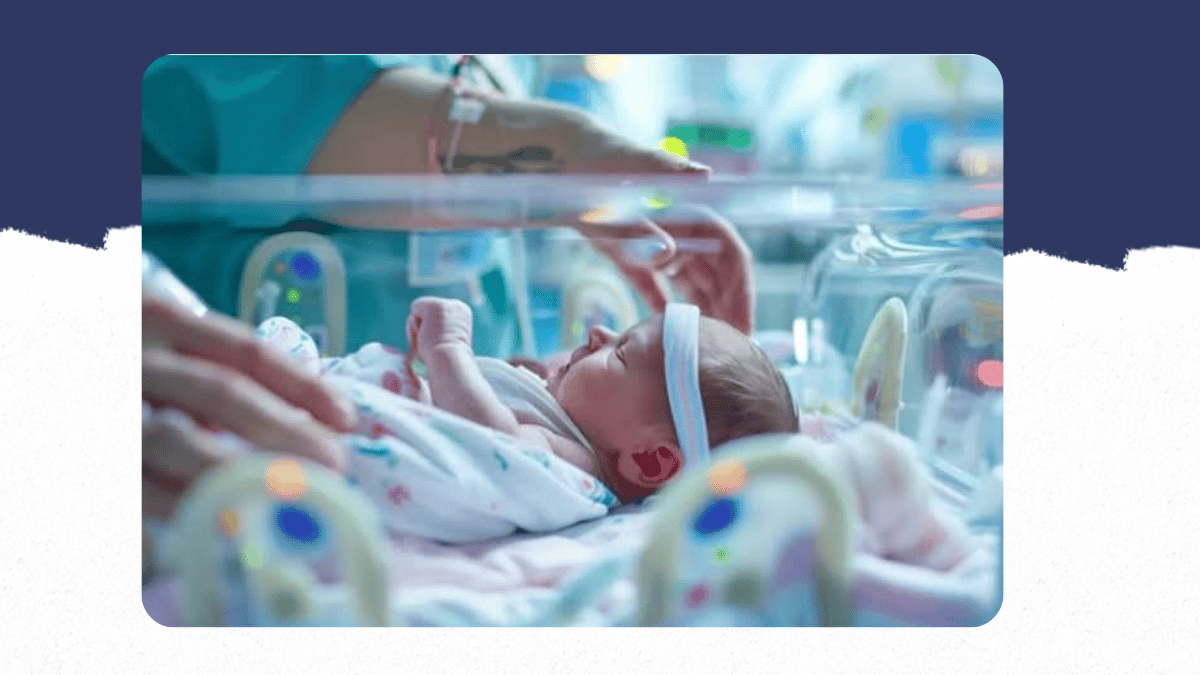
The neonatal period, the first 28 days of a newborn's life, encompasses the most rapid and consequential physiological changes in the entire human lifespan. The newborn who separates from the placenta at birth must in the first moments establish independent pulmonary respiration, adjust cardiovascular flow away from the foetal circulation, begin maintaining body temperature independently, and initiate feeding in the first hours of life. These transitions are usually accomplished smoothly, but when any element is impaired, the consequences can be rapid and serious. A paediatrician who has completed a Fellowship in Neonatology has specific clinical exposure to the full range of neonatal conditions, normal and high-risk, at a depth and case volume that general paediatric postgraduate training does not provide. My Fellowship in Neonatology, combined with my MD in Pediatrics, is the credential background that informs every newborn assessment I perform at Motherhood Chaitanya Hospital, Sector 44, Chandigarh, which is an established hospital providing comprehensive maternal and child health services to families across Chandigarh and the Tricity region. The difference between a fellowship-trained neonatologist's assessment of a newborn and a general paediatric assessment is most visible in the interpretation of subtle clinical signs that indicate a newborn who appears well but whose trajectory is worth watching closely.
Neonatal Jaundice and Feeding: The Two Most Common First-Week Concerns in Chandigarh
Neonatal jaundice, the yellowing of the skin and eyes from bilirubin accumulation, is the most common clinical finding in the first week of life, affecting more than half of term newborns and a higher proportion of late preterm infants. Physiological jaundice, the commonest and most benign form, appears after 24 hours of life, peaks around day three to four, and resolves by two weeks in most term infants as the newborn liver's conjugation capacity matures and breastfeeding is established. But several patterns of jaundice fall outside this normal physiological trajectory and require specific assessment and management. Jaundice appearing within the first 24 hours of life is never physiological and always requires investigation for haemolytic causes including blood group incompatibility. Jaundice that rises rapidly to high levels, regardless of timing, requires phototherapy to prevent the bilirubin reaching levels that can cause neurological damage, a condition called kernicterus that is entirely preventable with appropriate monitoring and treatment. Jaundice persisting beyond two weeks in a term newborn, or beyond three weeks in a preterm infant, requires investigation to exclude biliary atresia, hypothyroidism, and other pathological causes that must be identified early. At Motherhood Chaitanya Hospital, Chandigarh, my neonatal assessment includes systematic jaundice monitoring with the transcutaneous bilirubinometer and serum bilirubin where indicated, and phototherapy where thresholds are reached. Feeding difficulties in the first week, whether from breastfeeding latch problems, inadequate milk transfer, or an infant who is not feeding actively, compound jaundice and weight loss: the two problems are deeply interconnected, and addressing the feeding is as important as monitoring the bilirubin.
The High-Risk Newborn and What Specialist Neonatal Care Provides
Not all newborns arrive equally well-prepared for the transition to independent life, and the newborns who require the most careful clinical management in the neonatal period are those whose risk was apparent before or at birth and those whose risk becomes apparent in the first hours and days of life. Late preterm infants, born between 34 and 37 weeks of gestation, are often looked at and described as nearly term, but their lung maturity, thermoregulatory capacity, feeding coordination, and immune function are all meaningfully less developed than those of a 39 or 40-week infant. They feed less effectively, jaundice more severely, lose more weight, and are at higher risk of hypoglycaemia and temperature instability. Newborns of mothers with gestational diabetes require blood glucose monitoring in the first hours of life for neonatal hypoglycaemia, which produces symptoms that may be as subtle as jitteriness, poor feeding, or an episode of reduced responsiveness. Newborns delivered after a complicated labour, with or without birth asphyxia indicators, require systematic neurological assessment. The newborn with a suspected cardiac murmur requires clinical evaluation to determine whether the murmur represents a normal transitional circulation sound or a structural cardiac abnormality requiring investigation. Each of these presentations requires the clinical pattern recognition that neonatal fellowship training specifically develops. Motherhood Chaitanya Hospital, Sector 44, Chandigarh, is a hospital environment that provides the infrastructure for monitoring and managing these high-risk newborns with the structured follow-up that the first weeks of life require, and my neonatal specialist assessment is available as part of that care pathway for families in Chandigarh and the surrounding region.
To book a paediatric or neonatal consultation with Dr. Animesh Debbarma at Motherhood Chaitanya Hospital, Hospital Site 1 and 2, 44C, Sector 44, Chandigarh 160047, call +91 8415036816 or visit linqmd.com/doctor/pediatrics-chandigarh-dranimesh-debbarma
Written by Dr. Animesh Debbarma, MBBS, MD (Pediatrics), Fellowship in Neonatology, DAACI (Diploma in Allergy, Asthma and Clinical Immunology), Consultant Paediatrician and Pediatric Allergy Specialist, Motherhood Chaitanya Hospital, Hospital Site 1 and 2, 44C, Sector 44, Chandigarh 160047. Phone: +91 8415036816.
Related reading
Meet Dr. Animesh Debbarma: Dedicated to Every Child's Health, Growth, and Wellbeing


Add a Comment