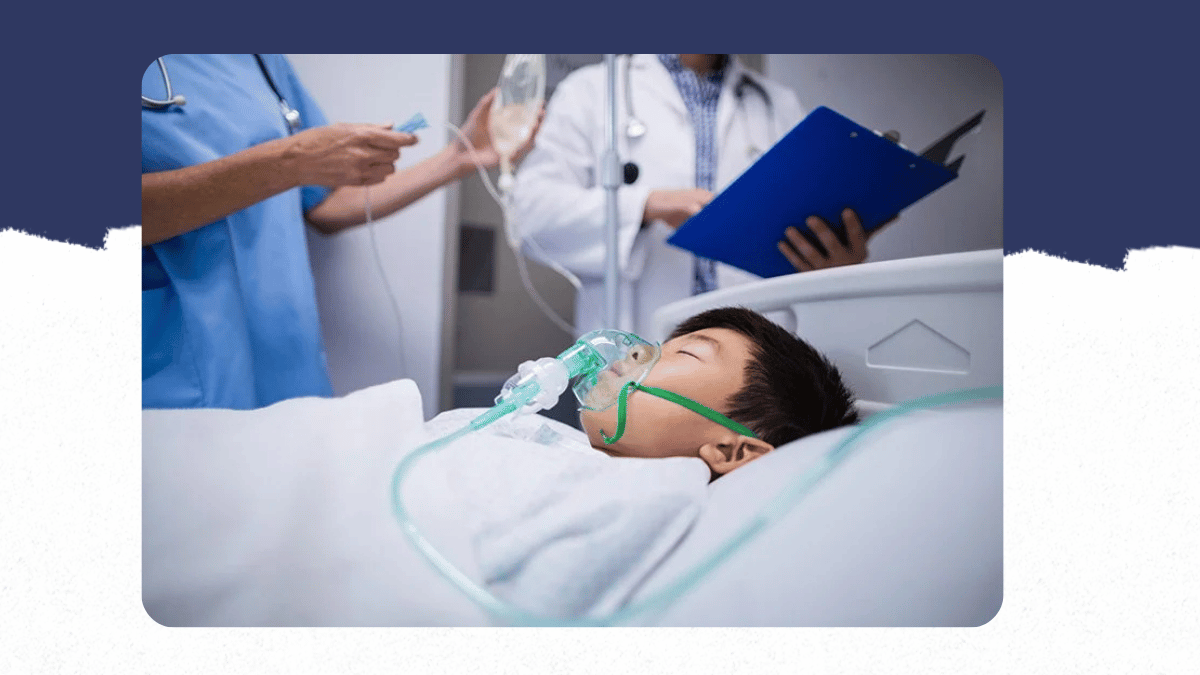
Children can move from apparent wellness to serious clinical deterioration faster than any other patient group in medicine. The physiological reserves that allow a child to compensate for circulatory compromise, respiratory failure, or serious infection are finite and, in a young child, are exhausted rapidly: the child who was running around at midday may be profoundly shocked by evening. The clinical skill that distinguishes a paediatric specialist from a general practitioner in this context is the ability to recognise early deterioration, the subtle changes in a child's clinical state that precede the obvious collapse, and to act on those changes before the compensatory mechanisms fail. My MD in Pediatrics, combined with my Fellowship in Neonatology, built the clinical foundation for recognising and responding to the full range of critically ill children, from the newborn who stops tolerating feeds and develops an apnoeic episode, to the toddler with a febrile convulsion, to the adolescent with a first severe asthma attack or anaphylactic reaction. At Motherhood Chaitanya Hospital, Sector 44, Chandigarh, this specialist paediatric assessment is available for families across the Chandigarh Tricity region. Paediatric critical care is not just about treating the emergency once it has fully developed. It is about identifying the child who is heading toward one while there is still time to change the trajectory.
The Critical Presentations That Parents in Chandigarh Need to Recognise
Febrile convulsions are the most common paediatric neurological emergency, affecting approximately two to four percent of children between six months and five years of age. The typical febrile convulsion is a brief, self-limiting tonic-clonic seizure occurring in the context of a rapidly rising fever, lasting less than five minutes and followed by a period of post-ictal drowsiness from which the child fully recovers. Most febrile convulsions, while terrifying for the parent who witnesses them, are benign and do not cause lasting harm. But a convulsion lasting more than five minutes requires emergency intervention. A child who is having their first febrile convulsion warrants urgent paediatric assessment to exclude meningitis, encephalitis, and other central nervous system infections that can also present with fever and seizure. And a child who has had more than one convulsion in the same febrile illness, who is younger than six months or older than five years when the first convulsion occurs, or who has focal neurological features during or after the convulsion requires further evaluation beyond reassurance. Severe respiratory distress in a child, presenting as increased breathing rate, visible use of neck and chest muscles during breathing, nasal flaring in infants, and in older children the inability to complete a sentence without pausing for breath, is a paediatric emergency that requires immediate clinical assessment and management. Anaphylaxis, the severe systemic allergic reaction to a food, insect sting, medication, or other allergen, presents with rapid progression of hives, swelling of the lips and tongue, throat tightness, breathing difficulty, drop in blood pressure, and collapse, and requires immediate adrenaline injection rather than antihistamines or a wait-and-see approach.
When to Seek Emergency Assessment Rather Than a Routine Appointment
For families in Chandigarh and the Tricity region, knowing when a child's symptoms require emergency hospital assessment rather than a next-day clinic appointment is one of the most important pieces of clinical knowledge a parent can have. The following situations require immediate emergency assessment: any convulsion that does not stop spontaneously within five minutes; any child with breathing difficulty who is working hard to breathe, whose lips or tongue are blue, or who cannot speak or cry because of breathlessness; any child with suspected anaphylaxis, recognised by rapid progression of allergic symptoms involving multiple body systems; any child who is unusually difficult to rouse, who responds only to pain or who cannot be woken; any infant under three months with a fever, because the young infant's immune system cannot reliably contain serious bacterial infections; and any child of any age whose clinical state is deteriorating rapidly in front of the parent. Paediatric sepsis, the life-threatening systemic response to bacterial infection that can progress from apparent wellness to cardiovascular collapse within hours, presents with high or very low temperature, fast heart rate, fast breathing, poor skin perfusion producing a mottled or pale appearance, and reduced alertness: this constellation in a child who was well earlier in the day is a clinical emergency that requires urgent assessment and treatment with intravenous antibiotics. At Motherhood Chaitanya Hospital, Sector 44, Chandigarh, the paediatric specialist assessment I provide for acutely unwell children begins with the systematic evaluation of the child's airway, breathing, circulation, and neurological status that forms the foundation of all paediatric critical care, and is accompanied by clear communication with families about what is happening and why at every stage of the management.
To book a paediatric or neonatal consultation with Dr. Animesh Debbarma at Motherhood Chaitanya Hospital, Hospital Site 1 and 2, 44C, Sector 44, Chandigarh 160047, call +91 8415036816.
Written by Dr. Animesh Debbarma, MBBS, MD (Pediatrics), Fellowship in Neonatology, DAACI (Diploma in Allergy, Asthma and Clinical Immunology), Consultant Paediatrician and Pediatric Allergy Specialist, Motherhood Chaitanya Hospital, Hospital Site 1 and 2, 44C, Sector 44, Chandigarh 160047. Phone: +91 8415036816.
Related reading
Meet Dr. Animesh Debbarma: Dedicated to Every Child's Health, Growth, and Wellbeing


Add a Comment