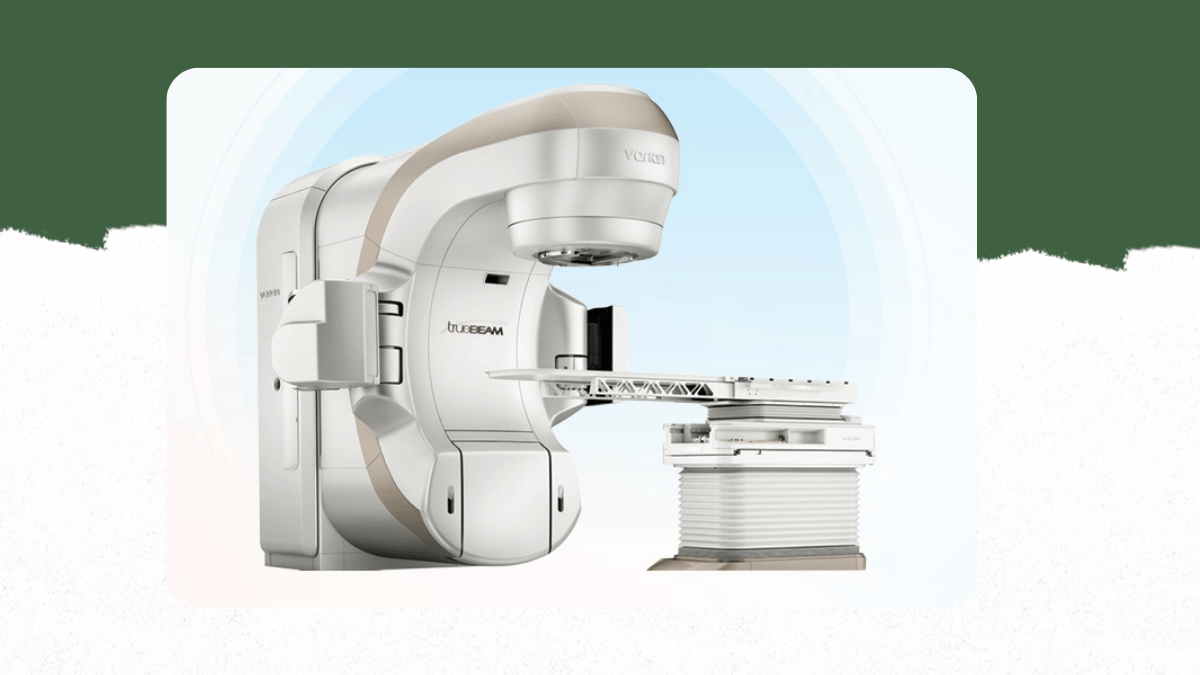
The word radiation carries fear for most people a fear that is understandable but rarely accurate when it comes to modern radiation oncology. What has changed in this field over the past two decades is not the physics of radiation, but the precision with which it is delivered, the sophistication with which it is planned, and the care with which its effects on surrounding healthy tissue are minimised. I am Dr. P Sasikala, Consultant Radiation Oncologist at SPARSH Hospital, Hennur Road, Bengaluru, with 16 years of experience and more than 5,000 patients treated. My practice has a particular focus on cancers that affect women breast cancer, cervical cancer, and other gynaecological cancers and a parallel commitment to cancer prevention and early detection that I believe is inseparable from treatment. This guide is written for every woman in Bengaluru and Karnataka who is facing a cancer diagnosis, supporting someone who is, or simply wants to understand what radiation oncology involves. Modern radiation therapy for women's cancers is precise, evidence based, and far better tolerated than most patients expect.
What Is Radiation Oncology and How Does It Work?
Radiation oncology is the medical specialty that uses ionising radiation to treat cancer. Radiation works by damaging the DNA within cancer cells disrupting their ability to divide and grow while the surrounding normal tissues, which have more effective DNA repair mechanisms, recover between treatment sessions. A course of radiation therapy typically consists of multiple individual treatment sessions called fractions, each lasting minutes, delivered daily over a period of days to weeks depending on the cancer type, stage, and the specific protocol being used. The radiation oncologist's role begins well before the first treatment session: I evaluate each patient's diagnosis, review their pathology and imaging, assess their overall health and fitness, participate in the multidisciplinary tumour board discussion, and design an individualised radiation treatment plan using advanced planning software. The treatment plan in modern radiation oncology specifies not only where the radiation goes, but precisely which structures around the tumour must be protected and to what dose limits.
Radiation Therapy for Breast Cancer
Breast cancer is the most common cancer in Indian women, and radiation therapy plays a central role in its treatment. Following breast conserving surgery the lumpectomy or wide local excision that preserves the breast adjuvant radiation to the remaining breast tissue is the standard of care that reduces the risk of local recurrence and is equivalent in long term survival to mastectomy in appropriately selected patients. Radiation is also used after mastectomy in patients with certain high risk features, as part of treatment for locally advanced disease, and for the management of bone metastases that cause pain or risk of fracture.
IMRT and IGRT for Breast Cancer
Intensity Modulated Radiotherapy (IMRT) allows the dose of radiation to be shaped precisely to the contours of the breast, minimising the dose received by the underlying heart and lungs structures that are in close proximity to the left breast in particular. Image Guided Radiotherapy (IGRT) adds real time imaging at the treatment machine to verify that the patient's position is exactly correct before each fraction is delivered, compensating for the natural variation in position that occurs day to day. Together, IMRT and IGRT represent the standard of precision radiation delivery for breast cancer in a modern oncology department. IMRT and IGRT together reduce cardiac and pulmonary dose in breast cancer radiation a clinically meaningful benefit for women who may live for decades after their cancer treatment.
Accelerated Partial Breast Irradiation (APBI)
Accelerated Partial Breast Irradiation delivers radiation to the area of the breast immediately surrounding the tumour bed, rather than to the whole breast, over a shorter treatment course. It is appropriate for carefully selected women with early stage breast cancer and offers the practical advantage of fewer treatment visits. My research on APBI, including per operative intraoperative brachytherapy technique, was recognised with the Best Paper Award from the Indian Brachytherapy Society in 2016 and published in the Journal of Contemporary Brachytherapy and the Journal of Carcinogenesis. This research reflects the depth of clinical interest I bring to refining breast cancer radiation for individual patients rather than applying a single protocol uniformly.
Radiation Therapy for Cervical and Gynaecological Cancers
Cervical cancer is one of the most preventable and most treatable cancers in women, and yet it remains a significant cause of cancer death in India largely because it is diagnosed late, when treatment options are more limited and outcomes are less favourable. In Karnataka, where I have conducted cancer awareness and screening outreach across both urban areas and rural communities, I have had this conversation thousands of times: a woman with cervical cancer who could have been treated with curative intent at an earlier stage, presenting late because she dismissed symptoms, because she was embarrassed to attend for screening, or because no one had told her that a Pap smear or HPV test was something she should have done years ago. Radiation therapy for cervical cancer, when combined with chemotherapy, is one of the most effective curative treatment strategies available in oncology but its effectiveness depends critically on the stage at which it is applied.
External Beam Radiation for Cervical Cancer
External beam radiation for cervical cancer delivered through IMRT or IGRT targets the cervix, uterus, and regional lymph nodes with high dose radiation while protecting the bladder, rectum, and small bowel. It is typically delivered concurrently with a radiosensitising chemotherapy agent (cisplatin), a combination that has been consistently shown to improve local control and survival compared to radiation alone. The course of treatment typically lasts five to six weeks of daily fractions, followed by the brachytherapy component.
Brachytherapy for Cervical Cancer
Brachytherapy is the component of cervical cancer radiation that most distinguishes its treatment from radiation given for other cancers. An internal radiation source a small radioactive implant is positioned directly within or adjacent to the cervix, delivering a very high dose to the tumour while the dose to surrounding structures falls off steeply over a very short distance. This precision of internal placement is physically impossible to replicate with external beam radiation, which is why brachytherapy is an essential and not optional component of curative intent cervical cancer treatment. My training and clinical experience in brachytherapy, including my published research in this area, form one of the most technically demanding and clinically important dimensions of my practice at SPARSH Hospital. Omitting brachytherapy from cervical cancer radiation reduces the cure rate it is not a comfortable additional procedure, but it is an essential one.
For other gynaecological cancers endometrial cancer (cancer of the lining of the uterus), vaginal cancer, and vulvar cancer radiation therapy plays a role that varies with the cancer type, stage, and the extent of surgical treatment. Vault brachytherapy after hysterectomy for endometrial cancer is one of the most commonly performed brachytherapy procedures in gynaecological oncology, and it is associated with an excellent local control rate and relatively mild side effects compared to whole pelvis external beam radiation.
The Technology Available at SPARSH Hospital, Bengaluru
The clinical outcomes of radiation therapy are not solely determined by the expertise of the radiation oncologist they also depend on the quality and range of the technology available. At SPARSH Hospital, Hennur Road, Bengaluru, I have access to a comprehensive suite of radiation oncology technology:
Stereotactic Radiosurgery (SRS) and Stereotactic Body Radiotherapy (SBRT)
SRS delivers a very high dose of radiation to a precisely defined small target typically a brain tumour or metastasis in a single fraction or a very small number of fractions, with accuracy measured in millimetres. SBRT applies the same philosophy of extreme dose concentration and precision to tumours outside the brain: lung, liver, spine, adrenal gland, and other sites. These techniques are not appropriate for every tumour or every patient, but for the right clinical situation they offer outcomes that were simply not achievable with conventional radiation a generation ago. SRS and SBRT can deliver curative intent radiation to tumours that cannot be surgically removed or where surgery carries unacceptable risk and this represents one of the most significant advances in oncology in the past two decades.
CyberKnife Based Treatment Planning
CyberKnife is a robotic radiosurgery platform that combines a compact linear accelerator mounted on a robotic arm with real time tumour tracking, allowing radiation to be delivered from hundreds of beam angles with continuous adjustment for tumour or patient movement. It is particularly well suited for tumours near critical structures where high precision tracking is essential. My expertise in CyberKnife based treatment planning extends the range of patients for whom I can offer stereotactic radiation.
What Radiation Therapy Involves: A Patient's Perspective
One of the most useful things I can do for a newly diagnosed patient is to explain exactly what the treatment process looks like from their perspective, rather than from the perspective of the technology delivering it.
The first step after a referral to radiation oncology is the planning consultation, during which I review all available imaging, pathology, and treatment records, examine the patient, and formulate a radiation treatment recommendation as part of the multidisciplinary plan. If radiation is the agreed next step, the patient then attends for a CT simulation scan a planning scan taken with the patient positioned exactly as they will be for treatment, often with immobilisation devices to ensure reproducibility. This scan is used by the treatment planning team, under my supervision, to contour the tumour and the structures to be protected, and to design the radiation dose distribution that meets the clinical objectives.
Treatment typically begins one to two weeks after planning. Each daily treatment session lasts between ten and twenty minutes, most of which is positioning time the actual radiation delivery is much shorter. Patients remain fully awake and feel nothing during the treatment itself. The cumulative side effects of radiation develop gradually over the course of treatment and vary by the site being treated: skin reactions in breast radiation, bladder and bowel symptoms in pelvic radiation, fatigue across all radiation courses. Most radiation side effects are manageable, temporary, and significantly less severe than patients anticipate before treatment begins, and the supportive care provided alongside radiation nutrition advice, skin care guidance, and symptom management makes a material difference to the treatment experience.
Prevention, Screening, and the Bengaluru and Karnataka Context
Sixteen years of treating women with cancer in Bengaluru and across Karnataka has given me a perspective that goes beyond the treatment room. The single most common observation I can make about the women I have treated is that the outcome could have been different more often than is comfortable to acknowledge if the diagnosis had come earlier. Early stage breast cancer can almost always be treated with breast conservation and localised radiation. Late stage breast cancer requires systemic treatment across the whole body, with a much more uncertain outcome. The gap between a curable cancer and an incurable one is, more often than not, the time between when it could have been found and when it actually was.
This is why I conduct cancer awareness programmes, screening outreach, and patient education across both urban and rural Karnataka. Cervical cancer screening through Pap smear or HPV co-test, HPV vaccination before sexual exposure, monthly breast self examination, clinical breast examination, and age appropriate mammography these are the interventions that close that gap. They are not expensive. They are not painful. And they are available in Bengaluru.
When Should You Consult a Radiation Oncologist?
A radiation oncology consultation is appropriate at several points in a cancer journey. It is indicated before any cancer treatment is started, as part of the multidisciplinary evaluation that determines the best combination of surgery, radiation, and systemic therapy for the individual patient. It is indicated after surgery when adjuvant radiation may improve outcomes. It is indicated when cancer recurs or progresses, to assess whether radiation to the site of recurrence is feasible and beneficial. And it is indicated when a patient has been told that their cancer cannot be surgically removed, to assess whether radiation alone or in combination with other treatments can control or cure the disease. If you have received a cancer diagnosis and have not yet been referred to a radiation oncologist, requesting that referral is one of the most important steps you can take even if radiation turns out not to be part of your treatment plan, the assessment ensures that no treatment option has been overlooked.
To book a radiation oncology consultation with Dr. P Sasikala at SPARSH Hospital, Hennur Road, HBR Layout, Bengaluru 560043 (Monday to Saturday, 9 AM to 5 PM), call +91 80958 09322.
Written by Dr. P Sasikala, MBBS (Dr. M.G.R. Medical University, Chennai, 2002), DMRT (Cancer Institute WIA, Adyar, Chennai, 2008), DNB Radiation Oncology (National Board of Examinations, New Delhi, 2012), Best Paper Award, Indian Brachytherapy Society (2016), Karnataka Leadership Award, Consultant Radiation Oncologist, SPARSH Hospital, Hennur Road, HBR Layout, Bengaluru 560043. Monday to Saturday, 9 AM to 5 PM. Phone: +91 80958 09322.
Related reading
Internal Radiation - Brachytherapy
Precision Radiation - Image-Guided Radiation Therapy (IGRT)
Cancer Prevention & Early Detection
Cancer Awareness and Early Detection: What Every Person in Bengaluru Should Know




Add a Comment