Knee pain caused by arthritis, injury, or joint degeneration can significantly affect your quality of life. Traditional knee replacement surgery has helped thousands regain mobility, but advances in technology now allow for robotic-assisted knee replacement, offering greater precision, improved outcomes, and faster recovery. This innovative approach is transforming orthopedic care and giving patients new hope for pain-free movement.
What is Robotic Knee Replacement?
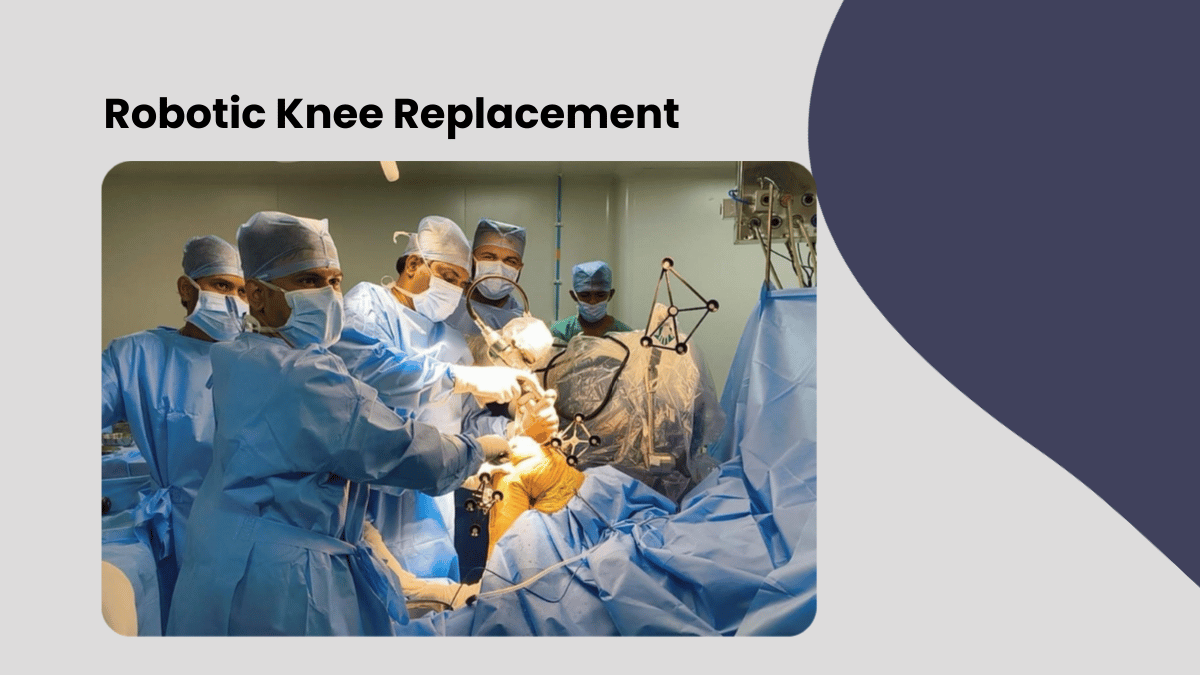
In my experience, robotic knee replacement is a highly precise, minimally invasive procedure that allows me to assist patients with severe knee arthritis or joint damage more effectively. Using a robotic system, I am able to carefully remove damaged tissue and position the knee implant with unmatched accuracy. The real-time 3D imaging provided by the system helps me plan the surgery in detail and execute it exactly as intended. I have seen firsthand how this precision leads to better alignment, improved implant fit, and smoother joint function, giving patients faster recovery, reduced pain, and enhanced mobility compared to traditional knee replacement surgery.
Benefits of Robotic Knee Replacement
1. Enhanced Precision: The robotic system allows the surgeon to create a customized plan for your knee based on your anatomy, ensuring precise bone cuts and implant placement.
2. Better Outcomes: Accurate alignment reduces wear on the implant, which can increase its lifespan and improve long-term joint function.
3. Minimized Pain and Trauma: Robotic assistance preserves healthy tissue and reduces trauma to surrounding muscles and ligaments, leading to less post-operative pain.
4. Faster Recovery: Patients often experience shorter hospital stays and quicker rehabilitation compared to traditional knee replacement surgery.
5. Improved Mobility: Precise implant placement and balanced knee mechanics contribute to better range of motion and overall mobility.
Who Can Benefit from Robotic Knee Replacement?
Patients suffering from osteoarthritis, rheumatoid arthritis, post-traumatic arthritis, or severe knee joint damage may benefit from robotic-assisted knee replacement. Ideal candidates are those who have not achieved relief with conservative treatments such as medications, physiotherapy, or injections. Your orthopedic surgeon can evaluate your condition and determine if robotic knee replacement is the best option.
The Procedure
Before surgery, a detailed CT scan of the knee is taken to create a 3D model for planning. During the procedure, the surgeon uses the robotic system to guide precise bone preparation and implant positioning. The surgery is performed under anesthesia, and the robotic system ensures controlled and accurate movements throughout. Patients typically begin physiotherapy soon after surgery to regain strength and mobility.
Recovery and Results
Recovery after robotic knee replacement is generally faster and smoother than traditional surgery. Most patients can walk with assistance within a day or two and gradually increase activity under guidance from a physiotherapist. Long-term outcomes include reduced pain, improved stability, and enhanced quality of life.
Conclusion
Robotic knee replacement combines advanced technology with expert surgical skill to offer patients a safer, more precise, and effective solution for knee joint pain. For individuals struggling with severe knee arthritis or degeneration, this procedure provides the opportunity to regain mobility, enjoy an active lifestyle, and reduce pain.
Keywords: Robotic knee replacement, robotic knee surgery, knee replacement surgery, minimally invasive knee replacement, arthritis knee treatment, MAKO robotic knee replacement, knee joint replacement, pain-free mobility, orthopedic surgery, joint replacement surgeon


Add a Comment