As a parent or caretaker, watching your child go through episodes like seizures, sudden behavioral changes, or sleep disturbances can be confusing and scary. One of the most helpful tools is an EEG (Electroencephalogram). But what exactly is it, and when is it necessary?
👉 Let’s break it down in simple yet informative terms.
What is an EEG?
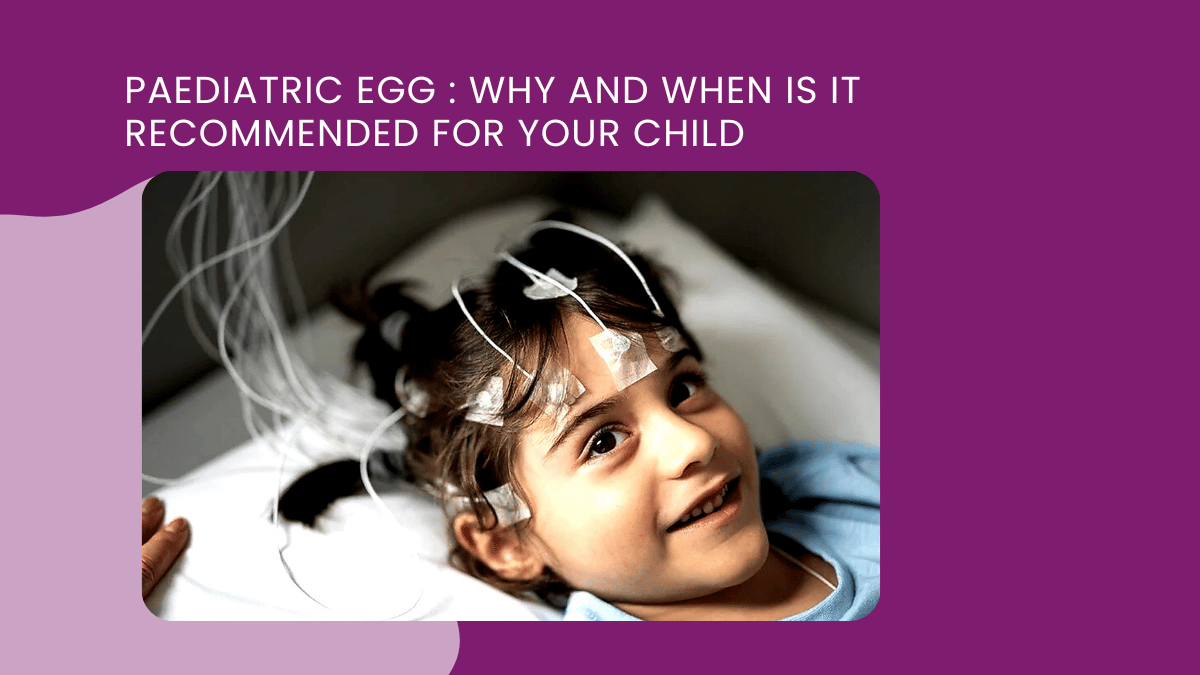
An EEG (Electroencephalogram) is a safe and painless test that records the electrical activity of the brain. Small metal discs called electrodes are placed on the scalp using a special paste. These electrodes pick up the brain’s electrical signals and send them to a computer, which then displays them as a graph.
👉 It is like an ECG (Electrocardiogram)that is done to check the heart rhythms.
Why Would My Child Need an EEG?
- Seizures or epilepsy – Whether it’s a first-time seizure or repeated unusual events (like blank stares or body jerks), an EEG helps support the diagnosis.
- To differentiate types of seizures/epilepsy – Focal vs generalized seizures often look different on EEG.
- Developmental regression – If a child loses milestones or shows changes in behavior, especially in conditions like autism.
- New sleep or behavioral issues – Especially if sudden, unexplained, or out of character.
👉 Important: An EEG alone does not diagnose epilepsy. It only adds a piece to the clinical puzzle. A normal EEG does not rule out seizures, and an abnormal EEG doesn’t always mean your child has epilepsy.
When is the Best Time to Do an EEG?
- Ideally, within 24–72 hours of an episode (like a seizure).
- A sleep EEG (when the child is drowsy or asleep) improves the chances of picking up abnormal patterns.
- Regular anti-seizure medications are usually continued, unless your doctor advises otherwise.
- Some drugs like Benzodiazepines, Ketamine, or Propofol can interfere with the test results and may need to be avoided before the EEG.
How Should I Prepare My Child?
The night before:
- Sleep deprivation is encouraged. Keep your child up 2–3 hours later than usual and wake them up 1-2 hours earlier.
- Avoid caffeine and sugar.
- Wash and dry your child’s hair thoroughly – no oil, sprays, or conditioners.
On the day:
- Give a light meal or snack an hour or two before the EEG to help your child stay calm or fall asleep during the test.
- Dress them in comfortable clothes.
- Bring comfort items – favorite toys, books, or a blanket can make a big difference, especially for young children.
- Explain that the test doesn’t hurt, especially for older children who might feel anxious.
What Happens During the EEG?
- Your child will lie down in a quiet, child-friendly room.
- The technician will attach electrodes to the scalp using a special paste.
- The EEG machine records the brain’s signals during:
- Awake state
- Sleep state
- Activation procedures like:
- Photic stimulation (flashing lights with eyes closed)
- Hyperventilation (breathing fast for a few minutes)
- The session can last between 30 to 90 minutes, depending on your child’s cooperation and clinical need.
👉 If your child struggles to sleep, mild sedatives like Melatonin or Triclofos may be used, under supervision.
How are the Results Interpreted?
Only a trained Pediatric Neurologist should interpret a child’s EEG. Here’s why:
- Normal patterns change with age – A newborn’s EEG looks very different from a 10-year-olds.
- Some benign patterns in children may look like seizure activity but aren’t.
- Certain epilepsy syndromes have very specific EEG patterns that help in diagnosis and management.
Things to Keep in Mind:
- EEG is not a definitive test for seizures or epilepsy.
- Around 5–6% of normal children may show some EEG changes that look abnormal.
- Nearly 57.8% of children with epilepsy may have a normal EEG, especially if done too long after the seizure or if the child is fully awake and alert.
After the EEG:
- Your child can return to normal activities immediately.
- Their hair may be sticky with paste—just wash it at home with mild shampoo.
👉 An EEG is a valuable tool in a pediatric neurologist’s diagnostic toolkit—and the best part? - Its SAFE and PAINLESS!
👉 If your child is having unusual spells, seizures, or developmental changes, talk to your doctor. EEGs can provide important clues and help guide next steps in treatment.

Add a Comment