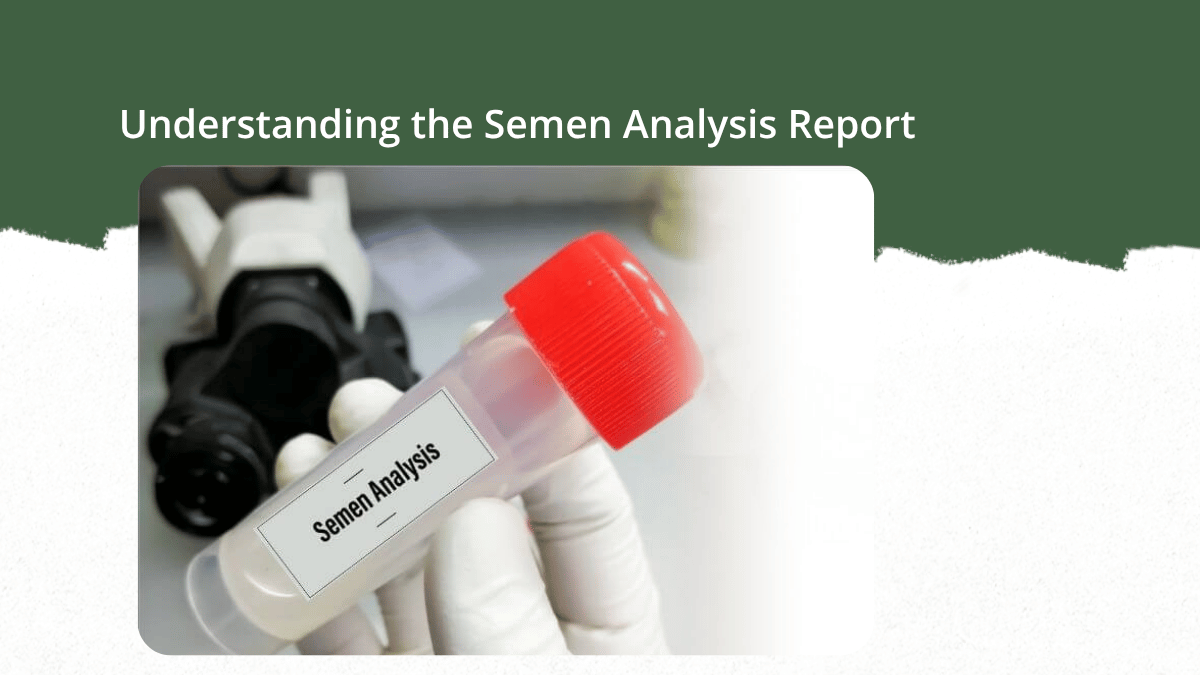
When a semen analysis report comes back with an abnormal result, the reaction in the consulting room is almost always the same: concern, confusion, and questions that need clear answers. What does a low count actually mean? Does this mean we cannot have children? Is this permanent? I have had this conversation thousands of times in 28 years of fertility practice at Birthright Fertility by Rainbow Hospitals, Banjara Hills, Hyderabad, and my consistent observation is that couples understand and cope better when the report is explained precisely, rather than when vague reassurance is offered. A semen analysis report is not a verdict. It is information. And information is always the starting point for a plan. Understanding what each semen analysis parameter means is the most empowering thing a couple facing male factor infertility can do.
The Key Parameters in a Semen Analysis Report
The WHO 2021 reference values define the lower limits of normal for each parameter, below which male factor infertility is considered to be contributing to the couple's difficulty conceiving. The parameters reported and what they mean are as follows. Sperm concentration: the number of sperm per millilitre of ejaculate, with a lower reference limit of 16 million per millilitre. A result below this is called oligospermia. A result of zero sperm is called azoospermia, which requires further investigation to determine whether the cause is obstructive (sperm are being produced but cannot exit) or non-obstructive (production is impaired). Total sperm number: the total count across the entire ejaculate volume, with a reference limit of 39 million. Total motility: the percentage of sperm that are moving in any direction, reference limit 42%. Progressive motility: the percentage moving forward purposefully, reference limit 30%. Morphology: the percentage of sperm with a normal shape by strict Kruger criteria, reference limit 4%. A result below 4% is called teratozoospermia. It is important to understand that these reference values represent the lower limit of normal, not optimal values , the further below the reference limit a result falls, the more likely it is to be clinically significant.
What an Abnormal Result Means for Treatment
Mild abnormalities in one or two parameters, particularly in isolation, do not necessarily mean that natural conception is impossible. Many couples with mild male factor abnormalities conceive without treatment. The clinical significance depends on the degree of the abnormality, which parameters are affected, and what the female partner's fertility evaluation shows. The combination of findings from both partners determines the treatment pathway.
Moderate male factor abnormalities, where sperm count and motility are reduced but not severely, may be suitable for intrauterine insemination (IUI), where processed sperm are introduced directly into the uterine cavity, bypassing the cervical barrier and reducing the distance sperm must travel. Severe male factor abnormalities, including very low sperm counts or severely impaired motility, typically indicate IVF with ICSI (intracytoplasmic sperm injection), where a single sperm is injected directly into the egg. ICSI has transformed the treatment of severe male factor infertility, making biological fatherhood possible for many men who previously had no fertility treatment options.
Why the Semen Analysis Should Always Be Repeated and Contextualised
A single abnormal semen analysis is never the basis for a diagnosis or a treatment decision in my practice. Sperm parameters fluctuate naturally and are affected by recent illness, fever, stress, heat exposure, and the interval since the last ejaculation. WHO guidelines recommend repeating the test four to six weeks after an abnormal result before drawing conclusions. Where abnormalities are confirmed, I assess whether hormonal, anatomical, or lifestyle factors are contributing and whether any are reversible before proceeding to assisted reproduction. At Birthright Fertility, Banjara Hills, Hyderabad, the male partner's evaluation is treated with the same thoroughness as the female partner's, because infertility is a shared diagnostic challenge and a shared treatment journey.
To book a fertility consultation with Dr. Sudharani Bairraju at Birthright Fertility by Rainbow Hospitals, Banjara Hills, Hyderabad, call 07337390606 or 080 69237022.
Written by Dr. Sudharani Bairraju, MBBS (Sri Venkateswara Medical College, Tirupathi, 1997), DNB Obstetrics and Gynaecology (St. Theresa's General Hospital, Hyderabad, 2007), Postgraduate Certification in Clinical Embryology (2015), Training in Advanced Infertility and Andrology (2014), Fellowship in Minimally Invasive Surgeries (2013), Fellowship in Advanced Gynaecological Endoscopy (2012), FOGSI-Dr. C.S. Dawn Prize for Best Paper Presentation AICOG 2011, Senior Consultant Obstetrician and Gynaecologist, Infertility (IVF) Specialist and Laparoscopic Surgeon, Birthright Fertility by Rainbow Hospitals, Banjara Hills, Hyderabad. 28+ years. 45,000 patients. Phone: 07337390606 / 080 69237022.
Related reading
Treatment Options in Infertility
Understanding Fertility Evaluation: What Happens When a Couple First Comes to See Me


Add a Comment