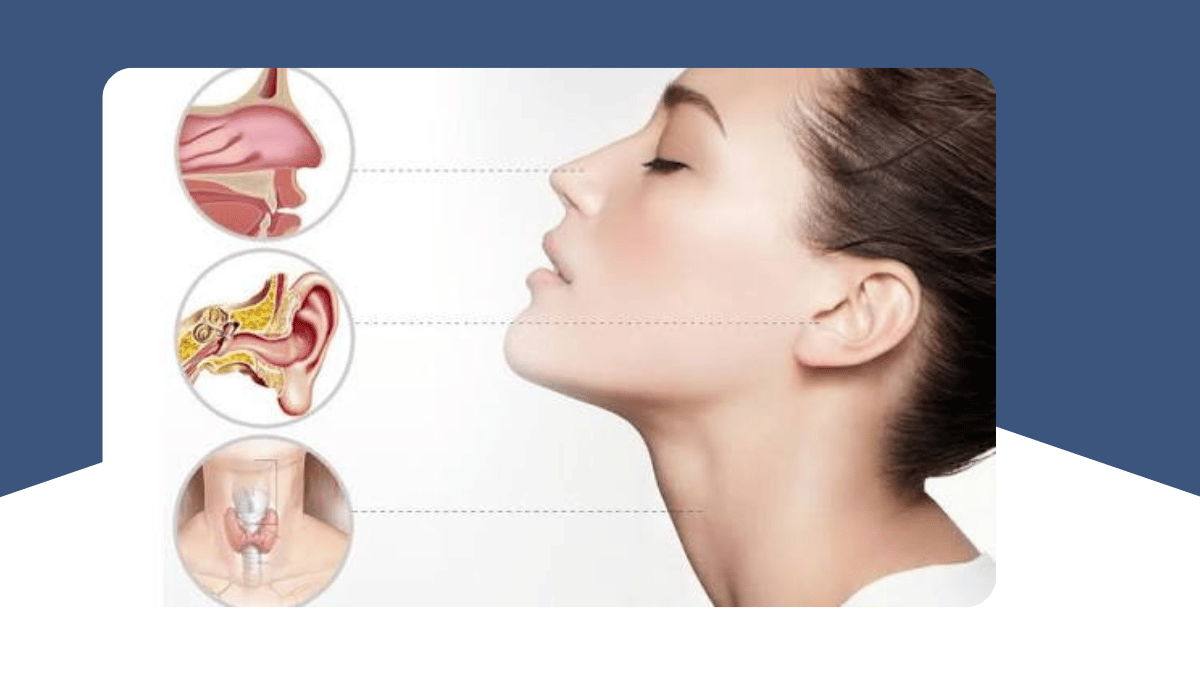
ENT diseases, conditions affecting the ears, nose, throat, and the upper airway structures connected to them, account for one of the largest proportions of outpatient medical consultations in India. In Ajmer and across Rajasthan, the specific environmental character of the region creates a pattern of ENT disease that has a distinct quality. The dry climate of the Aravalli region, with its extremes of summer heat and winter cold, the persistent dust exposure from the Rajasthan desert margin, the agricultural and occupational allergens of the rural and peri-urban environment, and the seasonal pollen patterns of Rajasthan's distinctive vegetation combine to produce an ENT disease burden where allergic and infective components are closely intertwined. A child with a third ear infection this winter may have an allergic rhinitis that has never been identified. An adult with a voice that has been hoarse for three months may have a postnasal drip driven by unrecognised allergic disease. A patient with a nose that has been blocked on and off for a year may have a pattern that combines structural and allergic components in proportions that require careful ENT assessment to disentangle. At ENT Care Clinic, Haribhau Upadhyay Nagar, Ajmer, my MS ENT training in otorhinolaryngology and my FAAI qualification, Fellow of the American Academy of Allergy, Asthma and Immunology, work together to provide an assessment that addresses both dimensions of the problem. In Ajmer, where ENT specialist care with integrated allergy expertise is not widely available, ENT Care Clinic provides a level of assessment that most patients in Rajasthan would otherwise need to travel to a larger city to access.
The Ear and Allergy Connection: Why Treating the Nose Changes the Ear
The Eustachian tube, the passage connecting the middle ear to the back of the nose, is the anatomical link through which nasal allergy produces ear disease. When allergic rhinitis inflames the nasal and nasopharyngeal mucosa, that inflammation extends to the tissue surrounding the Eustachian tube opening. The tube's already-narrow lumen becomes narrower. Its opening mechanism, which depends on muscle contraction during swallowing and yawning, is impaired by the surrounding mucosal oedema. Negative pressure develops in the middle ear as the air inside is absorbed and cannot be replenished. The tympanic membrane is drawn inward. Fluid accumulates in the middle ear cavity. Bacteria that would normally drain through the functional Eustachian tube are retained in the stagnant middle ear fluid. An acute otitis media develops. Antibiotics treat the infection, but the Eustachian tube inflammation from the allergic rhinitis remains unchanged after the course is complete. Within weeks, the cycle repeats. This is the mechanism behind recurrent otitis media in children with allergic rhinitis, and it is the mechanism behind the winter ear infection pattern that I see in my Ajmer practice in children sensitised to house dust mite, cockroach, or to the specific pollens and dust allergens of the Rajasthan environment. Identifying the allergy and treating it with appropriate nasal anti-inflammatory management, targeted allergen avoidance, and where indicated allergen immunotherapy, reduces Eustachian tube inflammation and breaks the infection cycle. This is a more durable solution than grommets for a child whose infections are driven by untreated allergic rhinitis.
Hearing, Voice, and Nasal Conditions: The Full Scope of ENT Care in Ajmer
The full scope of ENT care at ENT Care Clinic, Ajmer, extends beyond the ear-allergy connection to the complete spectrum of otolaryngological conditions seen in this population. Hearing loss in adults and children is assessed through clinical examination and audiometry, distinguishing conductive loss (from ear canal obstruction, middle ear fluid, or tympanic membrane perforation) from sensorineural loss and identifying the appropriate management. Tympanoplasty, the surgical repair of a perforated eardrum, is performed under microscopic visualisation for patients with chronic perforation producing recurrent infection or hearing impairment. Throat conditions including recurrent tonsillitis, chronic pharyngitis, and the persistent throat symptoms often driven by postnasal drip from allergic rhinitis are evaluated with attention to both the local throat finding and the nasal and allergic context that may be sustaining the throat symptom. Voice concerns including hoarseness and voice fatigue are assessed, with recognition that postnasal drip from allergic rhinitis is one of the most common causes of persistent throat irritation and chronic throat-clearing that patients in Ajmer describe without ever having had the nasal allergy identified. Tonsillectomy, adenoidectomy, and thyroid surgery are all within the surgical scope at ENT Care Clinic. The defining feature of the practice is not the breadth of ENT procedures available but the clinical approach: every ENT presentation is evaluated for its allergic component before a management plan is finalised, because in the Ajmer environment, that component is frequently present and frequently the factor that changes what treatment is needed.
To book a consultation with Dr. Sushma Charan Singh at ENT Care Clinic, A-193, Haribhau Upadhyay Nagar, Ajmer, Rajasthan 305004 (Monday to Saturday, 4:00 PM to 6:00 PM), call +91 6376482141.
Written by Dr. Sushma Charan Singh, MBBS, MS ENT/Otorhinolaryngology, FAAI (Fellow of the American Academy of Allergy, Asthma and Immunology), Advanced Course on Diagnosis of Allergy and Immunotherapy, ENT Specialist and Otorhinolaryngologist, ENT Care Clinic, A-193, Haribhau Upadhyay Nagar, Ajmer, Rajasthan 305004. Monday to Saturday, 4:00 PM to 6:00 PM. Phone: +91 6376482141.
Related reading
Meet Dr. Sushma Charan Singh: ENT Expertise and Allergy Precision, Together in One Clinic


Add a Comment