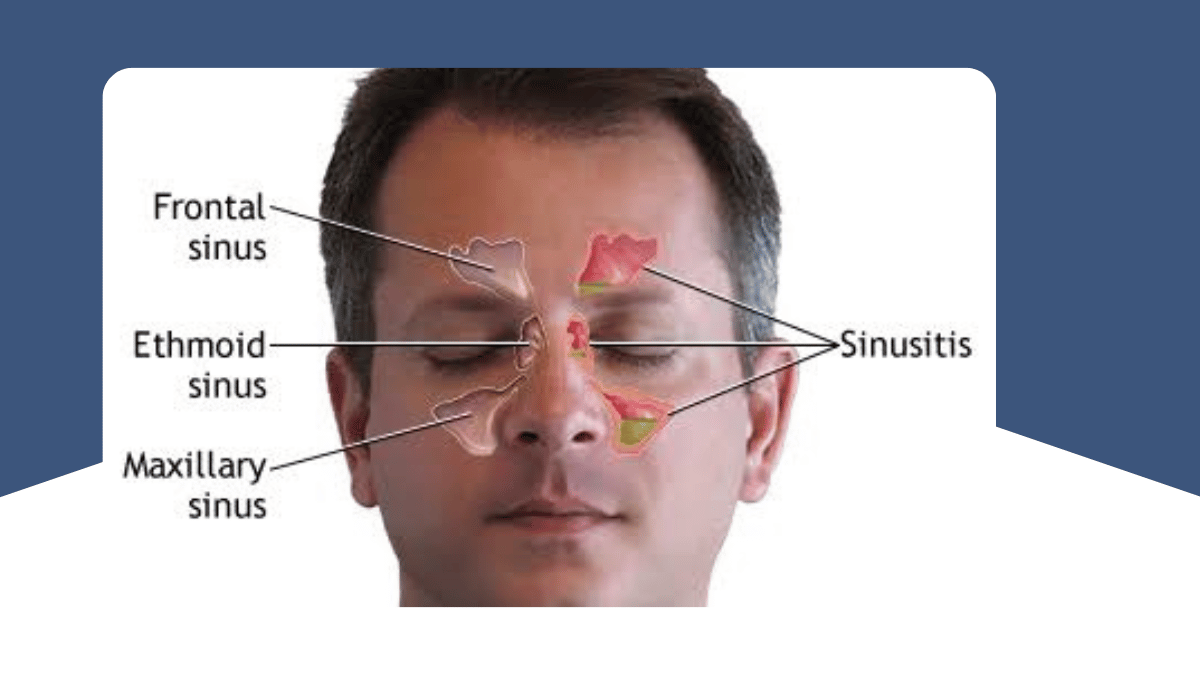
Chronic sinusitis, the persistent inflammation of the paranasal sinuses lasting more than twelve weeks and producing facial pressure or pain, nasal congestion, postnasal drip, reduced sense of smell, and recurrent infections, is one of the most prevalent and most inadequately managed ENT conditions in Ajmer and across Rajasthan. The inadequacy is not usually in the quality of the individual antibiotic course, which is often perfectly appropriate for the acute bacterial component. The inadequacy is in the failure to investigate and address why the sinusitis keeps coming back. In a population exposed to Ajmer's dust, to cockroach allergen in the homes and workplaces of the city, to the pollen of Rajasthan's arid and semi-arid vegetation including specific grasses, trees, and the weeds of agricultural and roadside environments, the answer to why chronic sinusitis recurs is very frequently allergy. As the ENT specialist at ENT Care Clinic, Haribhau Upadhyay Nagar, Ajmer, with MS ENT training and FAAI qualification from the American Academy of Allergy, Asthma and Immunology, my approach to every patient with chronic or recurrent sinusitis in Ajmer begins not with a surgical referral but with the question of whether allergy has been formally evaluated and managed.
How the Ajmer Environment Drives Chronic Sinusitis: The Allergy Mechanism
The paranasal sinuses drain through narrow ostia, small openings in the lateral nasal wall that lead from each sinus cavity into the nasal airway. These openings are surrounded by nasal mucosa that is directly affected by whatever inflammatory process is operating in the nose. When allergic rhinitis produces chronic mucosal swelling throughout the nasal cavity and nasopharynx, this swelling encroaches on the ostial openings. Sinus drainage is impaired. Secretions accumulate in the obstructed sinus cavities. The warm, moist, stagnant environment that results is ideal for bacterial proliferation. A sinusitis develops. Antibiotics resolve the acute infection. But the allergic mucosal inflammation that blocked the ostia in the first place continues, unchanged by the antibiotic course. Within weeks, drainage is impaired again. Secretions accumulate again. The next infection follows. This cycle repeats indefinitely until the allergic mechanism is identified and treated. In Ajmer, where house dust mite thrives in the indoor environments of a city with a significant human population density, where cockroach allergen is prevalent, and where the specific seasonal pollen profile of Rajasthan produces a different pattern from the southern Indian pollen load, skin prick testing with a panel relevant to this region identifies the allergen target, and targeted management addresses the mechanism rather than its latest episode. Nasal polyps, soft growths of chronically inflamed sinus mucosa, represent the more severe end of this spectrum and are a marker that the eosinophilic and allergic inflammation has been operating for long enough to produce structural mucosal change.
When FESS Is Needed, What It Involves, and What Determines Its Long-Term Success
Functional Endoscopic Sinus Surgery is the appropriate intervention when an adequate trial of medical management including nasal corticosteroid spray, saline nasal irrigation, antihistamine treatment where allergy is present, and where indicated a course of systemic steroids, has not produced satisfactory symptom relief. The assessment before recommending FESS includes a CT scan of the paranasal sinuses, which provides the detailed anatomical information about the extent and distribution of sinus disease and the specific openings requiring surgical attention. FESS is performed under endoscopic visualisation through the nostrils, without any external incision, using the endoscope and specialised instruments to open the blocked sinus passages, remove polyps under direct vision, and restore the natural drainage pathways. Most patients are discharged the same day or the following day. What I always establish before recommending FESS at ENT Care Clinic is that the allergic component of the patient's sinus disease has been identified and is being managed, and the reason for this is clear from the clinical evidence: a patient who undergoes FESS with well-controlled underlying allergy has substantially better long-term outcomes than a patient who has FESS alone. The surgery opens the drainage pathways but does not alter the inflammatory environment that produced polyps and obstruction in the first place. If allergic inflammation continues unchecked after FESS, new polyp formation and re-obstruction follow. If it is controlled through allergen avoidance, appropriate pharmacotherapy, and where indicated allergen immunotherapy, the surgical result is maintained for much longer. The principle I follow at ENT Care Clinic, Ajmer, is medicine before surgery and allergy before FESS, because for a significant proportion of patients, adequate medical and allergy management removes the need for surgery altogether, and for those who do need surgery, it produces results that last.
To book a consultation with Dr. Sushma Charan Singh at ENT Care Clinic, A-193, Haribhau Upadhyay Nagar, Ajmer, Rajasthan 305004 (Monday to Saturday, 4:00 PM to 6:00 PM), call +91 6376482141 or visit linqmd.com/doctor/sushma-charan-singh
Written by Dr. Sushma Charan Singh, MBBS, MS ENT/Otorhinolaryngology, FAAI (Fellow of the American Academy of Allergy, Asthma and Immunology), Advanced Course on Diagnosis of Allergy and Immunotherapy, ENT Specialist and Otorhinolaryngologist, ENT Care Clinic, A-193, Haribhau Upadhyay Nagar, Ajmer, Rajasthan 305004. Monday to Saturday, 4:00 PM to 6:00 PM. Phone: +91 6376482141.
Related reading
Meet Dr. Sushma Charan Singh: ENT Expertise and Allergy Precision, Together in One Clinic


Add a Comment