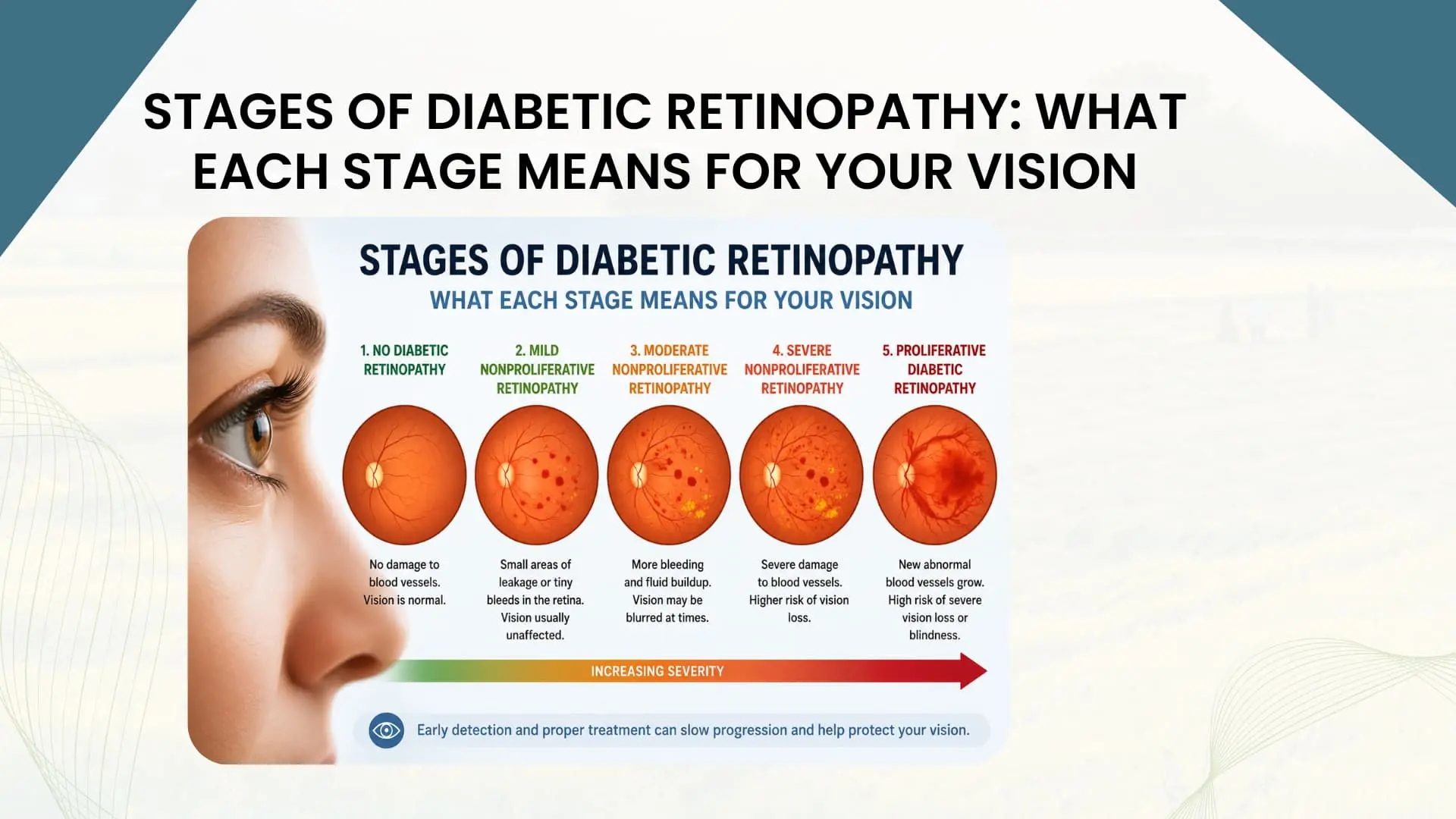
Diabetes can affect many organs in the body, but one of its most serious complications is damage to the eyes. Diabetic retinopathy is a condition caused by high blood sugar levels damaging the tiny blood vessels in the retina, the light-sensitive layer at the back of the eye. If left untreated, it can gradually lead to blurred vision and even permanent blindness. Understanding the stages of diabetic retinopathy can help patients seek timely treatment and protect their eyesight.
What Is Diabetic Retinopathy?
Diabetic retinopathy develops slowly over time. In the early stages, patients may not notice any symptoms at all. However, as the disease progresses, vision changes become more noticeable. Regular eye examinations are extremely important for people with diabetes, even if their vision seems normal.
Common symptoms include:
- Blurred or fluctuating vision
- Dark spots in vision diabetes patients may notice while reading or driving
- Difficulty seeing at night
- Distorted vision
- Sudden vision loss in advanced cases
Stage 1: Mild Non-Proliferative Diabetic Retinopathy (NPDR)
This is the earliest stage of diabetic retinopathy. Tiny bulges called microaneurysms develop in the retinal blood vessels and may leak small amounts of fluid.
At this stage:
- Vision may still remain normal
- Patients often do not experience symptoms
- Good blood sugar control can slow progression
👉 Early diagnosis during routine retinal screening is the best way to prevent further damage.
Stage 2: Moderate Non-Proliferative Diabetic Retinopathy
In moderate NPDR, the retinal blood vessels become more damaged and may start blocking blood flow to parts of the retina.
Moderate non-proliferative diabetic retinopathy treatment mainly focuses on:
- Strict blood sugar management
- Controlling blood pressure and cholesterol
- Regular retinal monitoring
- Lifestyle changes including diet and exercise
👉 Some patients may begin noticing mild blurred vision or dark floating spots during this stage.
Stage 3: Severe Non-Proliferative Diabetic Retinopathy
This stage occurs when many retinal blood vessels become blocked, reducing oxygen supply to the retina. The eye responds by sending signals to grow new abnormal blood vessels.
Patients often ask, “Can stage 3 diabetic retinopathy be reversed?” While severe retinal damage may not be completely reversible, early treatment can prevent further progression and preserve remaining vision. Laser therapy, retinal injections, and careful diabetes control can significantly reduce complications.
At this stage, warning signs may include:
- Increasing blurred vision
- Dark patches in vision
- Difficulty reading or recognizing faces
- Frequent changes in eyeglass prescription
Stage 4: Proliferative Diabetic Retinopathy (PDR):
Understanding the difference between NPDR and PDR is important. In NPDR, blood vessel damage occurs without abnormal vessel growth. In PDR, fragile abnormal blood vessels start growing on the retina due to poor oxygen supply.
These vessels can:
- Bleed into the eye
- Cause sudden floaters or black spots
- Lead to retinal detachment
- Cause severe or permanent vision loss
👉 PDR is the most advanced and dangerous stage of diabetic retinopathy and requires urgent treatment.
Signs of Vision Loss You Should Never Ignore
Some diabetic retinopathy vision loss signs that need immediate medical attention include:
- Sudden blurred vision
- Floating dark spots
- Flashing lights
- Loss of side vision
- Sudden partial or complete vision loss
👉 Ignoring these symptoms can result in irreversible blindness.
Protecting Your Vision From Diabetes
The best way to prevent diabetic retinopathy is through:
- Good diabetes control
- Regular retinal screenings
- Maintaining healthy blood pressure
- Avoiding smoking
- Timely ophthalmology consultations
Conclusion
Diabetic retinopathy often progresses silently, but early detection can save vision. Understanding the stages of diabetic retinopathy helps patients recognize the seriousness of the condition and seek treatment before permanent damage occurs. If you have diabetes and notice any changes in your vision, consult Dr. Usha Shree, Retinal Specialist & Ophthalmologist in Kasturi Nagar, for comprehensive retinal evaluation and advanced diabetic eye care.

Add a Comment