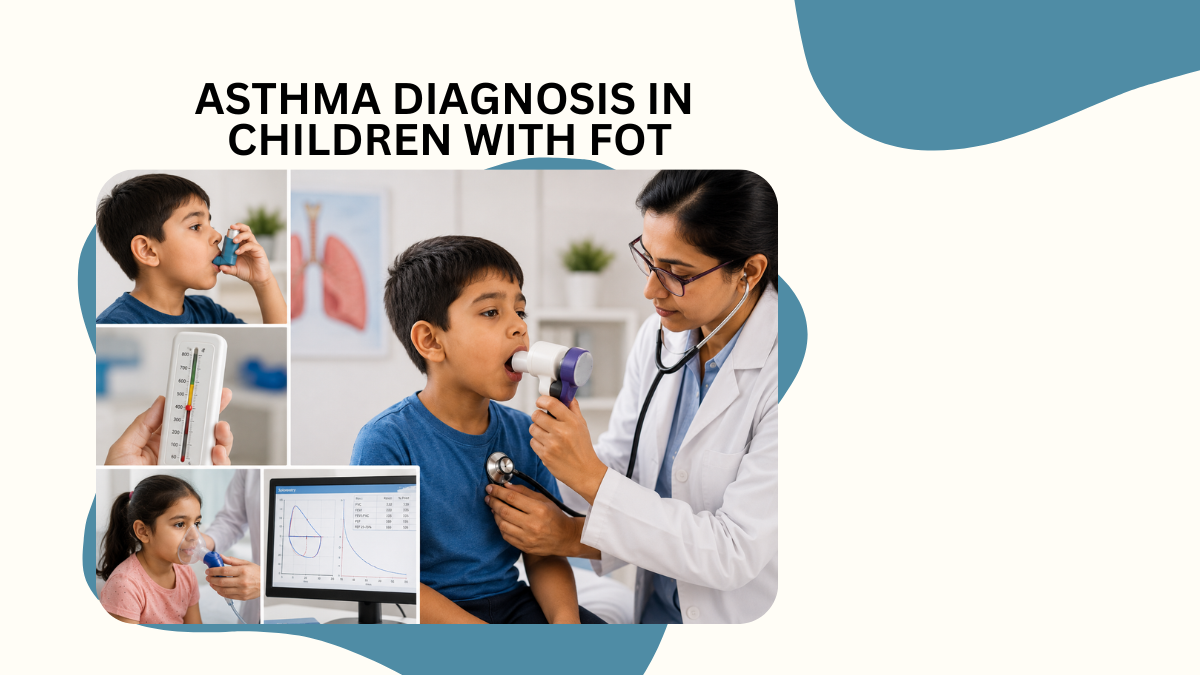
Understanding Asthma Diagnosis in Children
Diagnosing asthma in children can sometimes be challenging, especially in younger children who may struggle to perform traditional breathing tests correctly. Asthma symptoms such as wheezing, cough, shortness of breath, and chest tightness may vary from child to child, making accurate evaluation important. Modern diagnostic methods like the FOT are helping doctors identify breathing problems more comfortably and effectively in children.
As an ENT specialist and allergy expert, I frequently meet children who have recurrent cough, wheezing, or breathing difficulty but are unable to perform spirometry properly due to their age or anxiety during testing. In my experience, the Forced Oscillation Technique has become a very useful diagnostic tool because it is simple, non-invasive, and easier for younger children. Many parents are relieved when they learn that accurate lung function assessment can now be done without requiring forceful breathing efforts. Early diagnosis and proper respiratory evaluation help prevent repeated asthma flare-ups and improve long-term breathing health.
What Is the Forced Oscillation Technique?
The forced oscillation technique lung test is an advanced respiratory assessment used to measure how well the lungs and airways are functioning.
How the Test Works
During the test, the child breathes normally through a mouthpiece while gentle sound waves are passed into the airways. The machine then measures airway resistance and airflow patterns.
Why It Is Child-Friendly
Unlike spirometry, FOT does not require forceful blowing or complicated breathing instructions. This makes it especially suitable for younger children or those unable to cooperate with traditional tests.
Asthma Diagnosis
The FOT helps doctors identify airway narrowing, inflammation, and breathing abnormalities associated with asthma.
Detecting Early Airway Changes
FOT can identify subtle airway obstruction even before severe symptoms appear.
Monitoring Asthma Severity
The test helps assess how serious the airway inflammation is and whether treatment is effectively controlling symptoms.
Evaluating Treatment Response
Doctors may repeat the test after medications to see how well the lungs respond to asthma therapy.
Asthma Diagnosis Without Spirometry
For many children, asthma diagnosis without spirometry is now possible with the help of FOT testing.
Helpful for Younger Children
Children below the age of six often struggle with spirometry because it requires strong and coordinated breathing effort. FOT provides an easier alternative.
Comfortable and Non-Invasive
The test is painless, quick, and does not cause discomfort, making it less stressful for children and parents.
Useful in Recurrent Wheezing Cases
Children with repeated wheezing, night cough, or allergy-related breathing symptoms may benefit from FOT testing for early asthma detection.
Importance of Respiratory Function Tests
A proper respiratory function test helps doctors understand how the lungs are functioning and guides the right treatment plan.
Identifying Breathing Disorders
These tests help diagnose asthma, airway obstruction, and other chronic respiratory conditions.
Preventing Complications
Early diagnosis allows timely treatment, reducing the risk of repeated asthma attacks and hospital visits.
Improving Long-Term Lung Health
Regular monitoring helps ensure that the child’s lungs remain healthy as they grow.
Conclusion
The Forced Oscillation Technique is becoming an important tool in modern asthma diagnosis, especially for children who cannot perform spirometry easily. By offering a simpler and more child-friendly way to assess lung function, the forced oscillation helps doctors diagnose and monitor asthma more effectively. Early respiratory evaluation and proper treatment can greatly improve a child’s breathing, sleep, activity levels, and overall quality of life.



Add a Comment