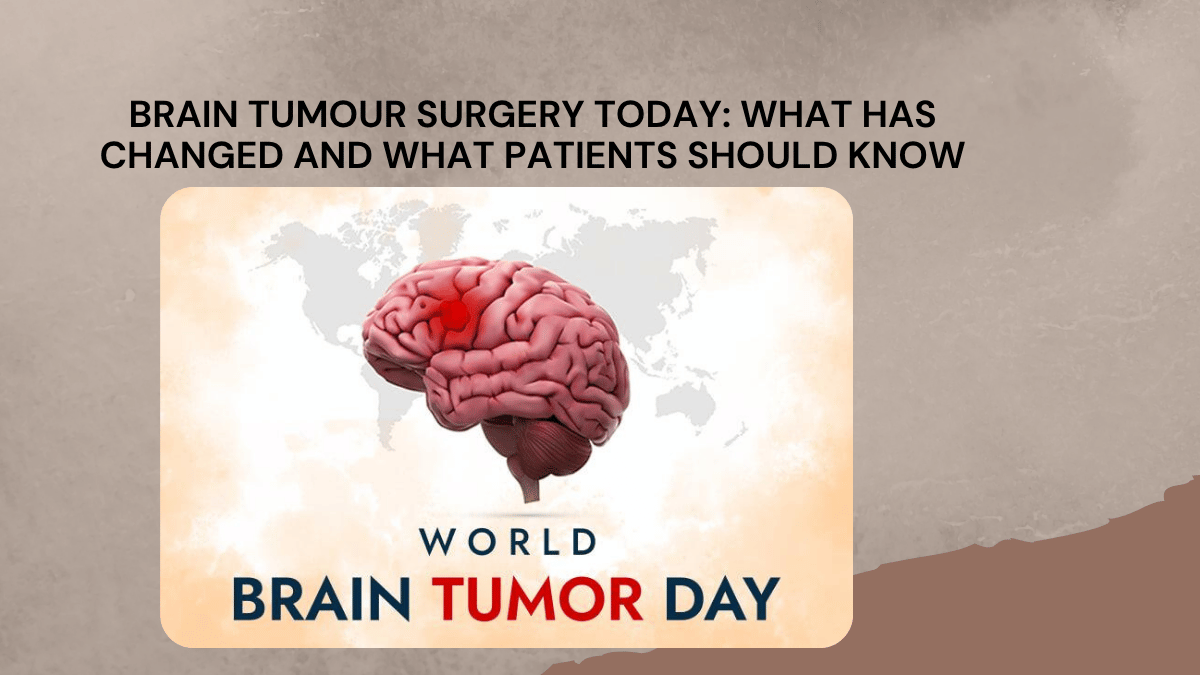
A brain tumour diagnosis raises immediate and understandable fear about surgery. What I want patients and families to know on World Brain Tumour Day is this: brain tumour surgery today is significantly safer and more precise than it was two decades ago. The goal is no longer simply to remove a tumour. It is to remove it as safely as possible while preserving the patient’s ability to speak, move, think, and return to daily life.
How has brain tumour surgery evolved over the past two decades?
Over the past two decades, neurosurgery has undergone a significant transformation. What was once performed with limited intraoperative information has evolved into a highly sophisticated discipline driven by advanced imaging, real-time navigation, functional mapping, and personalised treatment planning.
Modern brain tumour surgery is no longer a single approach applied to every patient. It is a tailored process that begins long before the patient enters the operating theatre, and continues through recovery and rehabilitation.
What happens before the operation begins?
Before surgery, detailed MRI-based planning allows us to understand the tumour’s relationship with critical areas of the brain. Technologies such as functional MRI and tractography help identify regions responsible for speech, movement, and other essential functions.
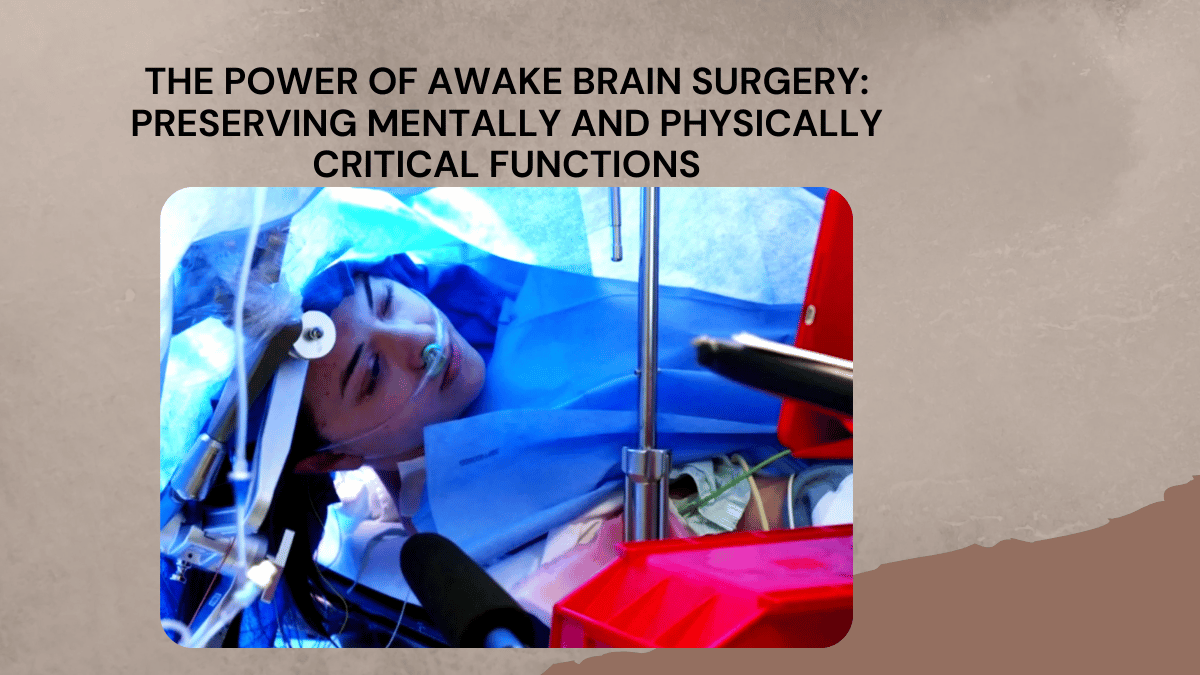
In selected cases, patients may undergo awake brain surgery, which allows us to monitor speech and cognitive function in real time while removing tumours located near eloquent brain areas. This is a procedure I perform at SPARSH Hospital, Hennur Road, Bengaluru, and it represents one of the most important advances in protecting neurological function during tumour surgery.
What technologies are used during surgery?
During the procedure, neuronavigation systems provide guidance with millimetric precision, functioning much like a GPS for the brain. Continuous neurophysiological monitoring alerts the surgical team to any potential changes in nerve function before they become permanent.
Fluorescence-guided surgery allows certain tumours to be distinguished from healthy brain tissue under specific lighting, helping ensure more complete removal. Intraoperative ultrasound and, in selected centres, intraoperative MRI provide real-time imaging that reduces uncertainty during the most critical stages of the operation.
What does success mean in brain tumour surgery?
The true measure of success is not simply how much tumour is removed. Success is measured by how well a patient recovers, how quickly they return to their daily activities, and how effectively their neurological function is preserved.
This philosophy of maximal safe resection has become central to modern brain tumour treatment. The goal is not aggressive surgery at any cost, but surgery that balances oncological benefit with quality of life. Surgery also provides tumour tissue for molecular and genetic analysis, which increasingly guides personalised treatment planning in the post-operative phase.
What should patients and families understand about risk?
No brain surgery is without risk. Every tumour is different and every patient presents a different set of challenges. Honest, unhurried conversations about potential risks are an essential part of the care I provide before any patient agrees to proceed.
What I would also say is that the perception of brain surgery risks as inherently severe often does not reflect the reality of contemporary practice. Advances in surgical technique, anaesthesia, and post-operative care have consistently improved outcomes, allowing many patients to leave hospital within days and return to meaningful activities within weeks. The risks are real and must be discussed. They should not, however, become the only lens through which a patient views their situation.
What does this mean for patients diagnosed today?
On World Brain Tumour Day, it is worth acknowledging how far the field has come. A brain tumour diagnosis remains a significant event in a person’s life. But patients today benefit from levels of surgical precision and safety that were not available a generation ago.
Many patients return to their families and daily lives after treatment. These outcomes are not guaranteed, and I do not present them as such. What they reflect is the consistent progress that has been made in how brain tumours are treated, and what a dedicated surgical team, the right technology, and an informed patient can achieve together.
If you or someone you care for has been diagnosed with a brain tumour, the most important step is an early neurosurgeon consultation - a conversation where your specific imaging is reviewed, your options are explained, and you can make an informed decision. You deserve that conversation without rush.
Written by Dr Avinash Lakha, MBBS, MS General Surgery, MCh Neurosurgery (AIIMS Bhubaneswar), Consultant Neurosurgeon, SPARSH Hospital, Hennur Road, Bengaluru.
Related reading:
The Power of Awake Brain Surgery
Overcoming Fear of Brain and Spine Surgery
Head Injuries: Understanding the Silent Dangers
To book a consultation with Dr Avinash Lakha at SPARSH Hospital, Hennur Road, Bengaluru, call +91 9902925815 or visit linqmd.com/doctor/avinash-lakha.

Add a Comment