












- Use colorful toothbrushes
- Sing a brushing song
- Brush together as a family
- Use reward charts
Pediatrician, Neonatologist, Allergist and Immunologist
MD (Pediatrics), Neonatologist & Pediatrician
8+ years of experience
8,000+ patients
Dr. Kabir Nanda is a highly skilled Pediatrician and Neonatologist in New Delhi with over 8 years of clinical experience in managing neonatal and pediatric conditions. With an MD in Pediatrics and Fellowship in Neonatology (NNF-accredited), he specializes in advanced NICU care, newborn critical care, pediatric respiratory disorders, and high-risk neonatal management. Dr. Nanda has extensive expertise in invasive and non-invasive ventilation, HFOV, neonatal resuscitation, exchange transfusion, and comprehensive pediatric OPD management. He also holds a Diploma in Pulmonology, Allergy & Immunology, strengthening his proficiency in treating childhood asthma, allergies, recurrent infections, and respiratory illnesses. Having successfully treated thousands of newborns and children, he is committed to evidence-based medicine, vaccination advocacy, growth and developmental monitoring, and parental counselling. Currently associated with leading hospitals in Delhi, Dr. Kabir Nanda is dedicated to delivering compassionate, ethical, and outcome-focused pediatric and neonatal care.
Dr. Kabir Nanda specializes in Neonatology and Pediatrics, with advanced expertise in NICU care, high-risk newborn management, and pediatric critical care in New Delhi. His core specialties include management of premature babies, low birth weight infants, neonatal infections, respiratory distress syndrome, neonatal jaundice, and birth asphyxia. Trained in NNF-accredited neonatal care, he is highly skilled in neonatal resuscitation, invasive and non-invasive ventilation, HFOV, umbilical catheterisation, exchange transfusion, and total parenteral nutrition (TPN). In addition, his background in Pulmonology, Allergy, and Immunology enables comprehensive treatment of childhood asthma, allergic disorders, recurrent wheezing, and pediatric respiratory infections. Dr. Nanda also provides complete pediatric OPD services, vaccination guidance, growth and developmental assessment, and preventive child healthcare. His approach combines evidence-based medicine, early diagnosis, and parental counselling to ensure optimal long-term health outcomes for newborns and children.
126A, opposite Rajasthan Vidyut niwas, B-7/Extension, Block B 7, Arjun Nagar, Safdarjung Enclave, New Delhi, Delhi 110029
Phone: +91 9289260077
Email: [email protected]
11/72, near Allahabad Bank, Block 11, Tilak Nagar, Delhi, 110018
Phone: 011 2599 1339
Why Is My Child Always Sick? Understanding Weak Immunity in Kids
Vaccination & Preventive Healthcare: Building a Strong Foundation for Lifelong Child Health
Pediatric Respiratory Infections & Chronic Cough: When to Worry and When to Act
Childhood Asthma, Allergies & Recurrent Wheezing: Early Diagnosis and Long-Term Control
Yes. Cavities, tooth decay, and gingivitis can occur at any age — even in toddlers. Early brushing helps prevent:
Brushing at night is most important.
Cleaning gums:
Once the first tooth appears, begin brushing gently.
From 12–24 months, use:
Brush twice daily.
Yes. Plaque can build up as early as 3 months of age.
You can gently clean gums using:
Clean after feeding and before bedtime.
Some babies are late teethers. If there are no teeth by 12–15 months, consult a pediatrician or pediatric dentist for evaluation.
If your baby develops a high fever or severe diarrhea, consult a doctor as these are not typical teething symptoms.
Typically:
Lower Teeth
Upper Teeth
Teething order may vary slightly from child to child.
Most babies get their first tooth between 6–10 months, usually a lower front tooth (lower central incisor). However, some babies may get teeth earlier or later — this can be completely normal.
From around 9 months, when your baby can pick up food:
Eating with the family encourages healthy habits.
Yes. Once solids begin, offer small amounts of plain water. Avoid sugary drinks. Fruit juices should be limited.
No salt – Babies’ kidneys cannot handle added salt.
No sugar – It promotes tooth decay and unhealthy taste preferences.
After 12 months, cow’s milk can be introduced as a drink.
Before that, breast milk or formula should remain the primary milk source.
Avoid egg white and cow’s milk until 1 year of age.
Introduce one food at a time, waiting 4–5 days before adding a new one.
Your baby may be ready if:
Before four months:
No. Weaning simply means introducing solid foods alongside breast milk or formula. Breastfeeding can (and should) continue even after solids are introduced.
World Health Organization recommends starting solid foods around six months of age, but not before four months.
Frequent hiccups and sneezing are normal in newborns. It helps clear nasal passages and adjust to life outside the womb.
Usually within 2–3 days after hospital discharge, then regularly as advised for growth and vaccinations.
Follow safe sleep guidelines:
• Place baby on their back
• Use a firm mattress
• No pillows, blankets, or toys in crib
• Share a room, not a bed
Call immediately if your baby has:
• Fever (100.4°F / 38°C or higher)
• Difficulty breathing
• Persistent vomiting
• Poor feeding
• Yellowing of skin/eyes worsening
• Fewer wet diapers than expected
Trust your instincts—if something feels wrong, seek medical advice.
It usually falls off within 1–2 weeks. Contact your doctor if you notice redness, swelling, or discharge.
Yes. Most babies lose up to 7–10% of birth weight in the first few days.
They usually regain it by 2 weeks of age.
Stool changes over the first week:
• First few days: Black, sticky (meconium)
• Day 3–5: Greenish-brown
• Afterward:
• Breastfed babies: Yellow, seedy
• Formula-fed babies: Tan or light brown
Call your doctor if stools are white, red, or black after the first week.
Newborns sleep 14–17 hours per day, usually in short periods of 2–4 hours.
It is normal for newborns to wake frequently for feeding.
Signs your baby is feeding well:
• 6–8 wet diapers per day after day 5
• Regular bowel movements
• Steady weight gain
• Baby appears satisfied after feeds
If you’re unsure, consult your pediatrician for a weight check.
If a vaccine dose is missed, consult your pediatrician for a catch-up immunization plan. Vaccination schedules can be adjusted without restarting the entire series.
Yes, administering multiple vaccines during the same visit is safe and recommended to ensure timely protection without delaying the immunization schedule.
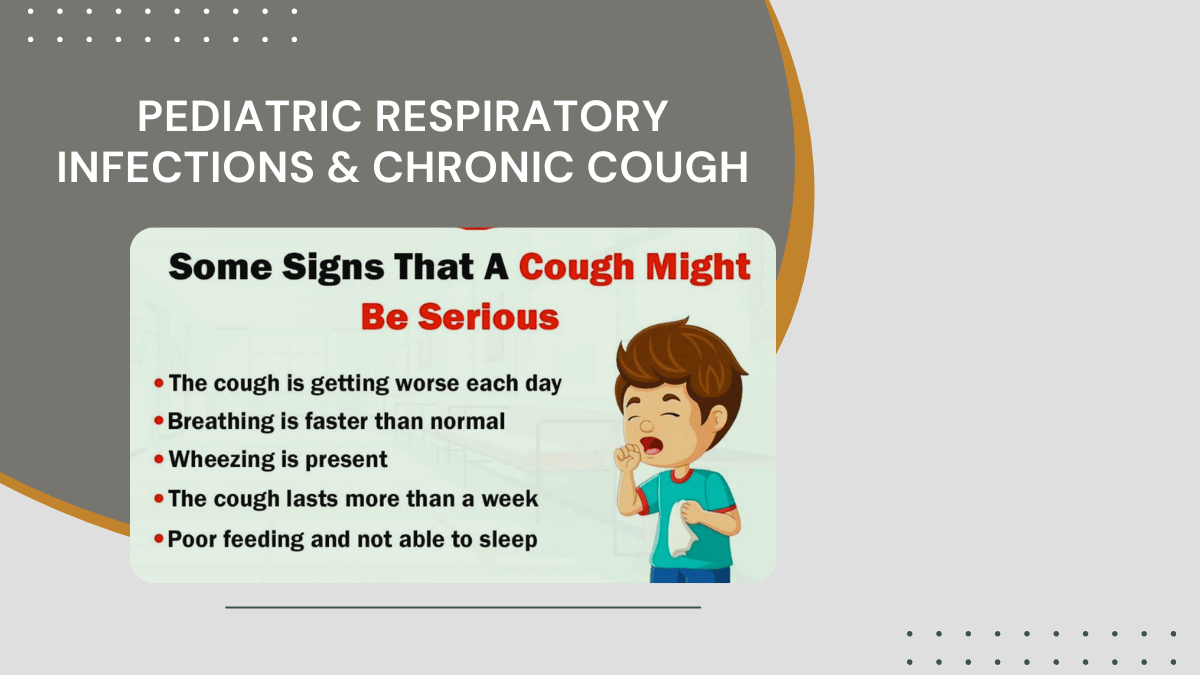
No, most respiratory infections in children are viral and resolve with supportive care. Antibiotics are only required for confirmed or strongly suspected bacterial infections.
A cough lasting more than four weeks, associated with weight loss, persistent fever, breathing difficulty, or recurrent wheezing requires medical evaluation to rule out asthma, infection, or other underlying conditions.
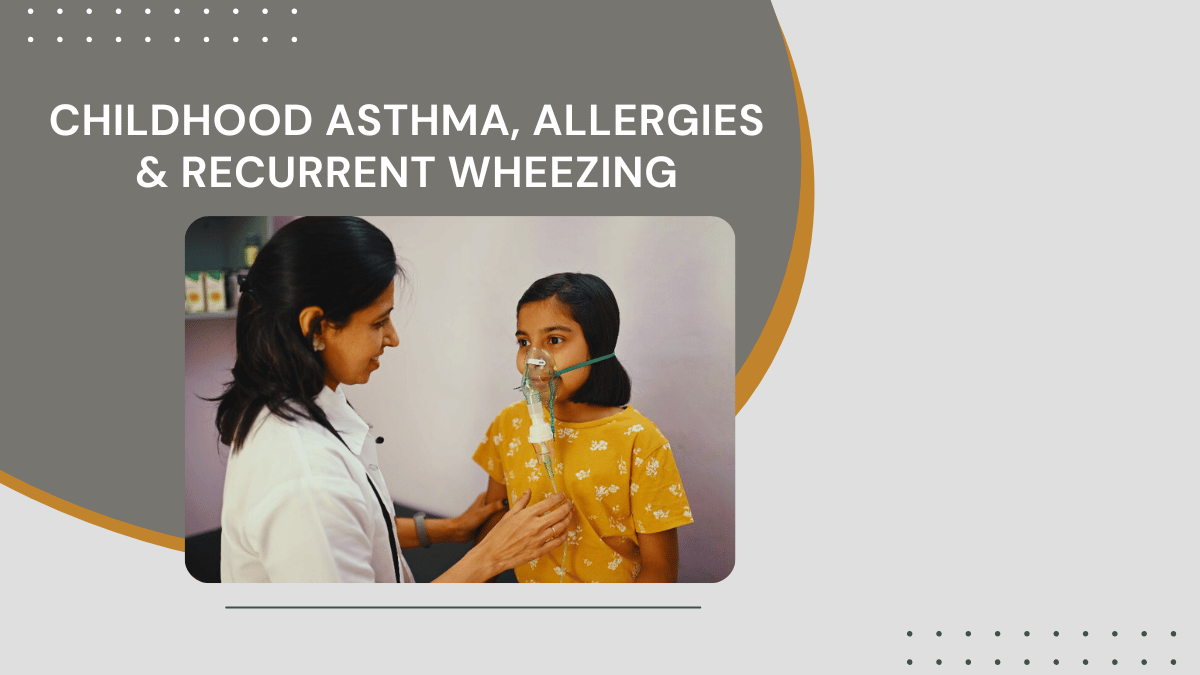
Yes, when prescribed correctly, inhaled medications are safe and effective for long-term asthma control. They reduce airway inflammation and prevent severe attacks when used under medical supervision.
Newborns typically feed every 2–3 hours (8–12 times per day).
• Breastfed babies may feed more frequently.
• Formula-fed babies may feed every 3–4 hours.
Frequent feeding is normal and supports healthy growth.