IVF is one of the most well-established fertility treatments available today, yet many couples arrive at my clinic with significant uncertainty about what it actually involves, who needs it, and what outcomes they can realistically expect. As a fertility specialist at Lakshya Fertility Centre, Bengaluru, I believe informed couples make better treatment decisions. IVF is not the first step in fertility treatment for everyone, but it is the right step for specific clinical situations.
What Does IVF Involve?
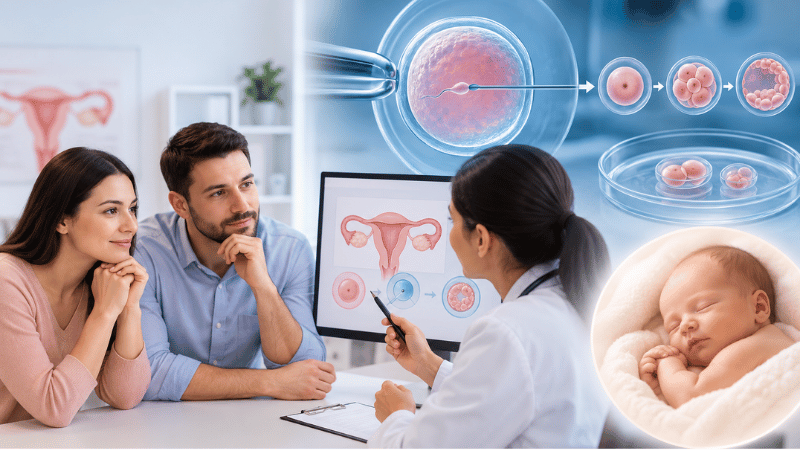
In vitro fertilisation means fertilisation occurs outside the body. The process involves several carefully coordinated steps.
Ovarian stimulation is the first phase. Hormonal medications are used to stimulate the ovaries to develop multiple follicles rather than the single egg a natural cycle typically produces. This is monitored closely through blood tests and ultrasound scans.
When follicles have reached the appropriate size, an egg retrieval procedure collects the eggs from the ovaries under sedation. These eggs are then fertilised in the laboratory using the partner's or donor sperm. The fertilised eggs develop into embryos over the next few days, and the embryo quality is assessed before transfer. A selected embryo is then transferred into the uterus, after which a pregnancy test confirms whether implantation has occurred.
When Is IVF Recommended?
IVF is not the automatic starting point for every couple with fertility concerns. Simpler treatments such as ovulation induction or IUI are often tried first in appropriate cases. IVF becomes the recommended pathway when:
• Both fallopian tubes are blocked or damaged
• Endometriosis has significantly affected the reproductive tract
• Ovarian reserve is significantly reduced, making simpler treatments unlikely to succeed
• Male factor infertility is moderate to severe, particularly affecting sperm count, motility, or morphology
• IUI has been attempted without success
• Maternal age or diminishing ovarian reserve makes time a critical factor
• Genetic testing of embryos is required before transfer
• Previous fertility treatment has failed and a more controlled approach is needed
How Do Age and Ovarian Reserve Affect IVF Success?
Age is one of the most significant factors influencing IVF outcomes. A woman's eggs naturally decline in quantity and quality with age, particularly after 35 years. Ovarian reserve testing, including AMH and antral follicle count, helps us understand the available egg pool and guides how stimulation protocols are designed.
Women with reduced ovarian reserve or older maternal age may still achieve success with IVF, but the treatment approach needs to be carefully individualised. My advanced training in oocyte and tissue cryopreservation in Denmark has shaped how I approach fertility preservation and IVF planning for this group of patients.
What Should You Expect During an IVF Cycle?
An IVF cycle typically spans three to four weeks from the start of stimulation to the pregnancy test. During this period, monitoring appointments are frequent, and the emotional and physical demands should not be underestimated.
Every IVF cycle is different. Success depends on egg quality, sperm health, embryo development, uterine receptivity, and the underlying fertility diagnosis , not on the treatment alone. Transparent counselling before starting any cycle helps couples understand realistic expectations based on their specific clinical profile.
IVF Is One Part of a Broader Fertility Plan
IVF offers many couples a meaningful path to parenthood that would not otherwise be possible. However, the decision to proceed with IVF should always follow thorough fertility assessment, honest discussion about expected outcomes, and consideration of all available treatment options.
At Lakshya Fertility Centre, Bengaluru, the approach to IVF is guided by detailed investigation, evidence-based stimulation protocols, and individualised care at every stage of the journey.
To book a fertility consultation with Dr. Lavanya Kiran, visit Jeevasare Healthcare, 9th Cross Road, Vijayanagar, Bengaluru, or KIMS Lakshya, Hosur Road, Electronic City, Bengaluru. Call +91 89513 05101 or WhatsApp: +91 8861191019.
Written by Dr. Lavanya Kiran, MS OBG, Fellowship in Infertility and Reproductive Medicine (India, Germany, Israel), Training in Oocyte and Tissue Cryopreservation (Denmark), Director and Lead Consultant, Obstetrics, Gynaecology, Reproductive Medicine, Regenerative Medicine, Cosmetic Gynaecology and Robotic Surgery, Jeevasare Healthcare, 9th Cross Road, Vijayanagar, Bengaluru; KIMS Lakshya, Hosur Road, Electronic City, Bengaluru. 20+ years. 25,000+ patients. Phone: +91 89513 05101.
Related reading
Female Infertility: Causes, Diagnosis, and Treatment Options Explained by Dr Lavanya
Hope Begins Here – Facing Infertility with Strength and Support
Myths & Misconceptions in Women’s Health – What Needs to Change.
Add a Comment