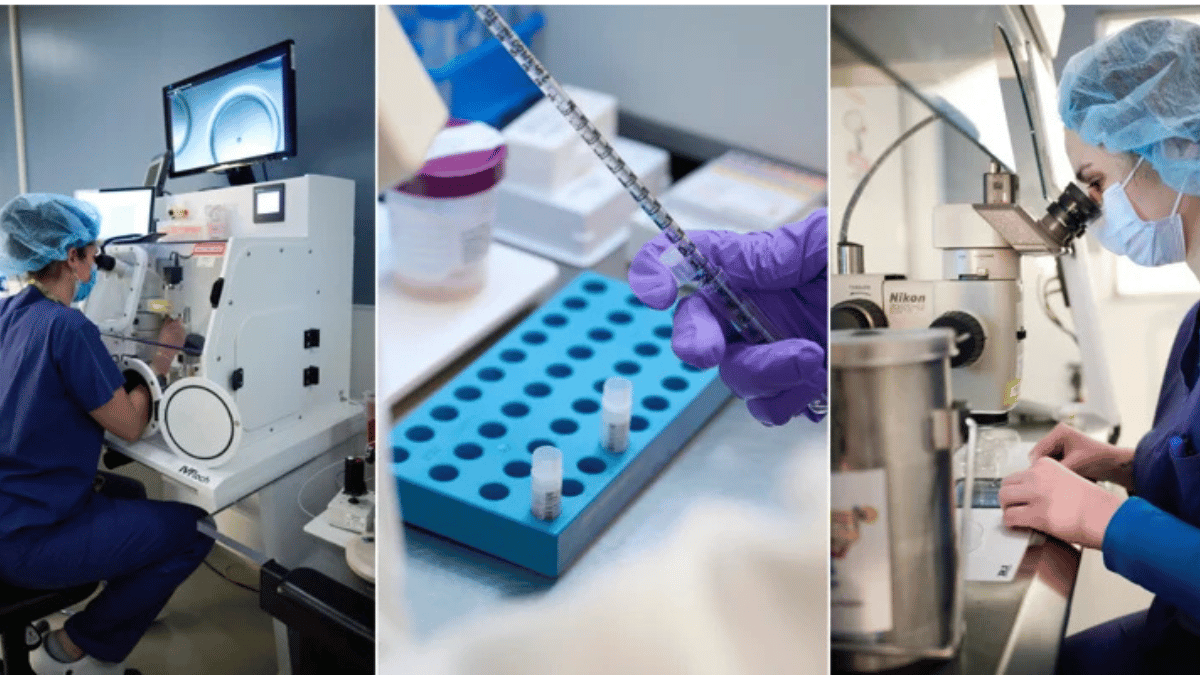
Every 25 July, I pause to think about one birth that changed everything. On this day in 1978, Louise Brown arrived in the world as the first baby ever conceived through in vitro fertilisation. At the time, the scientific community described it as extraordinary. Families who had been told they could never have children suddenly found that the impossible had a new definition. As the Founder and Clinical Director of Lakshya Fertility Centre and someone who has spent over two decades in reproductive medicine and fertility care, I mark World IVF Day not merely as a historical anniversary but as a reminder of how far the science of human reproduction has come — and how much further it continues to go.
What IVF has meant for women and families
The number eight million sounds abstract until you connect it to individual stories. Eight million people born through IVF and related assisted reproductive technologies — each one a family made possible by science, medical expertise, and an enormous amount of human hope. In my practice, I have sat with couples who have journeyed through years of investigations, failed cycles, and grief before a positive pregnancy test changed everything. I have also met young women who froze their eggs at thirty and returned years later to build their families on their own terms. I have cared for cancer patients who preserved their fertility before chemotherapy and went on to carry their own children. Each of these stories represents something that would not have been possible a generation ago. IVF did not just solve a medical problem. It expanded the definition of what parenthood could mean and who could access it.
How the science has evolved — and where it is heading
When I look at what fertility medicine offers today compared to what was possible in 1978, the change is remarkable. The original IVF protocol used natural cycles and transferred embryos with limited ability to select the healthiest. Today, we have preimplantation genetic testing that screens embryos for chromosomal abnormalities before transfer. We have time-lapse embryo monitoring that tracks development at every hour. We have personalised ovarian stimulation protocols guided by AMH, AFC, and pharmacogenomics. We have vitrification — fast-freeze technology that has transformed the outcomes of frozen embryo cycles to a point where they often match or exceed fresh transfers.
What excites me most, however, is what is happening at the frontier of regenerative reproductive medicine. Trained in stem cell and regenerative medicine through international programmes, I have seen the early evidence for approaches that may, in selected patients, help restore ovarian function that has declined prematurely. The uterus itself is no longer a static structure — we are beginning to understand how regenerative approaches can support implantation in endometria that were previously considered inadequate. These are not promises; they are directions of travel backed by serious science. World IVF Day 2026 is being observed against this backdrop of accelerating innovation.
Fertility preservation — the conversation we are having earlier
One of the most meaningful shifts I have witnessed in my career is the change in who comes to see me for fertility discussions. It is no longer only couples who have been trying to conceive. Increasingly, I see women in their late twenties and early thirties who want to understand their ovarian reserve, to discuss egg freezing, or to plan intelligently for a future that may not include immediate parenthood. Having trained in oocyte tissue cryopreservation in Denmark, I believe fertility preservation is one of the most important conversations we can have with women at the right age — before the biological window narrows rather than after. The same applies to women facing cancer treatment: preserving eggs or ovarian tissue before chemotherapy is not a delay in care; it is an act of forward-thinking medicine that many patients later describe as one of the most significant decisions they made.
What I carry into this day
On every World IVF Day, I think about the patients I have treated and the ones I have not yet met. I think about the women who are currently in the middle of an IVF cycle, managing injections and hormone fluctuations and the particular anxiety of a two-week wait. I think about the couples who have just received news that requires a change in direction. And I think about the young women who are not yet thinking about fertility but whose future choices will be shaped by what they know — or do not know — about their reproductive health.
What gives me energy in this work is the belief that medicine is not finished. As the President-Elect of KISAR for 2025 to 2027, as someone who has spoken at international platforms from Harvard to Taiwan, and as a practitioner who holds patents in medical devices developed specifically for reproductive care, I know we are at a genuinely exciting moment in the history of fertility medicine. The founding of Lakshya Fertility Centre was built on this conviction: that every patient deserves access to the most current science, delivered with the kind of care that recognises what this journey actually means to the people who are living it.
This World IVF Day, wherever you are in your fertility journey — whether you are just beginning, in the middle of treatment, or considering your options — I want you to know that the field of reproductive medicine is more capable than it has ever been. The story that began with Louise Brown is still being written. And for many of the patients I am privileged to care for, the most important chapter is still ahead.
To book a consultation with Dr Lavanya Kiran at Lakshya Fertility Centre at KIMS, Electronic City, Bengaluru (Mon-Fri 10 AM-1 PM and 5-7 PM, call +91 89513 05101) or Jeevasare Healthcare, Vijayanagar, Bengaluru (Thu 5-7 PM, call +91 87470 55999).
Written by Dr Lavanya Kiran, MBBS (M S Ramaiah Medical College), MS Obstetrics and Gynaecology (Kempegowda Institute of Medical Sciences), Fellowship in Reproductive Medicine (RGUHS), Diploma in Reproductive Medicine (Germany), Fellowship in Regenerative and Cosmetic Gynaecology (Israel, IASRM), Training in Oocyte Tissue Cryopreservation (Denmark), MBA (Hospital Management), PGDMLE (National Law School of India University), President-Elect KISAR 2025-2027, Vice President IASRM 2025-2027, Founder and Clinical Director, Lakshya Fertility Centre, Bengaluru.
Related reading
Female Infertility: Causes, Diagnosis, and Treatment Options Explained by Dr Lavanya
Hope Begins Here – Facing Infertility with Strength and Support
From Veena to Robotics: Dr. Lavanya’s Journey of Passion and Excellence
Add a Comment