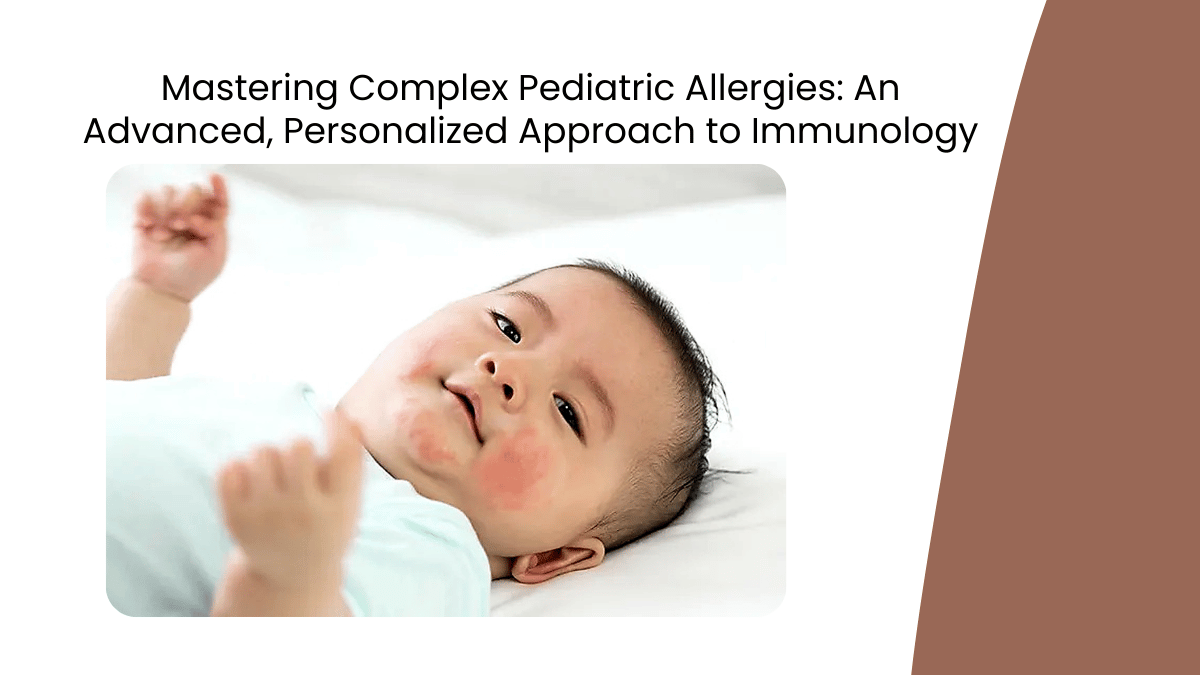
Over the years, I’ve come to realize that allergies in children are more than just sneezing or itchy eyes they’re complex conditions that can significantly impact a child’s quality of life. As a pediatrician and immunologist, I have had the privilege of guiding families through some of the most challenging allergy cases, offering hope and tailored treatments that transform lives. Every child's allergy story is unique, and mastering these complexities requires a blend of advanced understanding, careful diagnosis, and personalized care.
Unveiling the Hidden Layers of Pediatric Allergies:
One of the most profound lessons I’ve learned is that allergy symptoms can be misleading. For example, I vividly remember little Anaya, a 4-year-old girl who kept suffering from recurrent wheezing and skin rashes, resistant to routine allergy medications. It was only after comprehensive investigation skin prick testing, blood tests, and detailed history—that we uncovered her allergy to a rare food additive. Her case taught me that beneath seemingly common allergic reactions are often complex immunological triggers that demand a detailed, meticulous approach.
The Power of Advanced Diagnostics:
Mastering complex pediatric allergies begins with advanced diagnostics. In my practice, I integrate state-of-the-art allergy testing, component-resolved diagnostics, and immunological assays. These tools allow me to pinpoint precise allergens whether foods, environmental factors, or medications that impact each child uniquely. This precision helps me formulate personalized treatment plans, reducing unnecessary medication use and improving outcomes. For instance, in a recent case, a teenager with severe allergic asthma was sensitized to a specific mold strain, leading to targeted environmental modifications that dramatically reduced his attacks.
Personalized Treatment: More Than Just Medication:
Treating complex allergies isn’t about a one-size-fits-all approach. It involves allergy immunotherapy, dietary modifications, environmental control, and sometimes cutting-edge biologics. I’ve seen children like Aarav, a 6-year-old with multiple food allergies, thrive through a combination of oral immunotherapy and tailored dietary planning. This personalized approach not only minimizes allergic reactions but also restores confidence and normalcy to their everyday lives.
Empowering Families and Children:
A vital part of mastering allergy care is empowering families. Educating parents about allergy triggers, early warning signs, and emergency management equips them to handle crises confidently. I vividly recall a mother whose son had life-threatening peanut allergies her confidence in her knowledge and preparedness made an enormous difference when a moment of accidental exposure occurred. These stories remind me that our role extends beyond diagnosis; it's about building resilience and hope.
The Future of Pediatric Allergy Care:
Advances in immunology, biologic therapies, and personalized medicine are revolutionizing how we manage complex pediatric allergies. My promise to every family I serve is continual learning and adapting using the latest research to refine therapies and improve quality of life. Every child’s allergic journey is a story of hope, resilience, and expert care.
Mastering complex pediatric allergies demands a thoughtful, precise, and personalized approach balancing cutting-edge diagnostics with compassionate care. Every child deserves a tailored plan that respects their unique immunological makeup. Witnessing these children grow, thrive, and regain their confidence inspires me daily. Because at the heart of it all, we are not just treating allergies we are restoring childhoods and nurturing future hope.
Add a Comment