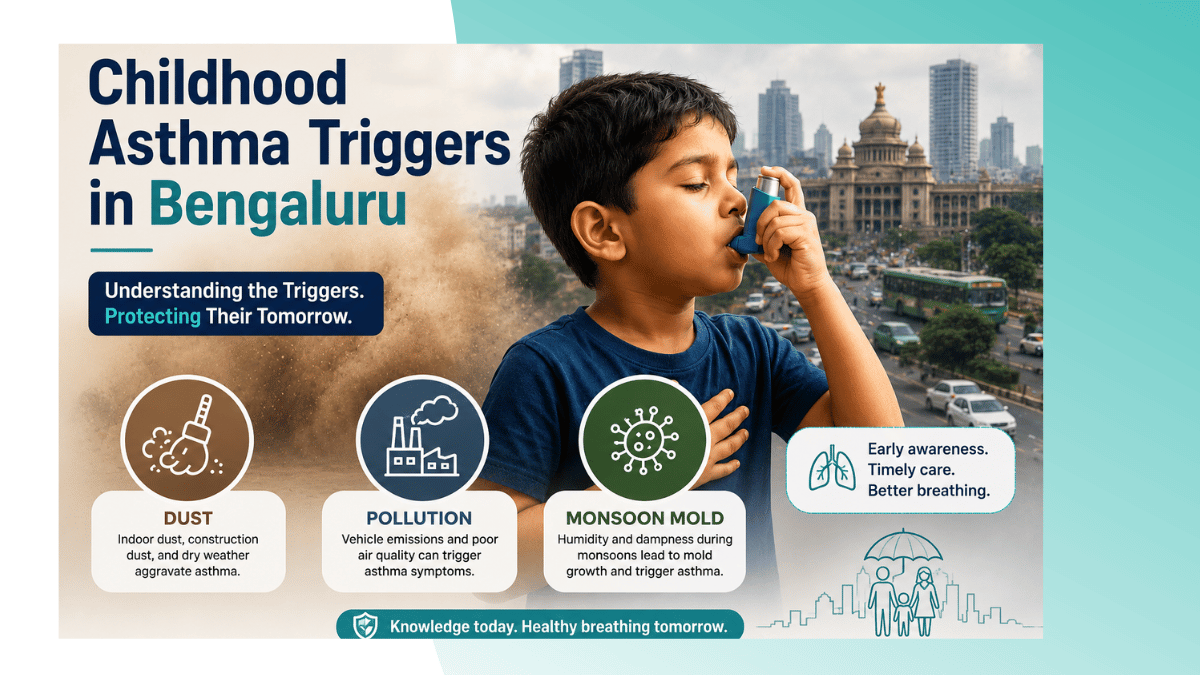
One of the most common questions parents ask me is why their child's asthma seems well controlled for months and then suddenly worsens. In Bengaluru, the answer is often environmental. Dust mites, traffic pollution, and monsoon mold are among the most common childhood asthma triggers I see in children with asthma at Chirayu Multi-Specialty Clinic, Kasturi Nagar.
Many families focus only on medication adjustments during flare-ups. However, if the underlying trigger remains unidentified, symptoms often continue to recur despite treatment.
Why does dust trigger asthma so often in Bengaluru?
House dust mites thrive in Bengaluru's warm, humid indoor environment. They live in mattresses, pillows, carpets, and soft furnishings, feeding on shed skin cells. Children sensitised to dust mite allergy often experience worse symptoms at night and on waking, since this is when exposure in bedding is highest. Construction dust, common across the city's rapidly developing neighbourhoods, adds a second layer of airborne irritant that can trigger symptoms independent of allergy.
How does air pollution affect a child's airway?
Bengaluru's traffic density has increased vehicle emissions significantly over the past decade. Fine particulate matter from exhaust irritates the airway lining directly, even in children without confirmed allergic sensitisation. For children who already have allergic asthma, pollution exposure lowers the threshold at which other triggers cause symptoms, making attacks more frequent and more severe during high-traffic periods or when air quality is poor.
Why does the monsoon make asthma worse?
Monsoon season brings a sharp rise in fungal spore counts, particularly Aspergillus and Alternaria, which thrive in damp indoor conditions. Poorly ventilated homes, damp walls, and stored items that retain moisture become breeding grounds. Children sensitised to mould often show a clear monsoon asthma pattern, with symptoms worsening from June through September and improving once the weather dries.
How can parents reduce these triggers at home?
Encasing mattresses and pillows in allergen-proof covers and washing bedding weekly in hot water substantially reduces dust mite exposure. Keeping windows closed during high-traffic hours and using indoor air purifiers helps with pollution exposure. Addressing damp areas, improving ventilation, and avoiding storage of damp items reduces mold growth during monsoon months. These measures work best alongside identifying the specific allergen through skin prick testing, since avoidance is far more effective when targeted rather than general.
When should a child's asthma triggers be formally investigated?
If your child's symptoms follow a consistent pattern, whether seasonal, related to specific environments, or worse at night, a formal allergy evaluation identifies the exact trigger rather than relying on assumption.
The goal is not simply to treat asthma attacks when they occur. The goal is to understand what is triggering them in the first place. When the trigger is identified accurately, children often experience fewer symptoms, fewer missed school days, and better long-term asthma control.
Written by Dr Sravanthi P V N, MBBS, MD Paediatrics, Consultant Paediatrician and Allergy Asthma Specialist, Chirayu Multi-Specialty Clinic, Kasturi Nagar, Bengaluru.
Related reading
Allergy Testing: A Comprehensive Guide
To book a consultation with Dr Sravanthi P V N at Chirayu Multi-Specialty Clinic, Kasturi Nagar, Bengaluru, call +91 9663358193.




Add a Comment