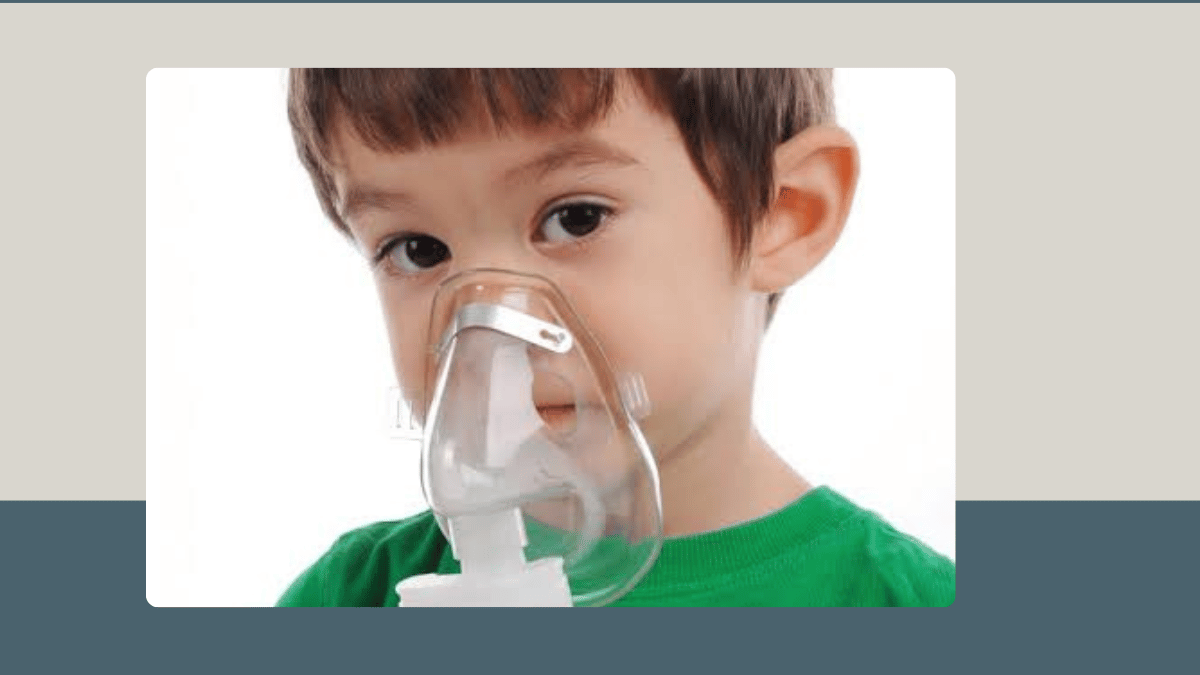
In my asthma practice at Imayam Speciality Hospital, Namakkal, the pattern of poorly controlled childhood asthma follows a consistent and entirely preventable script. The child has a reliever inhaler. They use it two, three, sometimes four times a week. They wake coughing in the early hours. Their activity is limited. Their parents have been told the child has asthma and have been given the inhaler. What they have not been told, with enough clarity to act on it, is that the reliever inhaler is managing symptoms without touching the disease. The disease, the chronic eosinophilic inflammation of the airway mucosa that makes the bronchi hyperresponsive to triggers and prone to narrowing, continues uninterrupted. My AASS and AAAIC training through Medtrain, combined with MD Pediatrics with Gold Medal, is the clinical qualification framework from which I manage childhood asthma with a level of specificity that general paediatric practice does not always provide, and the most important thing that framework produces for each child is a management plan that addresses the underlying disease, not just the episodes that the underlying disease generates.
House Dust Mite in Tamil Nadu: Why Namakkal's Climate Makes Allergic Asthma the Rule, Not the Exception
In Tamil Nadu's humid climate, house dust mite is the dominant perennial allergen in childhood asthma, and Namakkal's inland location does not insulate children from this exposure the way many families assume. House dust mite populations thrive in warm, humid environments in mattresses, pillows, blankets, soft furnishings, and the soft toys that young children sleep with. Namakkal's humidity, particularly through the monsoon months and in the cooler months when windows are kept closed, maintains the indoor humidity levels that support dense house dust mite populations year-round. A child with house dust mite sensitisation has persistently inflamed airways and allergen exposure at its most intense in the sleeping environment, which is why nocturnal cough and early morning wheeze are the characteristic pattern: the child has spent eight hours in the highest-exposure environment before waking. Understanding this environmental dimension of a child's asthma is what the AAAIC-trained allergy evaluation provides. Skin prick testing with a panel that includes house dust mite and locally relevant allergens identifies the specific sensitisation driving airway inflammation, and this identification changes the management conversation from inhaler prescriptions to allergen avoidance, environmental control in the bedroom, and for children with persistent symptoms despite good pharmacotherapy, allergen immunotherapy as the disease-modifying option.
The Controller Inhaler, the Written Action Plan, and What Asthma Control Actually Means
Well-controlled asthma means the child wakes without cough, participates fully in physical education and outdoor play, does not need their reliever more than twice a week, and has not needed oral steroids or an emergency hospital visit in the past twelve months. Most children I see at Imayam Speciality Hospital, Namakkal, presenting for poorly controlled asthma do not meet these criteria, and the reason is almost always that the controller inhaled corticosteroid is not being used. The inhaled corticosteroid, taken daily through an age-appropriate spacer device even when the child has no symptoms, reduces airway inflammation over two to three weeks of consistent use. It does not produce immediate relief. A parent who gives it for three days, notices no change, and stops has not given it long enough to work. And a child who uses it inconsistently, on some days but not others, maintains the airway inflammation that generates frequent symptoms. Spacer inhaler technique is assessed and corrected at every visit in my clinic because incorrect technique is the most common cause of controller treatment appearing to fail. Each child also receives a personalised written asthma action plan specifying their daily controller treatment by name and dose, their trigger list, the number of reliever doses that triggers escalation to emergency care, and the signs that require an immediate emergency department visit. This document travels with the child: it goes to school, to grandparents, to after-school care. A child whose asthma is managed with the right controller, the right technique, the identified allergen triggers, and a written action plan in the hands of everyone who cares for them has an asthma that is manageable and compatible with a full, active childhood.
To book a paediatric allergy consultation with Dr. Abinaya at Imayam Speciality Hospital, 194, Tiruchengode-Namakkal-Trichy Road, near Pillaiyar Kovil, R.P Pudur, Namakkal, Tamil Nadu 637001 (Monday to Saturday, 10:00 AM to 2:00 PM and 6:00 PM to 9:00 PM), call +91 7373097759.
Written by Dr. Abinaya, MBBS, MD Pediatrics (Gold Medal), AASS (Allergy and Asthma Specialist Course, Medtrain), AAAIC (Advanced Allergy, Asthma and Clinical Immunology Course, Medtrain), PGPN (Post Graduate Programme in Nutrition, Boston), Consultant Paediatrician and Allergy Asthma Specialist, Imayam Speciality Hospital, 194, Tiruchengode-Namakkal-Trichy Road, near Pillaiyar Kovil, R.P Pudur, Namakkal, Tamil Nadu 637001. Monday to Saturday, 10:00 AM to 2:00 PM and 6:00 PM to 9:00 PM. 14+ years. 10,000+ patients. Phone: +91 7373097759.
Related reading
Meet Dr. Abinaya: Specialist Paediatric Care for Allergy, Asthma, and Every Stage of Childhood



Add a Comment