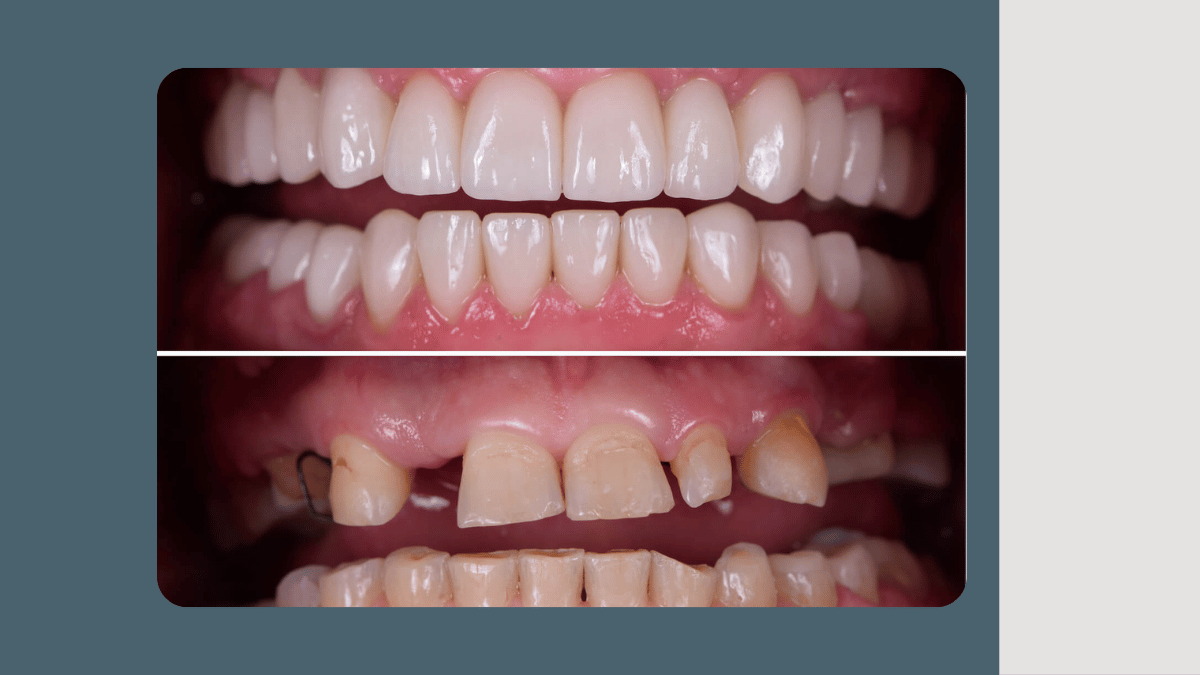
The phrase full-mouth rehabilitation sounds daunting. It suggests complexity, cost, and commitment - and honestly, it involves all three. But what it actually means, at its most fundamental, is restoring a mouth that has been significantly compromised back to one that works properly, looks natural, and can be maintained for life. In 27 years of practice and across more than 20,000 patients at Dental Conceptz in Bengaluru, I have seen what a difference this kind of comprehensive dental restoration makes - not just in how people chew and speak, but in how they carry themselves, how they engage socially, and how they feel about the face they see in the mirror every morning. I am Dr. Namratha Umesh, Director and Chief Dental Surgeon at Dental Conceptz, and full-mouth rehabilitation is one of the most clinically complex and personally transformative treatments a Prosthodontist provides.
What Is Full-Mouth Rehabilitation?
Full-mouth rehabilitation - also called full-mouth reconstruction or oral rehabilitation - is not a single procedure. It is a coordinated treatment plan that addresses multiple teeth, multiple problems, and often multiple systems - the bite, the jaw joints, the gum tissue, the bone supporting the teeth, and the aesthetic appearance of the smile - simultaneously and comprehensively. It is distinguished from routine dental treatment by its scope: it involves the systematic evaluation and treatment of every tooth in the mouth, or in many cases the replacement of most or all of the teeth, as part of a single integrated clinical strategy rather than piecemeal repairs carried out in isolation. Full-mouth rehabilitation treats the mouth as a functional system rather than a collection of individual teeth, and this system-level thinking is what separates it from conventional restorative dental care.
Who Needs Full-Mouth Rehabilitation?
The patients who present for full-mouth rehabilitation in my clinic come from a wide range of clinical starting points, but the common thread is that the state of their teeth and oral function can no longer be adequately addressed tooth by tooth. The most common presentations I encounter are:
Severe Tooth Wear
Teeth that have been significantly worn down by bruxism (grinding), acidic erosion from dietary habits or acid reflux, or decades of attrition present one of the most demanding rehabilitation challenges in dentistry. When tooth structure has been lost to the degree that the vertical dimension of the bite - the distance between the upper and lower jaws when the teeth are together - has collapsed, simply placing a crown on one tooth solves nothing. The entire bite must be re-established at the correct height and in the correct relationship, which requires simultaneous treatment of multiple or all teeth. Restoring the vertical dimension of the bite across the full arch is the defining challenge of rehabilitation for worn dentition.
Multiple Missing Teeth
When several teeth have been lost - through extraction, trauma, decay, or failed root canal treatments - the remaining teeth begin to shift. Adjacent teeth tip into the gaps, opposing teeth over-erupt into the spaces, and the bite changes in ways that create new problems: jaw joint discomfort, uneven wear on the remaining teeth, and an increasingly compromised ability to chew effectively. Replacing missing teeth in isolation without addressing the surrounding changes is frequently inadequate; full-mouth rehabilitation plans for the placement and restoration of implants, or bridgework, in a way that restores the bite as a whole.
Advanced Decay or Failing Restorations
A patient who has had multiple fillings, crowns, and dental work placed over many years - and whose existing restorations are failing, leaking, or no longer adequate - often reaches a crossroads where continuing to patch individual teeth becomes clinically unsound. When the majority of teeth are compromised, a comprehensive rehabilitation plan that addresses all of them systematically, in the right sequence, is both more clinically effective and more cost-effective in the long term than continued piecemeal repair. The decision to rehabilitate comprehensively rather than incrementally is one of the most important clinical judgements in restorative dentistry.
Congenital Absence or Developmental Conditions
Some patients are born with conditions that affect the number, size, or structure of their teeth - hypodontia (congenitally missing teeth), amelogenesis imperfecta (poorly formed enamel), or dentinogenesis imperfecta (poorly formed dentine). These conditions often require full-mouth management from a relatively young age and represent some of the most complex rehabilitation cases I manage.
How Is a Full-Mouth Rehabilitation Plan Made?
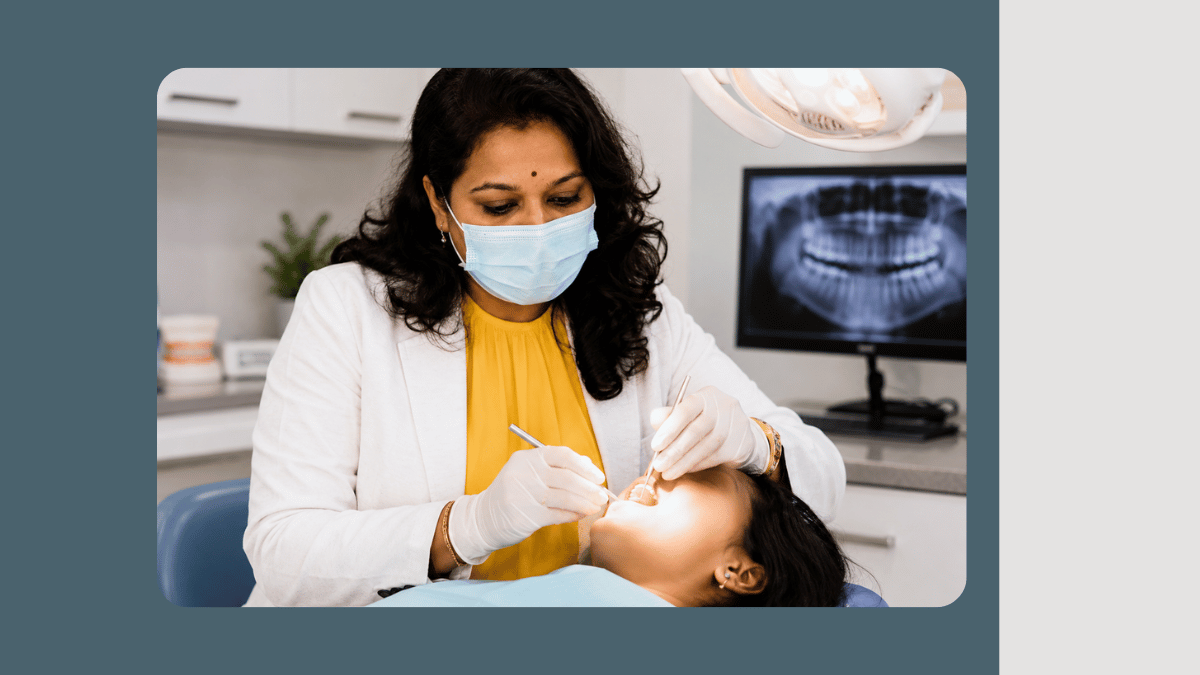
The clinical assessment that precedes a full-mouth rehabilitation plan is one of the most thorough evaluations in dentistry, and it is where the expertise of a Prosthodontist - a specialist in the restoration and replacement of teeth - is most distinctly relevant. At Dental Conceptz, I begin with a comprehensive clinical and radiographic examination: a full-mouth series of X-rays or a cone-beam CT scan to assess bone levels, root conditions, and implant site anatomy; study models of the existing dentition; a digital bite analysis to assess how the upper and lower teeth meet; a photograph series for aesthetic analysis; and where relevant, an assessment of the jaw joints and muscles. This information is synthesised into a treatment plan that addresses every element of the mouth systematically - the sequence in which teeth are treated, which are retained and restored, which require extraction, where implants will be placed, and what the final prosthetic design will look like. A diagnostic wax-up - a three-dimensional model of the proposed final outcome - is often fabricated before any treatment begins, allowing the patient to visualise and approve the aesthetic and functional result that will guide the clinical work.
The Role of Dental Implants in Full-Mouth Rehabilitation
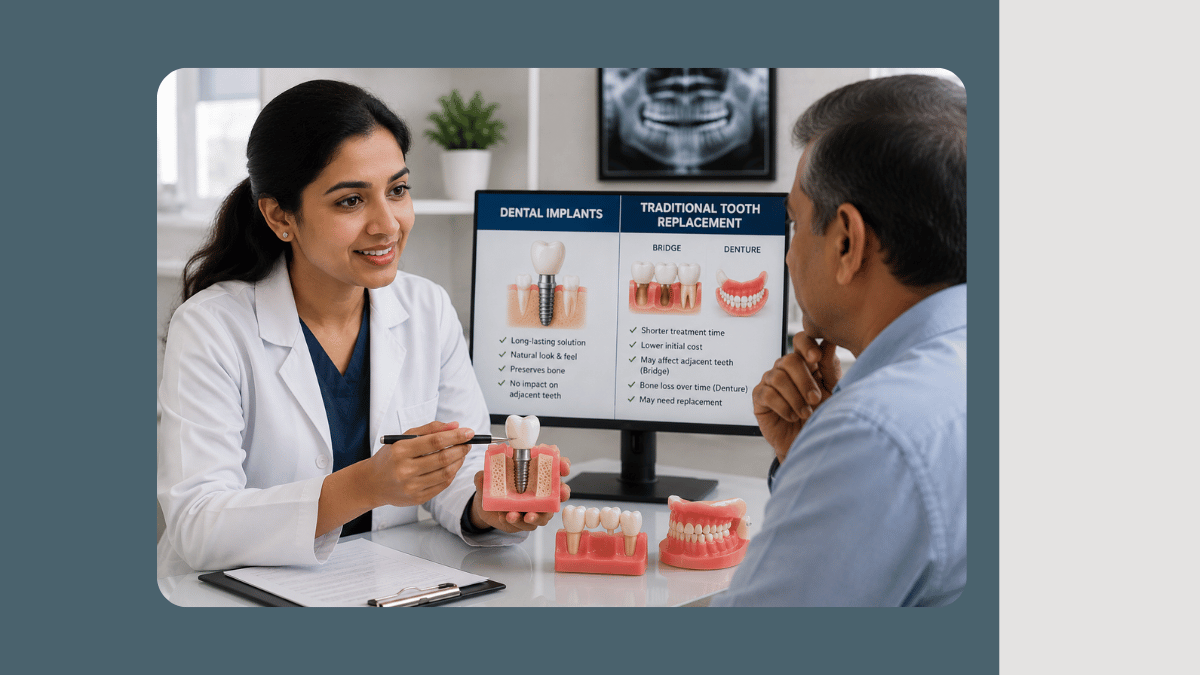
Dental implants are titanium fixtures placed into the jawbone that act as artificial tooth roots, providing the foundation for crowns, bridges, or full-arch prostheses. In many full-mouth rehabilitation cases, implants play a central role - replacing multiple missing teeth, providing anchorage for fixed prosthetic frameworks, or supporting the restoration of an entire arch of teeth. The clinical advantage of implants over alternative options is that they function and feel like natural teeth, they do not require the modification of adjacent healthy teeth, and they preserve the bone that would otherwise resorb after tooth loss.
ALL-ON-4: Full-Arch Implant Rehabilitation
For patients who have lost or need to lose most or all of their teeth, the ALL-ON-4 treatment concept offers a fixed implant-supported full-arch restoration on four strategically positioned implants. I was personally trained in the ALL-ON-4 surgical protocol and immediate function by Dr. Paulo Malo - the Portuguese oral surgeon and researcher who developed the concept - and have applied this training in the management of appropriately selected patients at Dental Conceptz, Bengaluru. The clinical elegance of ALL-ON-4 is that by angling two of the four implants posteriorly, it maximises the use of available anterior bone and reduces or eliminates the need for bone grafting in many cases, allowing a fixed provisional restoration to be placed on the day of surgery. ALL-ON-4 can transform the life of an appropriately selected edentulous patient - from complete dentures to a fixed, stable, implant-supported smile in a single surgical appointment.
Immediate Function Protocols
Immediate function - placing a provisional restoration on the day of implant surgery - is not possible in every clinical situation, but in carefully selected cases it allows patients to leave the clinic with teeth on the day their implants are placed. This requires precise surgical technique, accurate prosthetic planning, and a thorough pre-operative assessment of bone quality and quantity. Where the conditions are right, immediate function is one of the most significant advances in implant dentistry from a patient experience perspective.
When the Bone Is Not Enough: Augmentation and Regeneration
One of the most common barriers to straightforward implant placement in patients requiring full-mouth rehabilitation is inadequate bone volume. Teeth that were lost years or decades ago have been replaced by bone that has progressively resorbed - the jaw shrinks inward and downward wherever teeth have been absent for extended periods. For many patients presenting for full-mouth rehabilitation in Bengaluru, this bone loss means that implant placement requires bone augmentation procedures before or alongside the implant surgery. I have undergone Masters training in GBR (Guided Bone Regeneration) and Sinus Augmentation in Switzerland, and have received advanced training in hard and soft tissue augmentation protocols from some of the most respected faculty in the field - Dr. Iglauht in Germany, Dr. Rado Jadach in Poland, Dr. Ricardo Kern in Brazil, and Dr. Maurice Salama. This level of augmentation training means that inadequate bone volume is a challenge to be planned around, not a barrier to treatment.
Sinus Augmentation
The maxillary sinuses - the air-filled cavities in the upper jaw - often expand downward after upper back teeth are lost, leaving insufficient bone height for implant placement. Sinus augmentation, or a sinus lift procedure, involves adding bone graft material to the floor of the sinus to create the necessary vertical bone volume. This is one of the most frequently performed bone augmentation procedures in advanced implant practice and is a routine part of my clinical repertoire at Dental Conceptz.
Soft Tissue Management
The pink tissue surrounding a dental implant or a prosthetic crown - the gum tissue - is as important to the long-term aesthetic and biological success of a rehabilitation as the implant or the prosthesis itself. Inadequate gum tissue volume, poor architecture, or an insufficient zone of attached gingiva can compromise the stability of the implant and the aesthetics of the final restoration. I have trained in soft tissue management for aesthetics, the tunneling technique (Barcelona), and advanced soft tissue augmentation protocols. Achieving a natural-looking gum architecture around implants and prostheses is a detail that patients may not specifically request, but that they reliably notice when it is present.
Prosthodontic Restoration: Crowns, Bridges, and Prosthetic Frameworks
Once the implants are integrated, the bone has healed, and the gum tissue is in its optimal state, the prosthetic phase of full-mouth rehabilitation begins. This is the phase that produces the final result the patient lives with, and it requires the full clinical scope of Prosthodontic expertise. Individual implant-supported crowns, implant-supported bridges spanning multiple units, full-arch implant-supported fixed prostheses, and hybrid combinations of crowns and prosthetic frameworks are all part of the Prosthodontist's repertoire.
The materials available for prosthodontic restoration today - zirconia, lithium disilicate, porcelain-fused-to-metal, and composite frameworks - each have specific optical, mechanical, and biological properties that make them more or less appropriate for different clinical situations. Choosing the right material for each element of a full-mouth rehabilitation is a clinical decision that draws on the Prosthodontist's understanding of how teeth interact with opposing teeth under chewing forces, how materials age in the oral environment, and how the colour and translucency of the material will appear in the patient's specific lighting conditions.
The Bite, the Jaw Joints, and Orofacial Pain
One dimension of full-mouth rehabilitation that often surprises patients is the role of the bite and the jaw joints in the planning process. A rehabilitation that restores teeth to the wrong bite relationship can produce jaw joint pain, muscle tension, headaches, and new patterns of tooth wear that undo the work almost as quickly as it is done. My additional Fellowship training in Orofacial Pain and Sleep Medicine from Roseman University, Utah, USA, gives me a clinical perspective on the relationship between the dental occlusion, the jaw joints, and orofacial pain that is not part of standard Prosthodontic training. Assessing and establishing a stable, comfortable bite relationship is the clinical foundation on which every successful full-mouth rehabilitation is built - and it is a step that cannot be skipped or approximated.
What to Expect: Timelines, Stages, and the Patient Experience
Full-mouth rehabilitation is not a single appointment, and setting realistic expectations about the duration and stages of treatment is one of the first and most important conversations I have with patients who are considering it.
The timeline varies substantially depending on the complexity of the case. A patient who requires implants and bone augmentation, followed by integration time, followed by the prosthetic phase, may be in treatment for twelve to eighteen months from the first consultation to the placement of the final restorations. A patient who does not require implants and whose primary need is restoration of worn dentition with crowns and veneers may complete treatment in fewer appointments and over a shorter timeframe. Throughout the treatment period, patients are provided with provisional restorations - temporary crowns or bridges - that allow them to function, assess the proposed aesthetics, and communicate feedback before the final restorations are committed to. This is one of the most important elements of the process: the provisional phase is not just a temporary measure; it is a trial of the final outcome, and it is where adjustments to the bite, the shape, the colour, and the aesthetics are made before anything is finalised. The provisional phase of full-mouth rehabilitation is where the clinical result is refined and the patient's confidence in the outcome is built.
Why a Prosthodontist for Full-Mouth Rehabilitation?
A Prosthodontist is a dental specialist who has completed three additional years of postgraduate clinical training - beyond dental school - specifically focused on the restoration and replacement of teeth, the management of complex bite problems, and the rehabilitation of compromised oral function. This training is the clinical foundation for the kind of systematic, whole-mouth thinking that full-mouth rehabilitation requires. My MDS in Prosthodontics and Implantology from RGUHS Bengaluru, combined with my international Fellowships from ICOI (USA), ITI (Switzerland), ISOI (India), and the World Congress of Oral Implantology (Japan), and my advanced training from surgical faculty across four continents, means that I approach every full-mouth rehabilitation case with both the specialist training and the international perspective to plan and execute treatment that meets the highest clinical standards. A Prosthodontist does not just restore individual teeth - a Prosthodontist restores oral function as a system.
Full-Mouth Rehabilitation at Dental Conceptz, Bengaluru
At Dental Conceptz, I see patients for full-mouth rehabilitation consultations at both of my Bengaluru clinics - in Sahakar Nagar and in Jakkur. The initial consultation for a full-mouth rehabilitation case typically lasts sixty to ninety minutes, during which I take a complete clinical and radiographic assessment, discuss the patient's goals and concerns, and explain the options available. Patients frequently arrive having spent years putting off addressing their dental situation - because of anxiety about the scope of treatment, uncertainty about the cost, or simply not knowing where to start. My experience is that the consultation itself relieves much of that anxiety: when a patient understands what is involved, in what sequence, over what timeframe, and to what end result, the decision to proceed becomes a clear and confident one rather than a daunting one. If you are in Bengaluru and you have been told you need extensive dental work, or you have been living with significant dental problems that you have been managing by avoiding, a full-mouth rehabilitation consultation at Dental Conceptz, with a Prosthodontist who has been doing this work for 27 years, is the most useful single step you can take.
To book a full-mouth rehabilitation consultation with Dr. Namratha Umesh at Dental Conceptz, Sahakar Nagar (733, A Block, 15th Main, opposite Ganesh Temple, Bengaluru 560092) or Dental Conceptz, Jakkur (369, Santosh Vihar, 19th A Cross, Jakkur Main Road, Bengaluru 560064), call +91 9480016622 or visit linqmd.com/doctor/prosthodontist-bengaluru-namratha-umesh
Written by Dr. Namratha Umesh, MDS Prosthodontics and Implantology (RGUHS, Bengaluru), Fellow and Diplomate ICOI (USA), Fellow ITI (Switzerland), Fellow ISOI (India), Diplomate World Congress of Oral Implantology (Japan), Fellowship in Orofacial Pain and Sleep Medicine (Roseman University, Utah, USA), Director and Chief Dental Surgeon, Dental Conceptz, Sahakar Nagar and Jakkur, Bengaluru. 27+ years, 20,000+ patients. Phone: +91 9480016622.
Related reading
Orofacial Pain and Jaw Discomfort
Dental Implants or Traditional Tooth Replacement: How Do I Help Patients Choose?
Persistent Jaw or Facial Pain: Could Your Teeth and Bite Be Part of the Problem?


Add a Comment