CONSULTANT RADIATION ONCOLOGIST

Dr. P Sasikala

MBBS, DMRT, DNBRT

Dr. P Sasikala
Quick Connect

Scan to Connect

LinQ Card

QR Code
LinQMD Verified Doctor Identity

Dr. P Sasikala is a highly experienced Consultant Radiation Oncologist with over 16+ years of expertise in delivering advanced, evidence-based cancer care.

16+ Years of Experiance.
Areas of Expertise
Stereotactic Radiosurgery (SRS) Stereotactic Body Radiotherapy (SBRT) Image-Guided Radiation Therapy (IGRT) Intensity-Modulated Radiation Therapy (IMRT) Brachytherapy

Dr. P Sasikala
Quick Connect

Scan to Connect with

Dr. P Sasikala

QR Code

Scan with phone camera

LinQMD Verified Doctor Identity
· Consultation & Availability ·
Available for Consultation At
Sparsh Hospital, Hennur DivyaSree Avance, Hennur Bagalur Main Rd View on Map ↗
Trusted By
Patients
5000+ Patients with Continued Excellence
Read Patient Stories

About Dr. P Sasikala

Dr. P Sasikala is a highly experienced Consultant Radiation Oncologist with over 16+ years of expertise in delivering advanced, evidence-based cancer care. She is recognised for her compassionate, patient-centred approach, combining cutting-edge radiation oncology techniques with a strong emphasis on cancer prevention, early detection, and holistic patient support. With special expertise in the management of breast and gynaecological cancers, Dr. Sasikala is proficient in advanced treatment modalities including Stereotactic Radiosurgery (SRS), Stereotactic Body Radiotherapy (SBRT), Image-Guided Radiotherapy (IGRT), Intensity-Modulated Radiotherapy (IMRT), brachytherapy, and CyberKnife-based treatment planning, enabling highly precise and effective cancer treatment.
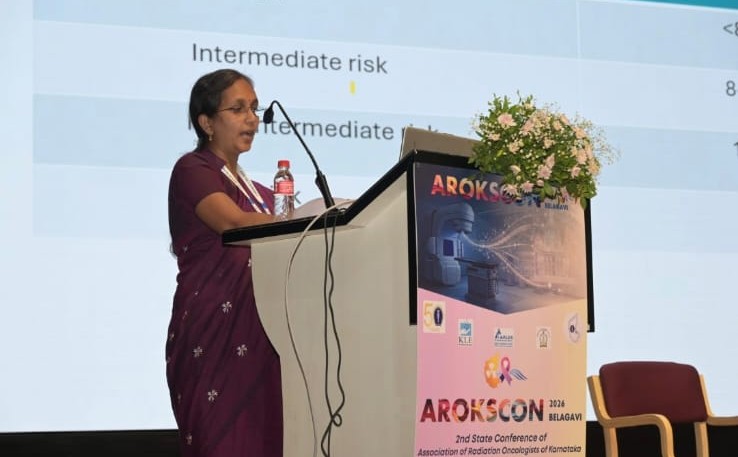
Beyond her clinical practice, Dr. Sasikala is deeply committed to improving public health through cancer awareness programmes, screening initiatives, and community outreach across both urban and rural Karnataka. She actively mentors postgraduate students, has authored numerous national and international publications, and has received several accolades, including the Best Paper Award from the Indian Brachytherapy Society and certification in Advanced Radiotherapy accredited by the Royal College of London. A life member of the Association of Radiation Oncologists of India (AROI) and the Indian College of Radiation Oncology (ICRO), Dr. Sasikala believes in a multidisciplinary and holistic approach to cancer care, empowering patients with knowledge, emotional support, and personalised treatment throughout their cancer journey.

Dr. P Sasikala – Speciality

Dr. P Sasikala specialises in Radiation Oncology, with over 16 years of experience in delivering personalised and precision-based cancer care, with a special focus on women’s oncology, early cancer detection, cancer prevention, and public health awareness. As an experienced Radiation Oncologist in Bengaluru, she has expertise in managing cancers affecting women, particularly breast cancer and cervical and gynaecological cancers, while promoting timely screening, awareness of early warning signs, and preventive healthcare. Her clinical expertise includes advanced radiation techniques such as SRS, SBRT, IGRT, IMRT, brachytherapy, and CyberKnife-based radiation treatment planning. Dr. Sasikala combines advanced cancer treatment with a strong commitment to educating women and communities about cancer risk factors, screening, and the importance of early diagnosis. Through multidisciplinary cancer care, community outreach, and public health initiatives, she aims to improve cancer awareness, encourage early detection, and support better treatment outcomes for patients.

Dr. P Sasikala – Areas of Expertise

Women’s Oncology - Special focus on comprehensive cancer care for women, including personalised evaluation and multidisciplinary treatment planning.

Breast Cancer Care- Expertise in radiation oncology management of breast cancer using advanced precision techniques tailored to individual patient needs.

Cervical & Gynaecological Cancers - Experienced in radiation therapy and brachytherapy for cervical and selected gynaecological cancers as part of comprehensive cancer care.

Early Cancer Detection & Screening Awareness - Promotes awareness of cancer warning signs, appropriate screening, and timely medical evaluation to support early diagnosis and treatment.

Cancer Prevention & Public Health Awareness - Actively advocates cancer prevention, risk-factor awareness, health education, and community outreach to improve public understanding of cancer.

Stereotactic Radiosurgery (SRS) - Expertise in highly focused radiation treatment for selected brain tumours, metastases, and other suitable lesions.

Stereotactic Body Radiotherapy (SBRT) - Skilled in delivering highly precise radiation treatment to selected tumours in the body while limiting exposure to surrounding healthy tissues.

IGRT & IMRT - Experienced in image-guided and intensity-modulated radiation techniques for accurate, personalised radiation delivery.

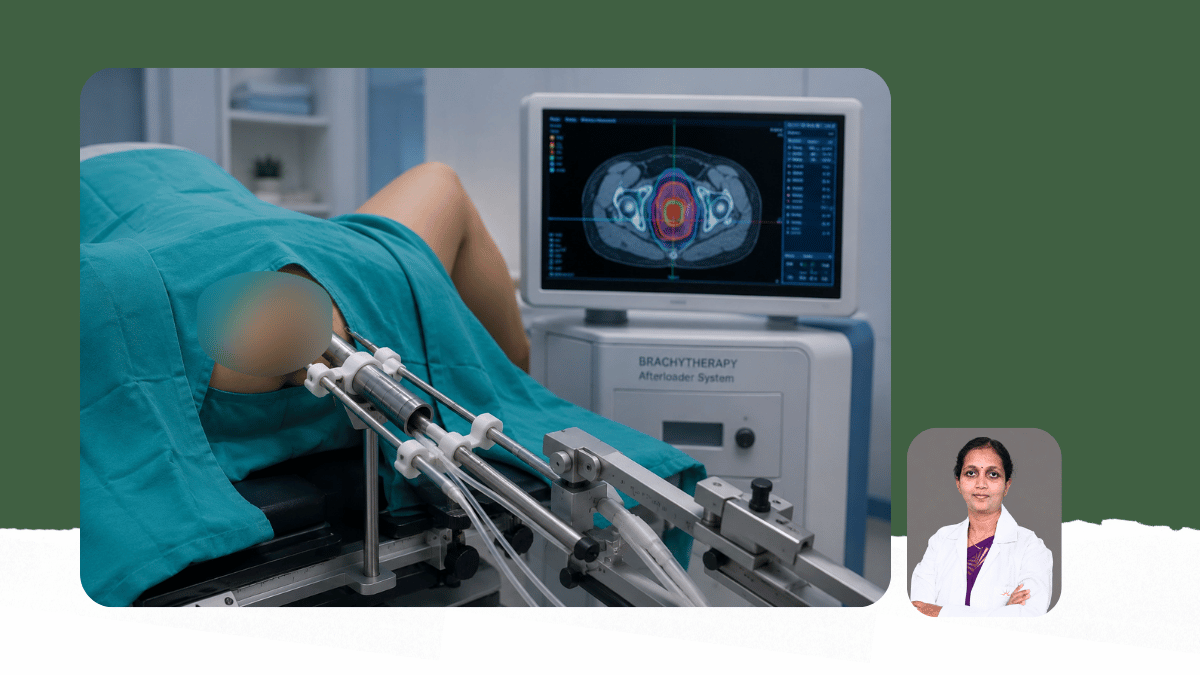
Brachytherapy - Expertise in internal radiation therapy, particularly relevant to selected cancers, including cervical and other gynaecological cancers.

CyberKnife & Precision Radiation Therapy - Experienced in advanced radiation planning and execution using precision-based technologies for targeted cancer treatment.

Awards & Publications

Awards & Recognition:
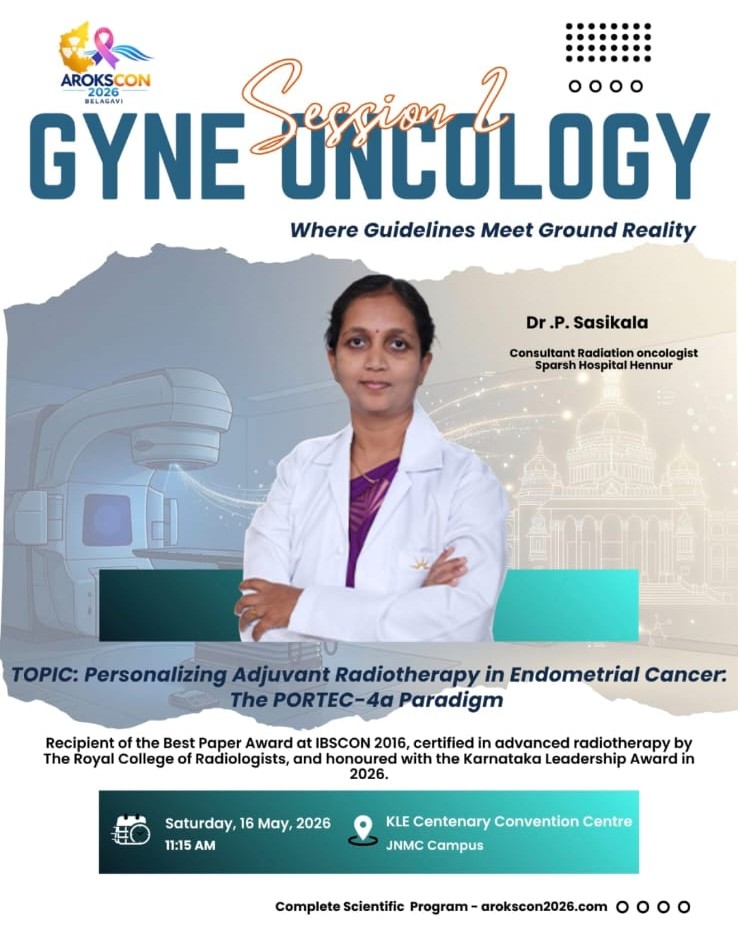
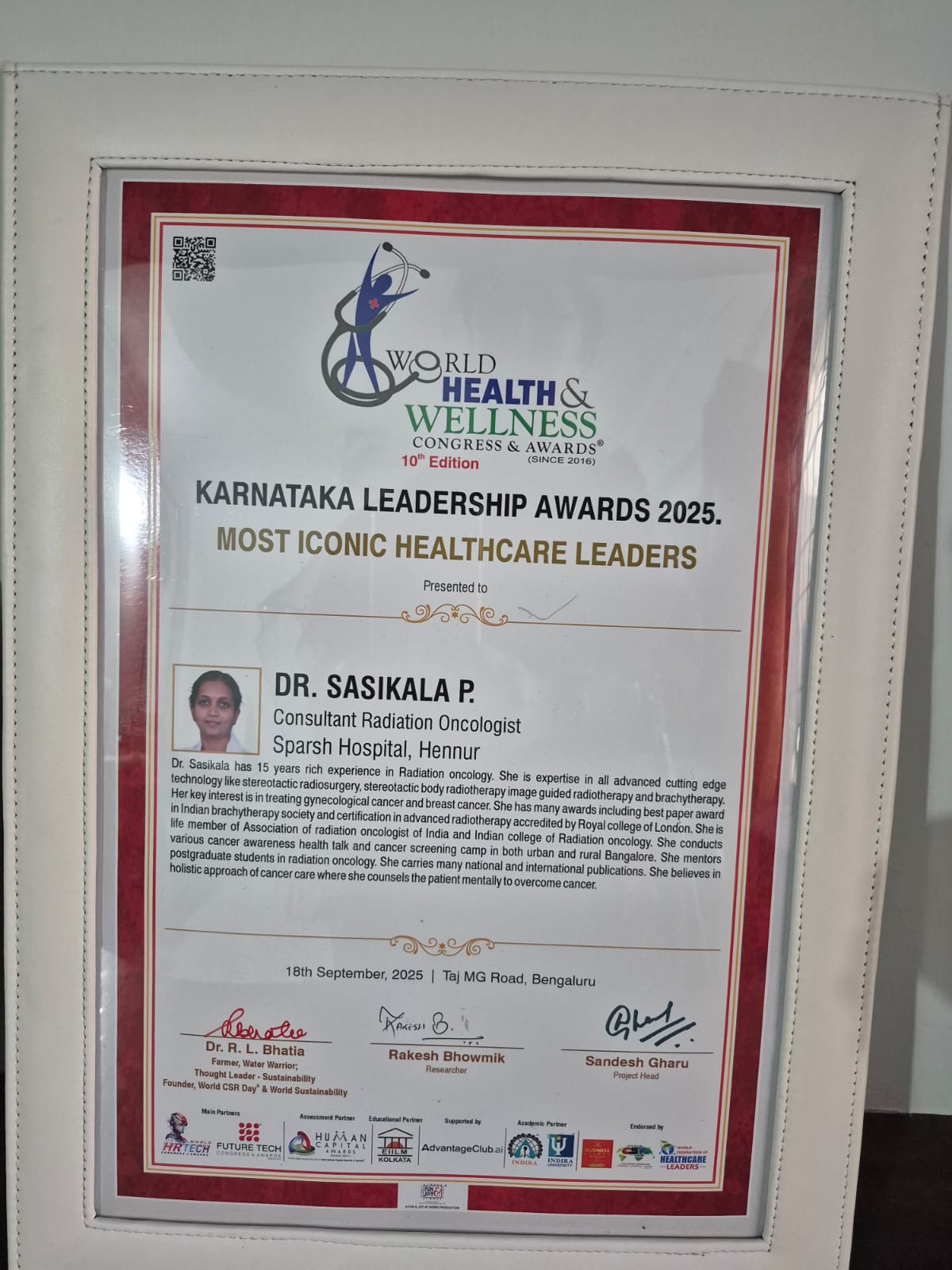
  • Karnataka Leadership Award – Recently received in recognition of leadership and professional contributions.
  • Best Paper Award for Accelerated Partial Breast Irradiation (APBI) – Awarded at the Indian Brachytherapy Society Conference, August 2016.  
Publications:
  • Per-operative Brachytherapy in Accelerated Partial Breast Irradiation – Journal of Carcinogenesis, Vol. 15, 2016 (Abstract).
  • Accelerated Partial Breast Irradiation in Early Breast Carcinoma: A Single Institute Experience – Journal of Contemporary Brachytherapy, 2016; 8(5):455–476 (Abstract).
  • Inflammatory Carcinoma in a Known Case of Carcinoma Breast: A Clinical Dilemma for Physician – A Case Report – BMJ Case Reports, 2016.
  • Will Re-irradiation Alone Prevent Locoregional Progression in Isolated Nodal Recurrence of Nasopharyngeal Carcinoma? – A Case Report – Journal of Nasopharyngeal Carcinoma, July 2017.
  • Dawn of Telemedicine – Journal of Cancer Research and Therapeutics (JCRT), April–June 2020; 16(3):697–698.
  • Evolution of Cancer Care in Karnataka – Indian Journal of Surgical Oncology, September 2022.
  • Clinical Impact of Patient’s Head Position in Supraclavicular Irradiation of Whole Breast Radiotherapy – Progress in Medical Physics, 34(1), March 2023.
  • Multiple Primary Carcinoma in a Post-Renal Transplant Immunocompromised Patient: A Case Report – International Journal of Radiology and Radiation Therapy, 2024; 11(1):5–6.  
  • MBBS (Bachelor of Medicine and Bachelor of Surgery) – Dr. M.G.R. Medical University, Chennai | 1996–2002
  • DMRT (Diploma in Medical Radiotherapy) – Cancer Institute (WIA), Adyar, Chennai | 2006–2008
  • DNB in Radiation Oncology (DNBRT) – National Board of Examinations, New Delhi | 2010–2012
  • Diploma in Acupuncture Science - Cumbam Academy of Acupuncture | 2025

Conditions & Treatments

Conditions treated and Procedures offered by Dr. P Sasikala

All

Internal Radiation: Brachytherapy for Cervical and Gynaecological Cancers
By: Dr. P Sasikala 22 September 2026

Internal Radiation: Brachytherapy for Cervical and Gynaecological Cancers

Brachytherapy for cervical cancer, endometrial cancer, and other gynaecological cancers at SPARSH Ho...

Read More
Women's Cancer Care and Radiation Oncology, Bengaluru
By: Dr. P Sasikala 07 September 2026

Women's Cancer Care and Radiation Oncology, Bengaluru

Specialist radiation oncology care for breast cancer, cervical cancer, and gynaecological cancers at...

Read More
Cancer Prevention & Early Detection
By: Dr. P Sasikala 17 July 2026

Cancer Prevention & Early Detection

Cancer prevention, screening awareness, and early detection guidance — helping patients and communit...

Read More
Women’s Cancer Care
By: Dr. P Sasikala 17 July 2026

Women’s Cancer Care

Women’s oncology focuses on the prevention, early detection, diagnosis, and treatment of cancers aff...

Read More
Internal Radiation - Brachytherapy
By: Dr. P Sasikala 15 July 2026

Internal Radiation - Brachytherapy

Specialist brachytherapy for cervical, breast, and selected cancers - radiation source positioned cl...

Read More
Precision Radiation - Image-Guided Radiation Therapy (IGRT)
By: Dr. P Sasikala 15 July 2026

Precision Radiation - Image-Guided Radiation Therapy (IGRT)

Advanced IGRT combining real-time imaging with radiation delivery to verify tumour position and impr...

Read More

Blogs and Articles

Expert Tips and Health Insights from Dr. P Sasikala

Latest

Articles by Dr. P Sasikala

https://d2vvc091k8tmib.cloudfront.net/s3fs-public/2026-09/Radiation%20Therapy%20for%20Women%27s%20Cancers%20%281%29.png
https://d2vvc091k8tmib.cloudfront.net/s3fs-public/2026-08/Dr.%20Sasikala%20Updated%20image%201.png
By: Dr. P Sasikala
31 August 2026

Radiation Therapy for Women's Cancers: What Every Patient Deserves to Know

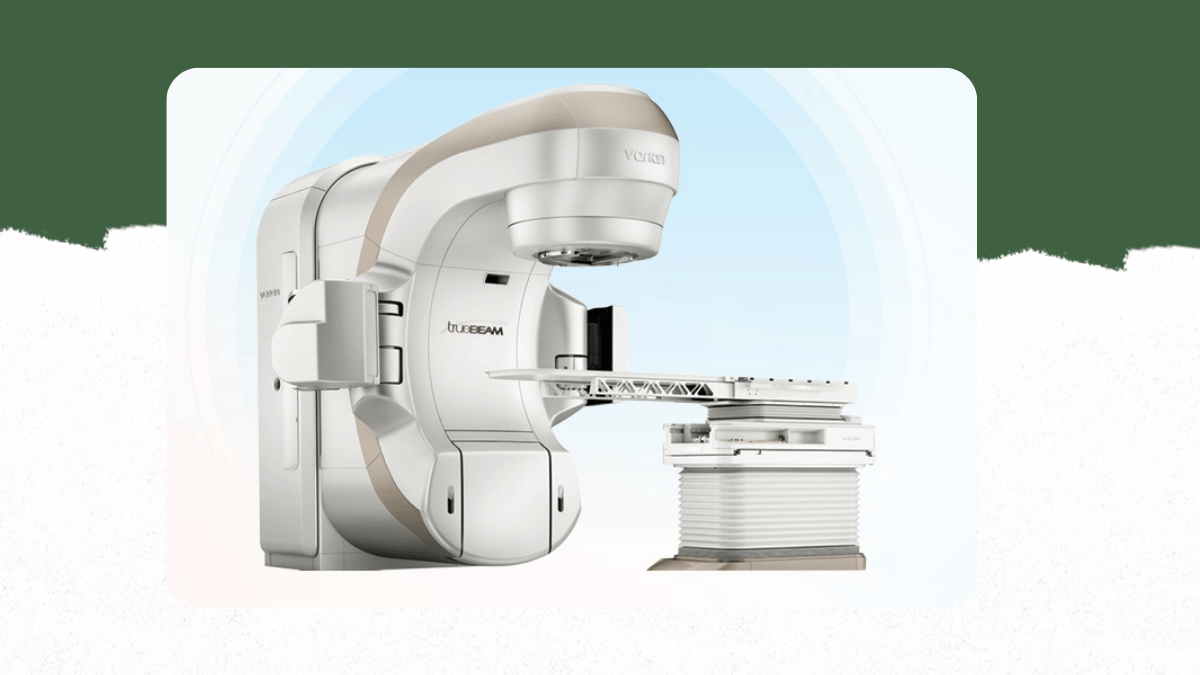
A Consultant Radiation Oncologist with 16 years and Best Paper Award (Indian Brachytherapy Society) explains modern radiation therapy for breast, cervical, and gynaecological cancers in Bengaluru, including IMRT, IGRT, VMAT, brachytherapy, DIBH, SRS, SBRT, CyberKnife, and the LINAC, at SPARSH Hospital, Hennur Road.
Read More
https://d2vvc091k8tmib.cloudfront.net/s3fs-public/2026-08/Cancer%20Awareness%20and%20Early%20Detection_%20What%20Every%20Person%20in%20Bengaluru%20Should%20Know.png
https://d2vvc091k8tmib.cloudfront.net/s3fs-public/2026-08/Dr.%20Sasikala%20Updated%20image%201.png
By: Dr. P Sasikala
11 August 2026

Cancer Awareness and Early Detection: What Every Person in Bengaluru Should Know

Dr. P. Sasikala explains important cancer warning signs, screening approaches and the role of early detection in enabling timely, targeted cancer treatment and better outcomes.
Read More
https://d2vvc091k8tmib.cloudfront.net/s3fs-public/2026-08/Lifestyle%20Management%20to%20Prevent%20Cancer_%20What%20a%20Radiation%20Oncologist%20Wants%20You%20to%20Know.png
https://d2vvc091k8tmib.cloudfront.net/s3fs-public/2026-08/Dr.%20Sasikala%20Updated%20image%201.png
By: Dr. P Sasikala
11 August 2026

Lifestyle Management to Prevent Cancer: What a Radiation Oncologist Wants You to Know

A Radiation Oncologist's guide to lifestyle cancer prevention - tobacco, diet, weight, exercise, and the screening decisions that determine whether a cancer is found early enough to treat successfully.
Read More
https://d2vvc091k8tmib.cloudfront.net/s3fs-public/2026-07/Know%20Your%20Doctor_%20Dr.%20P.%20Sasikala%2C%20Consultant%20Radiation%20Oncologist.png
https://d2vvc091k8tmib.cloudfront.net/s3fs-public/2026-08/Dr.%20Sasikala%20Updated%20image%201.png
By: Dr. P Sasikala
15 July 2026

Know Your Doctor: Dr. P. Sasikala, Consultant Radiation Oncologist

Learn about Dr. P. Sasikala, an experienced Radiation Oncologist in Bengaluru specialising in advanced, precision-based cancer treatment and compassionate care.
Read More

Frequently Asked Questions

Frequently Asked Questions

View all

How can I consult Dr P Sasikala?

You can consult Dr. P. Sasikala, Consultant Radiation Oncologist in Bengaluru, for evaluation and management of cancers requiring radiation therapy. During the consultation, she reviews the diagnosis, medical reports, imaging findings, and previous treatments to recommend an appropriate and personalised radiation treatment plan.

Written by Dr P Sasikala, MBBS (Dr MGR Medical University, Chennai), DMRT (Cancer Institute WIA, Adyar, Chennai), DNB Radiation Oncology (National Board of Examinations, New Delhi), Consultant Radiation Oncologist, Bengaluru.


Is radiation therapy painful, and what does the treatment actually feel like?

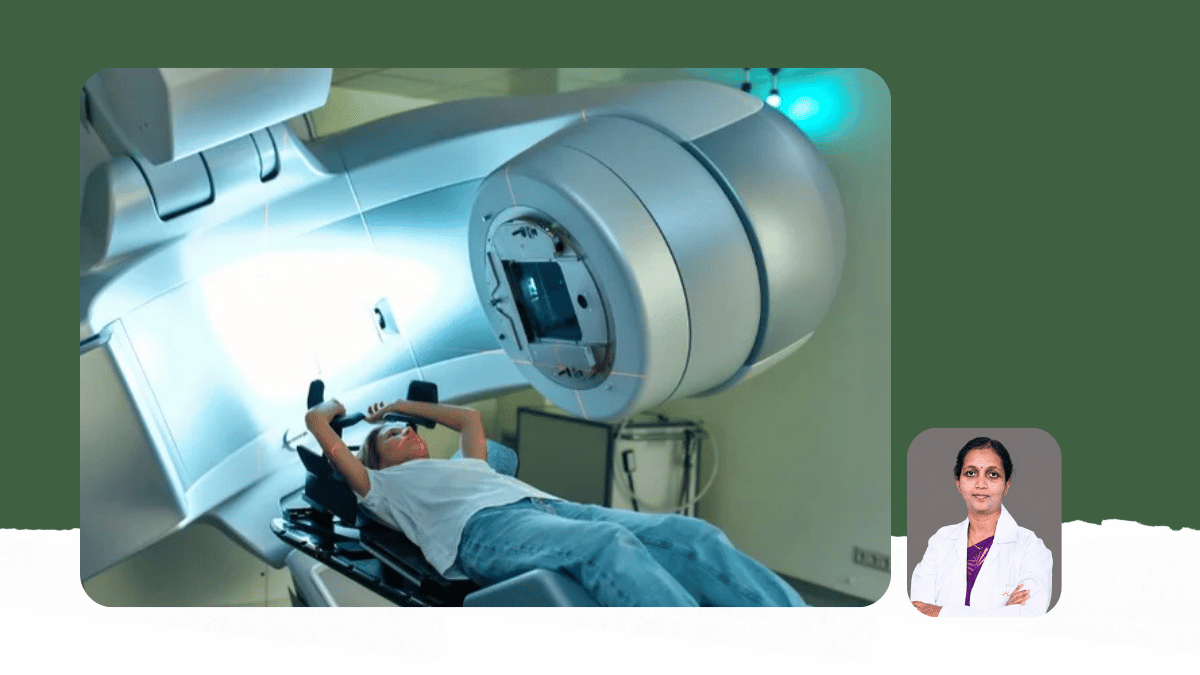
No. Radiation therapy is not painful. This is one of the most important things I tell every new patient at SPARSH Hospital, Hennur Road, Bengaluru, because the fear of pain is one of the most common reasons patients approach a radiation oncology consultation with dread, and it is a fear that the treatment itself consistently fails to justify. During each radiation treatment session, the patient lies on the treatment couch, is positioned carefully by the radiotherapy team, and the machine either rotates around them or moves to specific positions to deliver the radiation from the planned angles. The actual radiation delivery is completely invisible and completely silent. The patient feels nothing: no heat, no tingling, no pressure, no discomfort of any kind during the radiation itself. The session from entry to exit typically takes between ten and twenty minutes, most of which is positioning time. Many patients, having anticipated something frightening, find themselves surprised that the experience of each treatment session is simply lying still while the machine moves. The side effects of radiation, which are the source of legitimate concern, are not experienced during the session itself. They develop gradually and cumulatively over the course of treatment, as the normal tissues in the treatment area accumulate radiation dose alongside the tumour. For breast cancer radiation, the main side effect is skin reaction in the treated area and fatigue. For pelvic radiation, the main side effects are bladder and bowel symptoms. These are expected, managed proactively with supportive care guidance, and in the majority of patients they resolve after treatment ends. Most of my patients tell me, at the end of their radiation course, that the treatment was significantly less difficult than they had expected. Knowing what to expect before you start makes the experience of going through it considerably more manageable.

Written by Dr. P Sasikala, MBBS, DMRT, DNB (Radiation Oncology), Best Paper Award (Indian Brachytherapy Society, 2016), Karnataka Leadership Award, Consultant Radiation Oncologist, SPARSH Hospital, Hennur Road, HBR Layout, Bengaluru 560043. Monday to Saturday, 9:00 AM to 5:00 PM. Phone: +91 80958 09322.

How long does a course of radiation therapy take and how many sessions will I need?

The length of a radiation therapy course and the number of sessions required varies considerably depending on the type of cancer being treated, the stage of the disease, the intent of treatment (curative or palliative), and the specific radiation technique being used. At SPARSH Hospital, Hennur Road, Bengaluru, I design each treatment schedule individually as part of the multidisciplinary plan, but I can give you a general picture of what different cancer types typically involve. For early breast cancer treated with adjuvant radiation after breast-conserving surgery, the modern accelerated protocol that I now use for appropriate patients delivers the entire course in just five treatment sessions, typically given once daily on five consecutive working days. This is a significant change from the older four to six week protocols and reflects the evidence base from large randomised trials showing equivalent outcomes in appropriately selected patients. For cervical cancer treated with curative intent, external beam radiation is delivered over five to six weeks of daily fractions from Monday to Friday, followed by a brachytherapy component consisting of several sessions given over one to two weeks. Radiosurgery using SRS or SBRT, which delivers very high doses to small, precisely defined targets, is completed in one to five sessions over one to two weeks. Palliative radiation for bone metastases causing pain is typically given as a short course of one to ten sessions. Whatever the specific schedule, I explain the full treatment plan including total number of sessions, daily session duration, and the expected timing of side effects at the planning consultation before treatment begins, so that patients can arrange their work and personal commitments around the treatment schedule without uncertainty.

Written by Dr. P Sasikala, MBBS, DMRT, DNB (Radiation Oncology), Best Paper Award (Indian Brachytherapy Society, 2016), Karnataka Leadership Award, Consultant Radiation Oncologist, SPARSH Hospital, Hennur Road, HBR Layout, Bengaluru 560043. Monday to Saturday, 9:00 AM to 5:00 PM. Phone: +91 80958 09322.

Why is brachytherapy essential for cervical cancer and not something that can be skipped?

This is one of the questions I am most frequently asked by patients with cervical cancer, and I want to answer it directly because I am aware that brachytherapy, which involves placing a radiation applicator inside the vagina and cervix under short anaesthesia, is an aspect of treatment that some patients find alarming and are sometimes advised they can forgo. They cannot, if the intent of their treatment is cure. The reason brachytherapy cannot be replaced by external beam radiation alone comes down to physics. The dose of radiation needed to kill the central tumour in a cervical cancer is very high, higher than can be delivered to the cervix from outside the body without also delivering an unacceptably high dose to the bladder, which sits immediately in front of the cervix, and the rectum, which sits immediately behind it. The radiation dose from an external beam falls off with distance, but not steeply enough at the short distances involved in pelvic anatomy to protect the bladder and rectum while maintaining a tumoricidal dose at the cervix. An internally placed source, positioned directly at the tumour or within the applicator at the cervix, delivers its dose with a very steep fall-off: the tumour receives a very high dose, while the bladder and rectum, just two or three centimetres away, receive a dose that is a fraction of the tumour dose. This physics cannot be replicated from outside the body. My research in brachytherapy, recognised with the Best Paper Award from the Indian Brachytherapy Society in 2016, reflects my long engagement with the technical and clinical dimensions of brachytherapy delivery. At SPARSH Hospital, Hennur Road, Bengaluru, brachytherapy is performed as a standard part of curative-intent cervical cancer treatment, and I discuss the procedure, the anaesthesia, and what to expect in detail with every patient before the brachytherapy sessions begin.

Written by Dr. P Sasikala, MBBS, DMRT, DNB (Radiation Oncology), Best Paper Award (Indian Brachytherapy Society, 2016), Karnataka Leadership Award, Consultant Radiation Oncologist, SPARSH Hospital, Hennur Road, HBR Layout, Bengaluru 560043. Monday to Saturday, 9:00 AM to 5:00 PM. Phone: +91 80958 09322.

Related reading
Radiation Therapy for Women's Cancers: What Every Patient Deserves to Know

What is the difference between IMRT, IGRT, SBRT, and SRS, and how do I know which one I need?

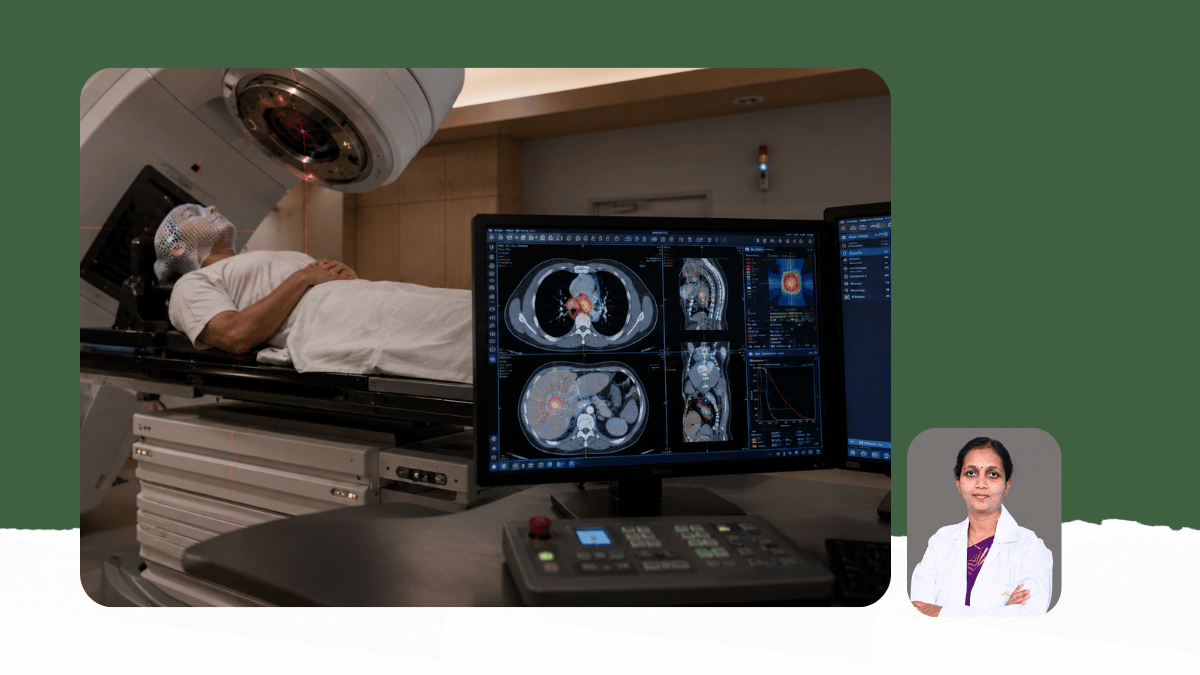
IMRT, IGRT, SBRT, and SRS are acronyms for different radiation delivery techniques, and patients encounter them all at various points in a cancer diagnosis and treatment journey. Let me explain each one and why the distinctions matter for treatment selection at SPARSH Hospital, Hennur Road, Bengaluru. IMRT, or Intensity Modulated Radiotherapy, refers to the shaping of the radiation dose to conform closely to the three-dimensional outline of the tumour while limiting the dose received by surrounding normal tissues. The radiation beam is divided into multiple small beamlets whose individual intensities are modulated by a computer-optimised plan to produce a dose distribution that treats the tumour adequately while sparing the organs at risk. It is now the standard technique for most cancer types, including breast cancer, cervical cancer, and prostate cancer. IGRT, or Image Guided Radiotherapy, refers to the use of imaging at the treatment machine, typically a cone-beam CT or surface guidance system, to verify that the patient is positioned exactly as planned immediately before each fraction is delivered. It is used in combination with IMRT rather than as an alternative to it: IMRT shapes the dose, IGRT verifies the position. Together, IMRT and IGRT produce the standard of precision radiation delivery at SPARSH Hospital. SBRT, or Stereotactic Body Radiotherapy, and SRS, or Stereotactic Radiosurgery, both refer to techniques that deliver very high doses of radiation to precisely defined, relatively small targets in a small number of fractions. The distinction is anatomical: SRS is the term used when the target is in the brain, and SBRT is used for targets elsewhere in the body, including lung, liver, spine, adrenal gland, and other sites. Both require extremely precise patient positioning and very accurate tumour targeting because the high dose per fraction means that any geographic miss has a significant consequence. The specific technique used for any individual patient is determined by the cancer type, the size and location of the tumour, the proximity to critical structures, and the clinical intent of treatment, and this determination is part of the treatment planning process at my clinic.
Written by
Dr. P Sasikala, MBBS, DMRT, DNB (Radiation Oncology), Best Paper Award (Indian Brachytherapy Society, 2016), Karnataka Leadership Award, Consultant Radiation Oncologist, SPARSH Hospital, Hennur Road, HBR Layout, Bengaluru 560043. Monday to Saturday, 9:00 AM to 5:00 PM. Phone: +91 80958 09322.
Related reading
Radiation Therapy for Women's Cancers: What Every Patient Deserves to Know

Link copied to clipboard!

Reach Dr. P Sasikala

Sparsh Hospital, Hennur

DivyaSree Avance, Hennur Bagalur Main Rd, Geddalahalli, Chikkanna Layout, HBR Layout, Bengaluru, Karnataka 560043