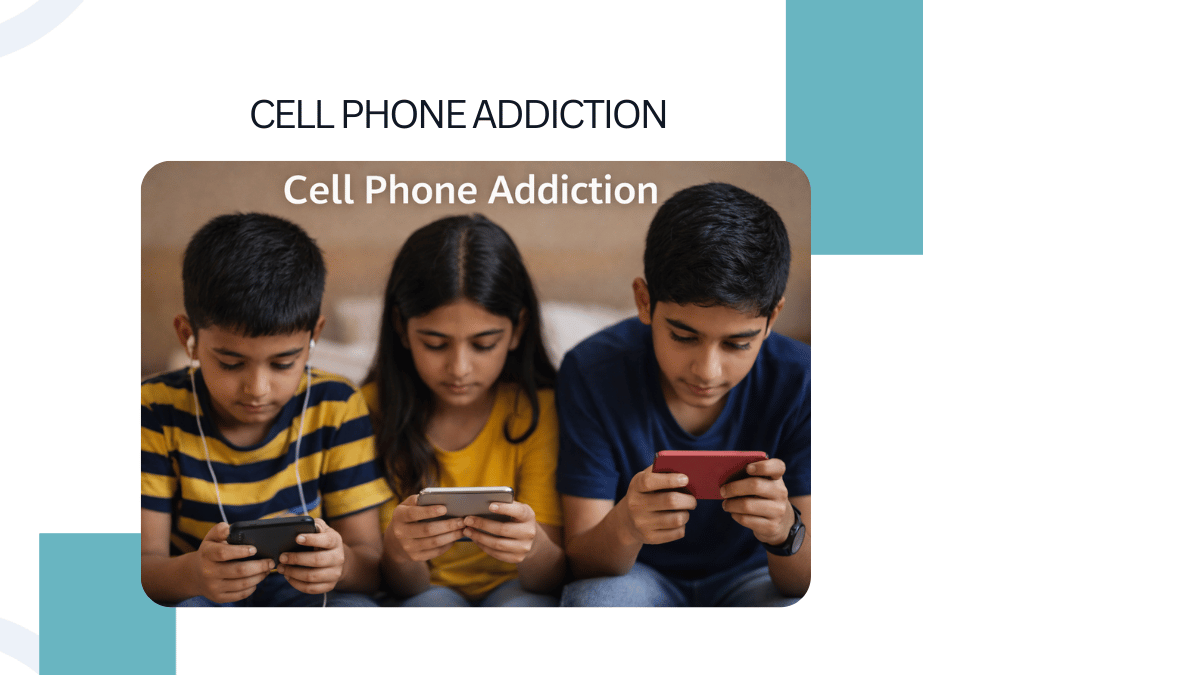
Research describes a range of psychological, behavioural and physical warning signs that may indicate cell phone addiction in children. These symptoms align with criteria for behavioural addiction including preoccupation, withdrawal and negative consequences stemming from excessive use.
PSYCHOLOGICAL AND EMOTIONAL WARNING SIGNS:
- Excessive smartphone use is linked to multiple mental health issues and behavioural changes in kids such as
Anxiety and Distress:
- A child may experience anxiety, irritability and restlessness when they are unable to use their phone which is a key withdrawal symptom.
Depression and Low Self-Esteem:
- Overuse particularly involving social media have been linked to higher rates of depression and anxiety in adolescents. Constant social comparison can have a negative impact on their self-esteem.
Preoccupation and Craving:
- An addicted child may have a persistent need to check their device for notifications and feel a constant craving to use it even when bored.
Changes in Mood:
- Increased screen time have been associated with higher levels of frustration, aggression and sudden emotional breakdowns.
BEHAVIOURAL WARNING SIGNS:
- Problematic phone use can dramatically interfere with a child's daily life altering their habits and behaviours.
Neglecting Responsibilities:
- Children may neglect schoolwork, chores or other obligations due to excessive phone use often resulting in lower academic performance.
Social Withdrawal and Conflict:
- They may prefer online interactions over face-to-face communication, leading to social isolation and damage to family relationships. Conflicts can arise when parents try to limit phone time.
Loss of Control:
- The child is unable to regulate their own phone usage and may spend more time on their device than they intended.
Secrecy and Lying
- To avoid confrontations, a child might hide their phone use or be defensive when questioned about their screen time.
Using Phones in Dangerous Situations
- An addicted child might use their phone in prohibited or dangerous situations, such as while crossing the street or at school.
PHYSICAL AND COGNITIVE WARNING SIGNS:
- The effects of excessive phone use are not limited to behaviour and can have a direct impact on a child's physical health and brain development.
Poor Mental Health:
- Constant digital stimulation can reduce a child’s attention span and makes it hard for them to focus on tasks that require sustained attention. Research also indicates that GABA neurotransmitter dysfunction may be a biological indicator and studies link early phone adoption to later mental health issues in adulthood.
Sleep Disturbances
- The blue light from screens can suppress melatonin, disrupting sleep cycles. Phone addiction is associated with insomnia and disturbed sleep patterns.
Eye Strain and Headaches
- Staring at the screen for long periods can lead to digital eye strain causing dry eyes, blurred vision and headaches.
Poor Posture and Pain
- The sedentary nature of phone use can lead to neck, shoulder and back pain.
Weight Gain
- Researches have associated excessive screen time with increased sedentary behaviour and a higher risk of obesity.
CONTRIBUTING FACTORS:
- Certain individual and environmental factors increase the risk of cell phone addiction:
Early Age of First Use:
- Children who receive their first smartphone at a younger age may face a higher risk for future mental health problems.
Emotional and Social Factors:
- Childhood emotional maltreatment, loneliness, low self-esteem and difficulty with emotional regulation are linked to problematic phone use.
Parental Behaviour:
- Parental phubbing (ignoring children to use their phones) is a significant moderator of a child's problematic phone use.
Confinement During Stressful Periods:
- Events like the COVID-19 pandemic's lockdowns have been associated with increased smartphone overuse.
Research & Studies:
- A meta-analysis found a median prevalence of problematic smartphone use (PSU) in children and adolescents to be 23.3%, with strong associations to increased odds of depression and anxiety.
- Another study linked individuals who got their first smartphone before age 13 to significantly higher rates of suicidal thoughts, aggression and other mental health issues in adulthood.
- Research from the Radiological Society of North America found heavy phone use in teens was linked to brain chemistry imbalances, specifically in the GABA system, which can be normalised only after successful treatment.




Add a Comment