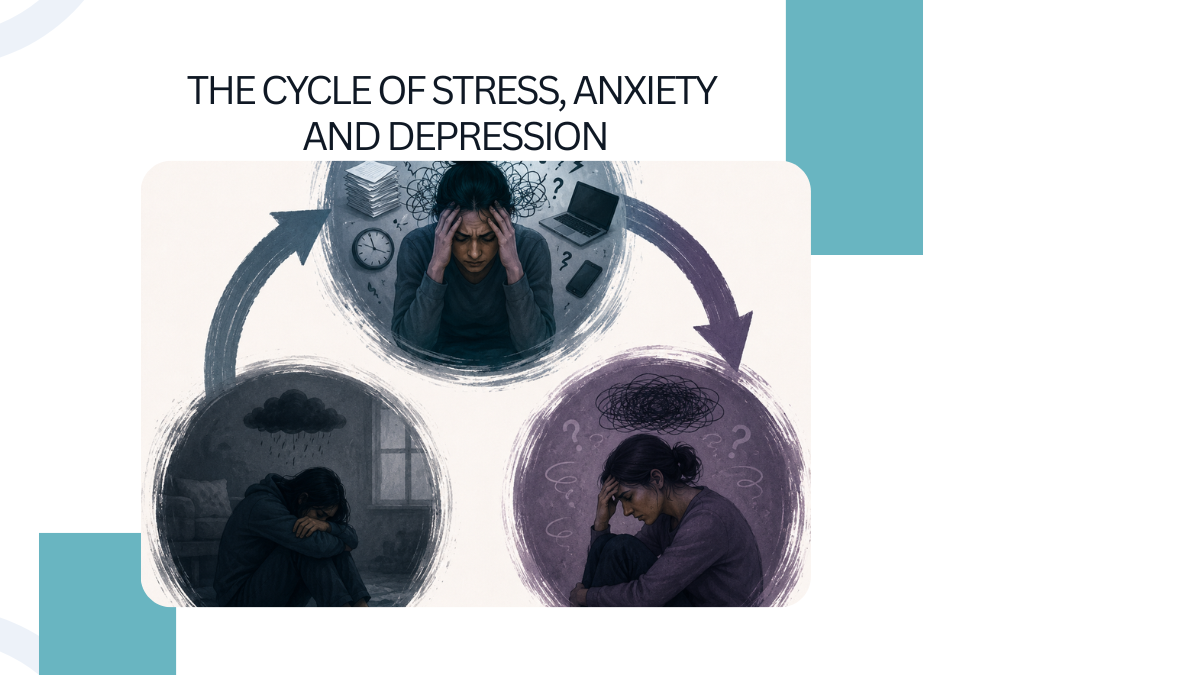
How Stress Leads to Anxiety and Depression
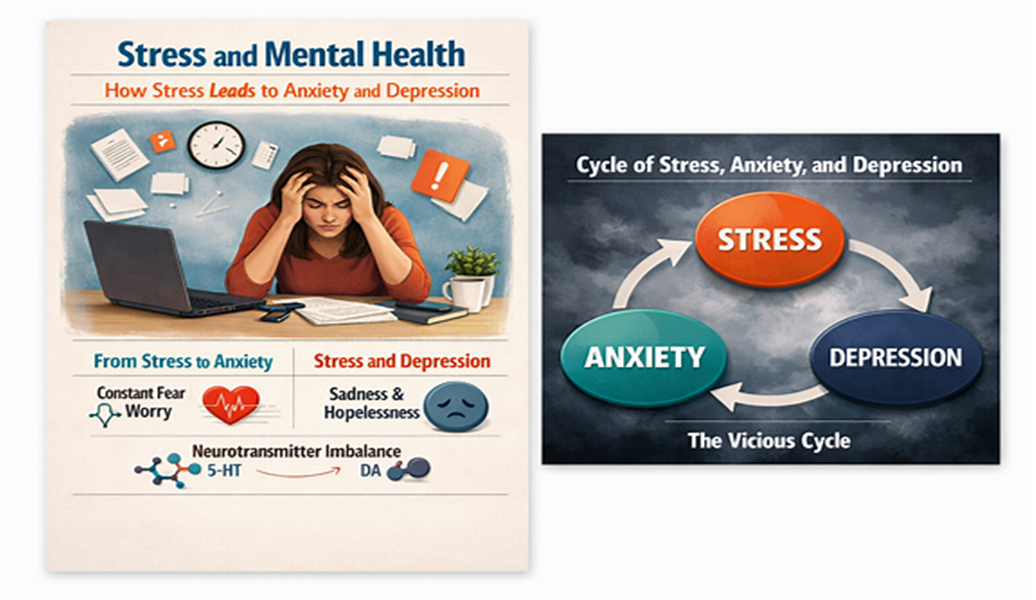
Stress Response:
- Stress is the body’s reaction to external demands such as deadlines, conflicts or financial strain.
- The hypothalamic-pituitary-adrenal (HPA) axis releases cortisol and adrenaline, preparing the body to cope.
- Short-term stress can be adaptive, but chronic stress exhausts the system, impairing sleep, immunity and emotional balance.
Transition to Anxiety:
- When stress persists, the body remains in a heightened state of vigilance.
- Symptoms: constant worry, restlessness, rapid heartbeat and difficulty concentrating.
- Unlike stress, anxiety continues even after the stressor is gone, becoming self-sustaining.
Progression to Depression:
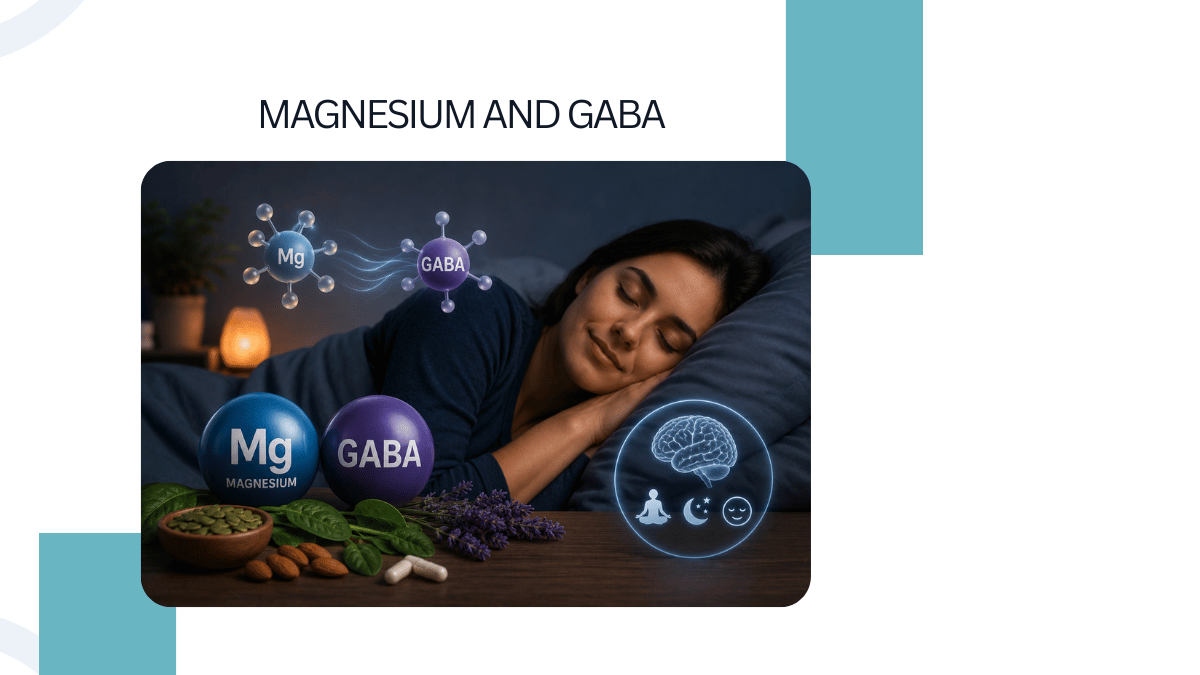
- Prolonged anxiety and exhaustion can deplete neurotransmitters like serotonin and dopamine, leading to low mood.
- Symptoms: persistent sadness, hopelessness, loss of interest and fatigue.
- Depression represents a stress response gone awry, where the brain’s adaptive systems begin to malfunction.
The Harmful Cycle:
- Stress → Anxiety → Depression forms a reinforcing loop.
- Depression reduces coping ability, which increases stress, perpetuating the cycle.
- Breaking this cycle requires early stress management, therapy and lifestyle interventions.
Conclusion
Managing stress is not just about relaxation - it is critical for preventing anxiety and depression. Techniques like breathing exercises, mindfulness, physical activity and professional counselling can help restore balance and protect mental health.


Add a Comment