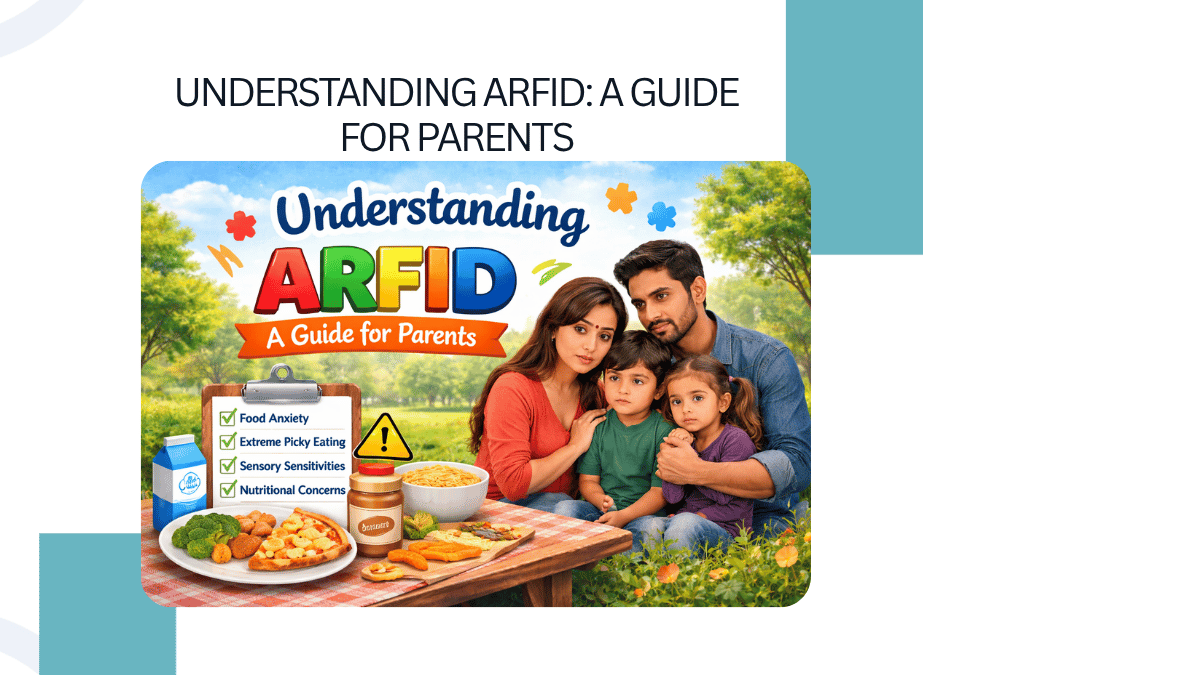
Avoidant/Restrictive Food Intake Disorder (ARFID) is a relatively new diagnosis in the field of eating disorders, formally recognized in the DSM-5 in 2013. Unlike anorexia nervosa or bulimia nervosa, ARFID is not driven by body image concerns. Instead, children avoid or restrict food due to sensory sensitivities (taste, texture, smell), lack of interest in eating or fear of negative experiences such as choking or vomiting.
🚸 Why Parents Should Know
Children with ARFID may:
• Eat very limited types of food.
• Show distress around mealtimes.
• Experience nutritional deficiencies, weight loss or poor growth.
• Struggle socially (e.g., avoiding parties or school lunches).
ARFID can overlap with conditions like autism, ADHD and anxiety, making early recognition important. Studies suggest prevalence in children ranges from 0.3% to 5.5%, though higher rates are seen in clinical settings.
🩺 Signs to Watch For
• Persistent avoidance of foods without body image concerns.
• Reliance on supplements or feeding tubes.
• Frequent complaints of abdominal pain or fear of choking.
• Noticeable impact on health or daily functioning.
🌈 Treatment Approaches
Effective care focuses on:
• Restoring nutrition and growth.
• Gradually expanding food variety.
• Addressing fears through therapies such as cognitive-behavioural therapy, family-based therapy and exposure therapy.
• In some cases, medication may support progress.
💡 Takeaway
ARFID is not “picky eating.” It is a serious condition that requires understanding and professional support. Parents play a vital role in early recognition and in creating a supportive environment for recovery.



Add a Comment