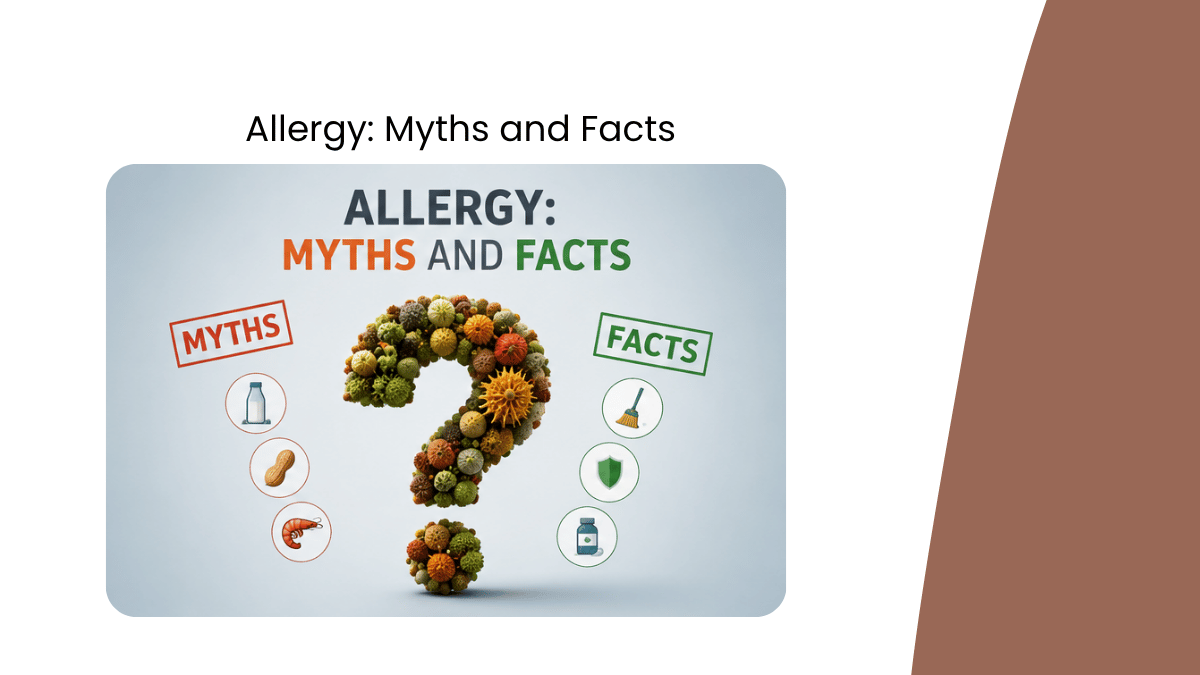
Myth 1: Allergies are harmless
Fact: Allergies have a major impact on the quality of life. Severe allergic reactions (anaphylaxis) which are usually caused by allergies to foods, drugs and insect stings can even be life threatening.
Untreated or partially treated allergic rhinitis leads to poor sleep quality, fatigue, and daytime sleepiness. Adults might find it hard to think, function, and need more time off work. Untreated allergic rhinitis in school-aged children may lead to learning problems and reduced school performance.
Untreated allergies can also cause worsening of other chronic respiratory problems like asthma, sinusitis and skin disorders such as eczema and urticaria.
Myth 2: Food allergies are not serious
Facts: Food allergies can be life-threatening. Food allergy can cause symptoms like urticaria, coughing, swelling of face and tongue, breathing difficulty, and loss of consciousness. People with food allergies must be very conscious of their food habits.
Myth 3: Eating a small amount of a food that you are allergic to won't hurt you
Fact: Intake of even trace amount of a food allergen can cause a severe reaction called anaphylaxis in some people. The food that a person is allergic to must be completely eliminated from his/her diet to keep them safe. It is also important to avoid cross contact between a safe food and a food allergen for a person. Cross contact with a food allergen to which the person is sensitised to makes the safe food unsafe for that person.
Myth 4: Allergic reaction happens when a child eats a food for the first time.
Fact: When a child eats a food for the first time he/her might get sensitised towards the allergen and in subsequent exposures the effects of the allergy may be observed.
Myth 5: Allergies and asthma can be cured
Fact: There are currently no cures for asthma or allergies, even though effective treatments are available. With appropriate diagnosis and management, symptoms can be prevented and treated. The closest thing to cure for some allergies is allergen immunotherapy (also known as desensitisation).
Myth 6: Moving to another region can cure allergies
Fact: Allergic rhinitis might be triggered by wind-blown pollen, mostly in spring and summer, or by other allergens such as house dust mite, animals and mould spores all year round. Moving away from the source of allergen (such as to another state, or from inland areas to the coast), may provide short-term relief from symptoms. However exposure to new plants or other allergens such as moulds or house dust mite can cause people to develop new allergies.
Myth 7: You cannot develop an animal allergy if you do not have pets
Fact: Animal allergens, particularly cat and horse allergens, can be carried on clothes. This may sensitise other people who do not have pets themselves and trigger symptoms in sensitive people.
Myth 8: Some animals are better for people with asthma and allergies
Fact: Allergens in cats are mainly from their skin glands and in dogs from their saliva. Even if some breeds do not shed dander, allergens can still become attached to dust particles in the house on walls, carpets, bedding, clothing, and curtains. This does not easily break down with time. These allergens can be continuously suspended in air, even if the animal has been removed from the house or is not in the bedroom.
The amount of allergen shed by an animal may vary with factors such as sex, whether de-sexed or not, length of hair, fur or wool, but the allergen is the same among different species.
Allergies to other animals such as guinea pigs, horses and mice have also been reported. Even iguanas can trigger allergies. Therefore there are no hypoallergenic animals.
Myth 9: Smoking does not trigger asthma
Facts: Smoking is a known trigger of asthma attacks. Babies who are born to mothers who smoke or are exposed to smoke have a greater chance of developing asthma than children of non-smoking mothers.
Myth 10: Continuous exposure to animals will decrease your allergy symptoms
Reality: Continuous exposure does not decrease allergy or desensitise in an allergic person. In fact, one in three people who are already allergic and exposed to indoor pets will become allergic to them as well over time. The proteins found in a pet's dander (skin flakes, hair, fur, wool, saliva and urine) or feathers can cause an allergic reaction or trigger asthma in some people. Pet hair, fur or wool can also collect pollen and other outdoor allergens. Keeping indoor pets is also associated with asthma and the need for more medication.
Myth 11: Eliminating wheat and milk helps relieve the symptoms of asthma and hay fever
Reality: Eliminating wheat and milk from diet only helps your allergy if a person is diagnosed with an allergy to wheat and milk. Unnecessary removal of wheat or dairy products from diet can affect nutrition, growth, and development particularly in children.
Scientifically, there is no evidence that milk either increases mucus production or worsens asthma. Patients may react to cold drinks (such as milk), with wheezing because of inhalation of cool dry air while it is being drunk.
To book a consultation with Dr. Nayan Mani Deka at Pratiksha Rainbow Children's Hospital, VIP Road, Borbari, Guwahati, Assam 781036 (Monday to Saturday, 10:00 AM to 5:00 PM), call +91 9436732863 or visit linqmd.com/doctor/nayan-mani-deka
Written by Dr. Nayan Mani Deka, MBBS, MD (Paediatrics), Diploma in Allergy and Asthma (CMC Vellore), Certified PALS, APLS, NSSK, Consultant Paediatrician, Asthma Allergy Specialist and Immunotherapist, Pratiksha Rainbow Children's Hospital, VIP Road, Borbari, Guwahati, Assam 781036. Phone: +91 9436732863 / +91 6000714825 / +91 8812866239.

Add a Comment