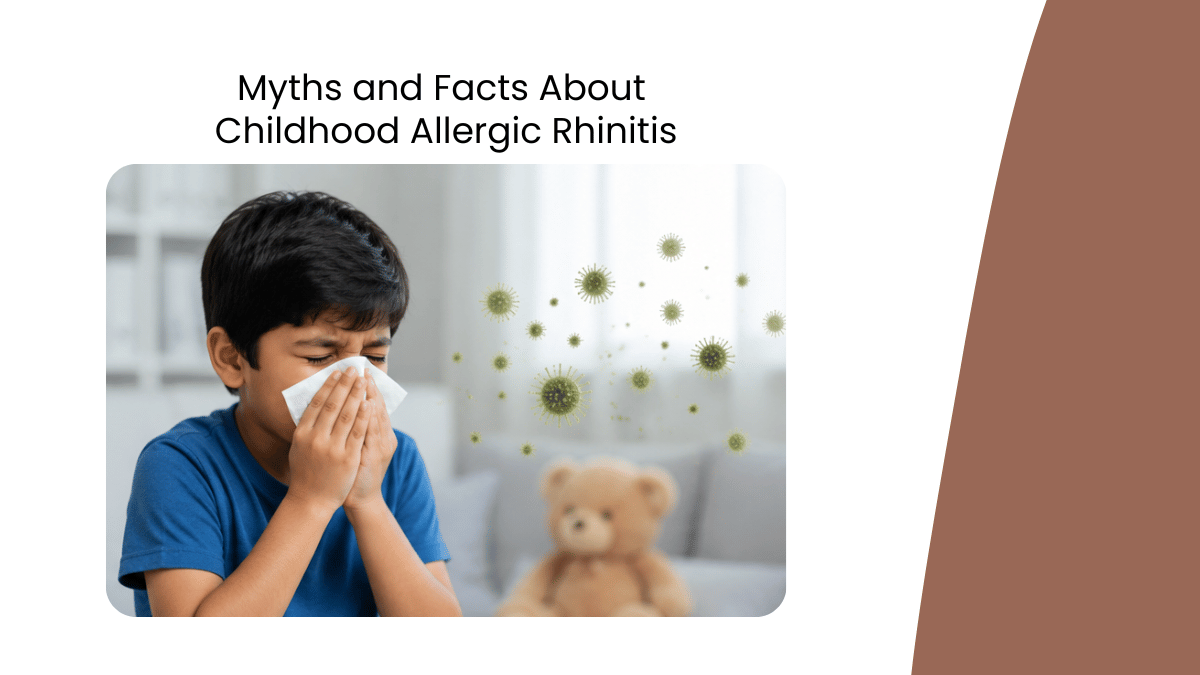
Allergic rhinitis is one of the most commonly misunderstood conditions in childhood, and the myths that surround it delay diagnosis, discourage treatment, and allow avoidable complications to develop. As a Consultant Paediatrician and Asthma Allergy Specialist at Pratiksha Rainbow Children's Hospital, Guwahati, I correct these misconceptions every day in my clinic. Here are eight of the most frequent ones. Childhood allergic rhinitis is underdiagnosed and undertreated precisely because myths about it are so widely believed.
Myth 1
It is just a common cold that keeps coming back.
Fact
Allergic rhinitis is not a cold. It is an immune response to allergens like pollen, dust mites, or pet dander. Unlike viral colds, it does not go away in a few days and often follows a seasonal or year-round pattern. The child who appears to have colds every few weeks is far more likely to have allergic rhinitis than recurrent viral infections.
Myth 2
Children will outgrow allergic rhinitis.
Fact
Some children may experience a reduction in symptoms with age, but many continue to have symptoms into adulthood. Early identification and management are essential to prevent complications like asthma or sinusitis.
Myth 3
Allergic rhinitis is not serious , it does not need treatment.
Fact
Untreated allergic rhinitis can lead to poor sleep, impaired school performance, ear infections, and worsening asthma. Proper treatment improves quality of life significantly.
Myth 4
All runny noses in children are due to allergies.
Fact
While allergic rhinitis is a common cause of nasal symptoms, infections, anatomical problems such as enlarged adenoids, or irritants can also cause similar complaints. A detailed history and sometimes allergy testing help clarify the cause.
Myth 5
Antihistamines make kids sleepy and should be avoided.
Fact
Newer generation antihistamines such as loratadine, cetirizine, and fexofenadine are non-sedating and safe for children. They effectively reduce sneezing, runny nose, and itching with minimal side effects. It is the older antihistamines that cause sedation, not the modern ones.
Myth 6
Allergic rhinitis can be cured permanently with medications.
Fact
Medications control symptoms but do not cure the allergy. Long-term management involves avoiding triggers and, in some cases, allergen-specific immunotherapy. Immunotherapy is the only available treatment that can modify the underlying allergic response and reduce sensitivity over time.
Myth 7
Children with allergic rhinitis should avoid outdoor play.
Fact
Children can and should play outside. Parents can manage exposure during high-pollen times such as early morning and windy days, and encourage regular physical activity while managing allergies with appropriate medications. Avoiding outdoor play entirely is unnecessary and deprives children of important physical and social development.
Myth 8
Nasal sprays are addictive and unsafe for children.
Fact
Nasal steroid sprays, when prescribed and used correctly, are safe and effective in children with allergic rhinitis and are the most effective treatment available for nasal symptoms. The sprays that cause dependency are decongestant sprays such as oxymetazoline, which are not recommended for regular use. These are a different category of medication entirely. Nasal steroid sprays do not cause addiction or dependence.
To book a paediatric allergy consultation with Dr. Nayan Mani Deka at Pratiksha Rainbow Children's Hospital, VIP Road, Borbari, Guwahati, Assam 781036, call +91 9436732863 or +91 6000714825 or visit linqmd.com/doctor/nayan-mani-deka
Written by Dr. Nayan Mani Deka, MBBS (Gauhati Medical College, 2003), MD Paediatrics (GMCH Gauhati, 2008), Diploma in Allergy and Asthma (CMC Vellore), Certified PALS, APLS, NSSK, Consultant Paediatrician, Asthma Allergy Specialist and Immunotherapist, Pratiksha Rainbow Children's Hospital, VIP Road, Borbari, Guwahati, Assam 781036. Phone: +91 9436732863 / +91 6000714825.
Related reading
Pediatric Allergy: Focus on Food Allergy and Anaphylaxis

Add a Comment