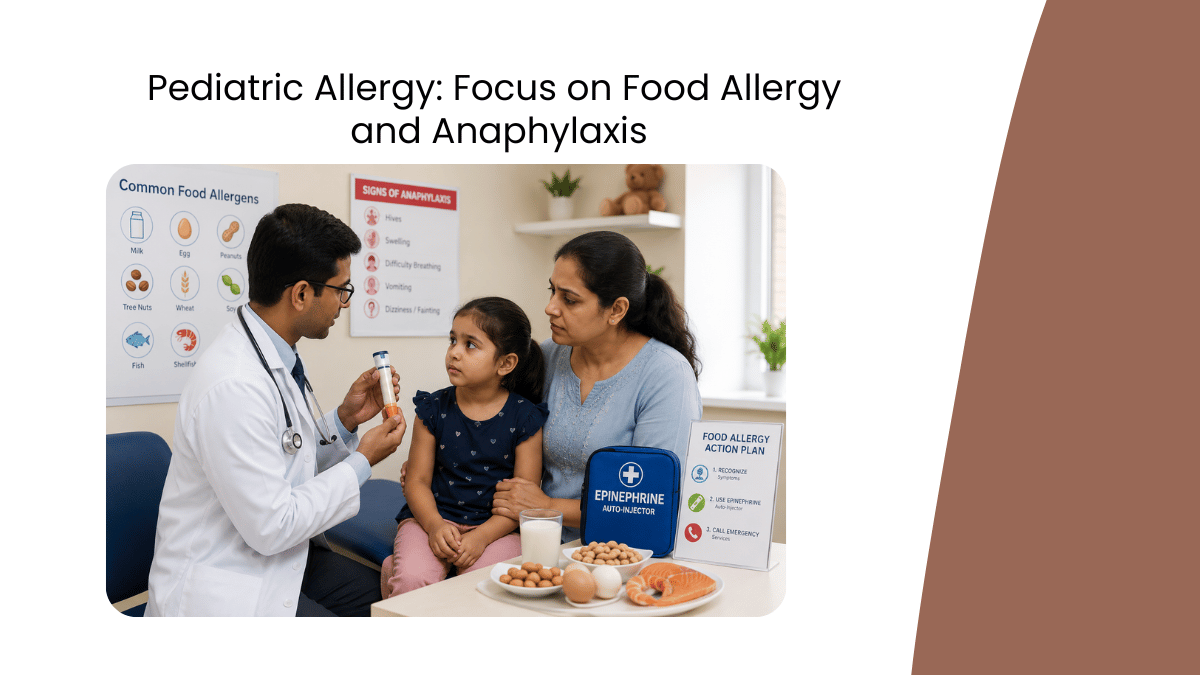
Can something as simple as a food trigger a serious allergic reaction in a child? Food allergies are increasingly important for parents and caregivers to understand because reactions can range from mild skin symptoms to a severe, life-threatening emergency called anaphylaxis. As a Consultant Pediatrician and Asthma Allergy Specialist, I believe that awareness, early recognition, and timely action can help families manage food allergies safely and confidently.
What Is an Allergy?
An allergy occurs when a child's immune system reacts to normally harmless substances, known as allergens, such as foods, dust, or pollen. This reaction can affect the skin, stomach, breathing, or sometimes the whole body.
What Is Food Allergy?
Food allergy is an immune reaction to specific foods. In some children, even a small amount of the trigger food can cause symptoms. Common food allergens include milk, egg, peanut and nuts, wheat, soy, fish, and shellfish.
Symptoms of Food Allergy
Symptoms usually appear within minutes to two hours after eating. Skin symptoms may include hives, itching, or swelling of the lips and face. Stomach-related symptoms can include vomiting, abdominal pain, or diarrhoea. Some children may develop respiratory symptoms such as coughing, wheezing, or difficulty breathing.
Recognising these symptoms early is important, particularly if they appear soon after a child has eaten a particular food.
What Is Anaphylaxis?
Anaphylaxis is a severe, life-threatening allergic reaction that needs urgent treatment. Warning signs can include difficulty breathing, swelling of the tongue or throat, repeated vomiting, dizziness or fainting, or a child becoming weak, pale, or unresponsive.
What to Do in an Emergency?
If anaphylaxis is suspected, give adrenaline (epinephrine) immediately if available and prescribed, and rush to the nearest hospital for emergency medical care. Lay the child flat and raise the legs if possible and appropriate. Most importantly, do not delay treatment.
Antihistamines are NOT enough to treat anaphylaxis. Adrenaline is the first-line emergency treatment.
How Is Food Allergy Diagnosed and Managed?
Doctors diagnose food allergies based on the child's history of reactions and, when appropriate, allergy tests such as skin or blood tests. Management involves strictly avoiding the trigger food, always checking food labels, and informing the child's school and caregivers about the allergy. Parents should also carry emergency medicines if prescribed and understand clearly when and how to use them.
Can Food Allergy Be Outgrown?
Some food allergies can improve as children grow. Milk and egg allergies may improve with age, while peanut and nut allergies may persist in some children. Regular follow-up with a doctor is therefore important to monitor the condition and guide ongoing management.
Can Food Allergies Be Prevented?
Complementary feeding can generally begin at around six months of age. Early introduction of common foods as part of age-appropriate complementary feeding may help reduce the risk of certain food allergies in some children. Breastfeeding is also beneficial for overall infant health and nutrition.
Parents should seek medical advice for repeated reactions to food, breathing difficulty, severe symptoms, or any suspected allergic reaction.
Key Message for Parents
Food allergy can be serious, but with awareness, appropriate management, and early action, children with food allergies can be cared for safely. Parents, schools, and caregivers should know how to recognise symptoms and respond quickly during an emergency.
Recognise the symptoms early and act fast. In anaphylaxis, timely adrenaline can save lives.
To book a consultation with Dr Nayan Mani Deka at Pratiksha Rainbow Children's Hospital, VIP Road, Borbari, Guwahati, Assam 781036, call +91 9436732863 / +91 6000714825 or visit linqmd.com/doctor/nayan-mani-deka
Written by Dr Nayan Mani Deka, MBBS (Gauhati Medical College, 2003), MD Paediatrics (GMCH Gauhati, 2008), Diploma in Allergy and Asthma (CMC Vellore), Certified PALS, APLS, NSSK, Consultant Paediatrician, Asthma Allergy Specialist and Immunotherapist, Pratiksha Rainbow Children's Hospital, Guwahati, Assam.
Related reading
Mastering Complex Pediatric Allergies: An Advanced, Personalized Approach to Immunology
World ORS Day: Every Sip Counts - What Every Parent Must Know About ORS and Zinc
A Personal Journey of Hope, Precision, and Lifelong Impact in Neonatal Intensive Care
Add a Comment