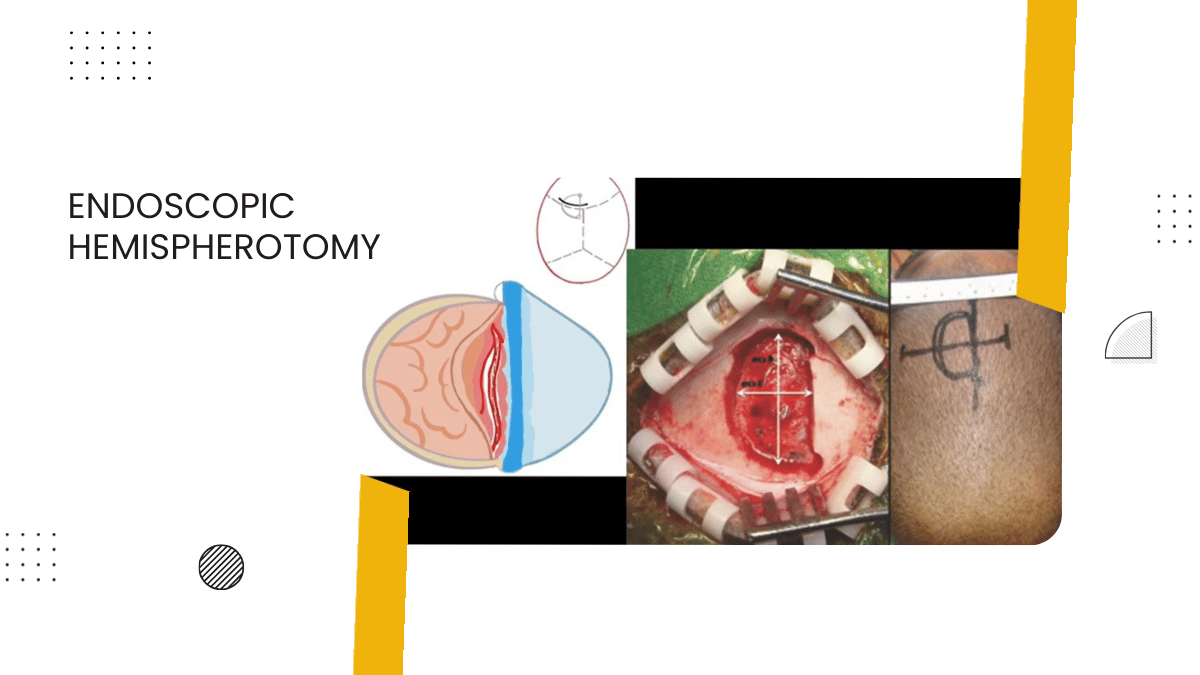
Endoscopic Hemispherotomy for Nonatrophic Rasmussen's Encephalopathy is a pioneering minimally invasive surgical technique developed by Dr. Ramesh Doddamani at AIIMS, New Delhi, for the management of progressive, drug-resistant epilepsy caused by Rasmussen’s encephalitis. Rasmussen’s encephalitis is a rare, chronic inflammatory neurological disorder that typically affects one cerebral hemisphere, leading to intractable seizures, progressive hemiparesis, and cognitive decline. In cases where medical management fails, surgical intervention through hemispheric disconnection becomes the most effective option for seizure control and functional preservation.
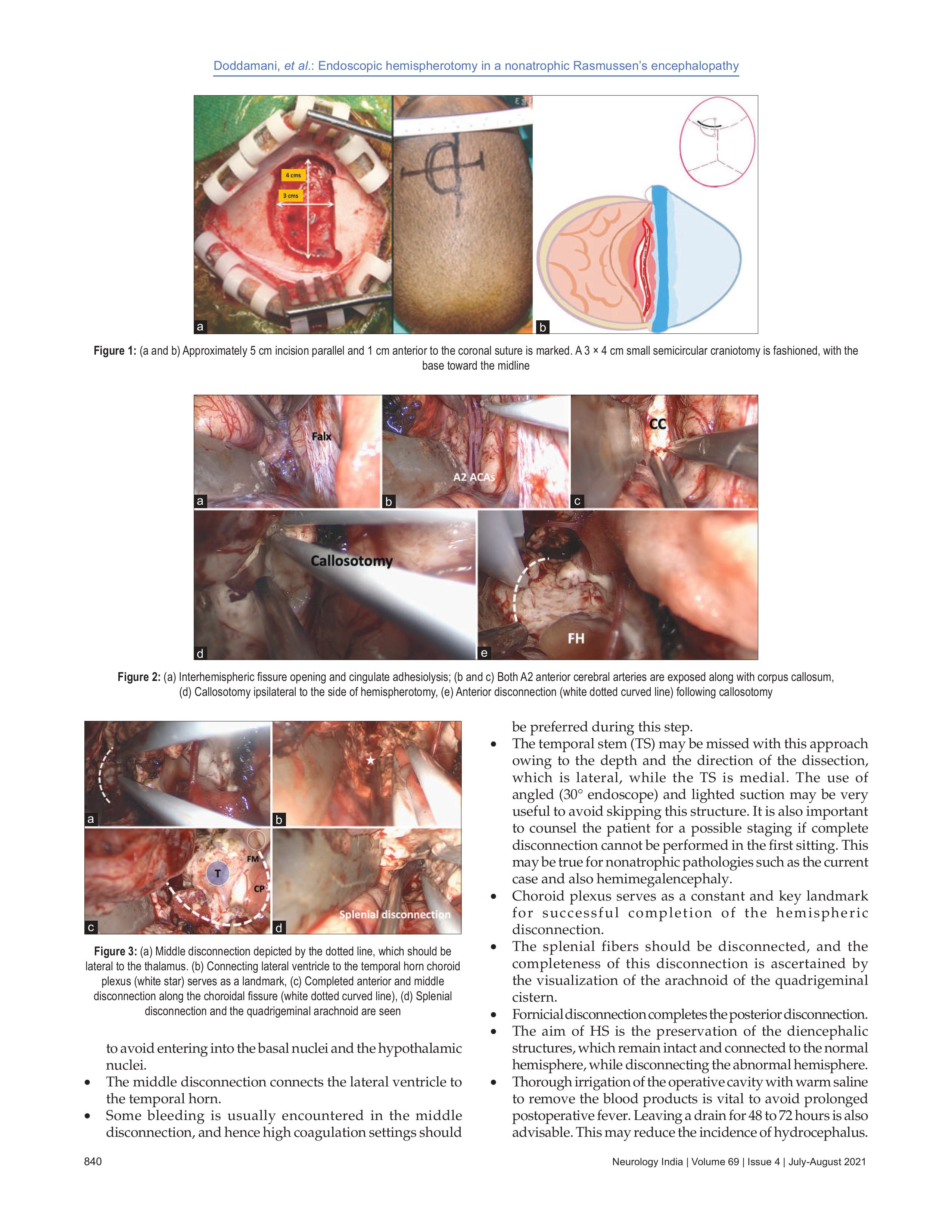
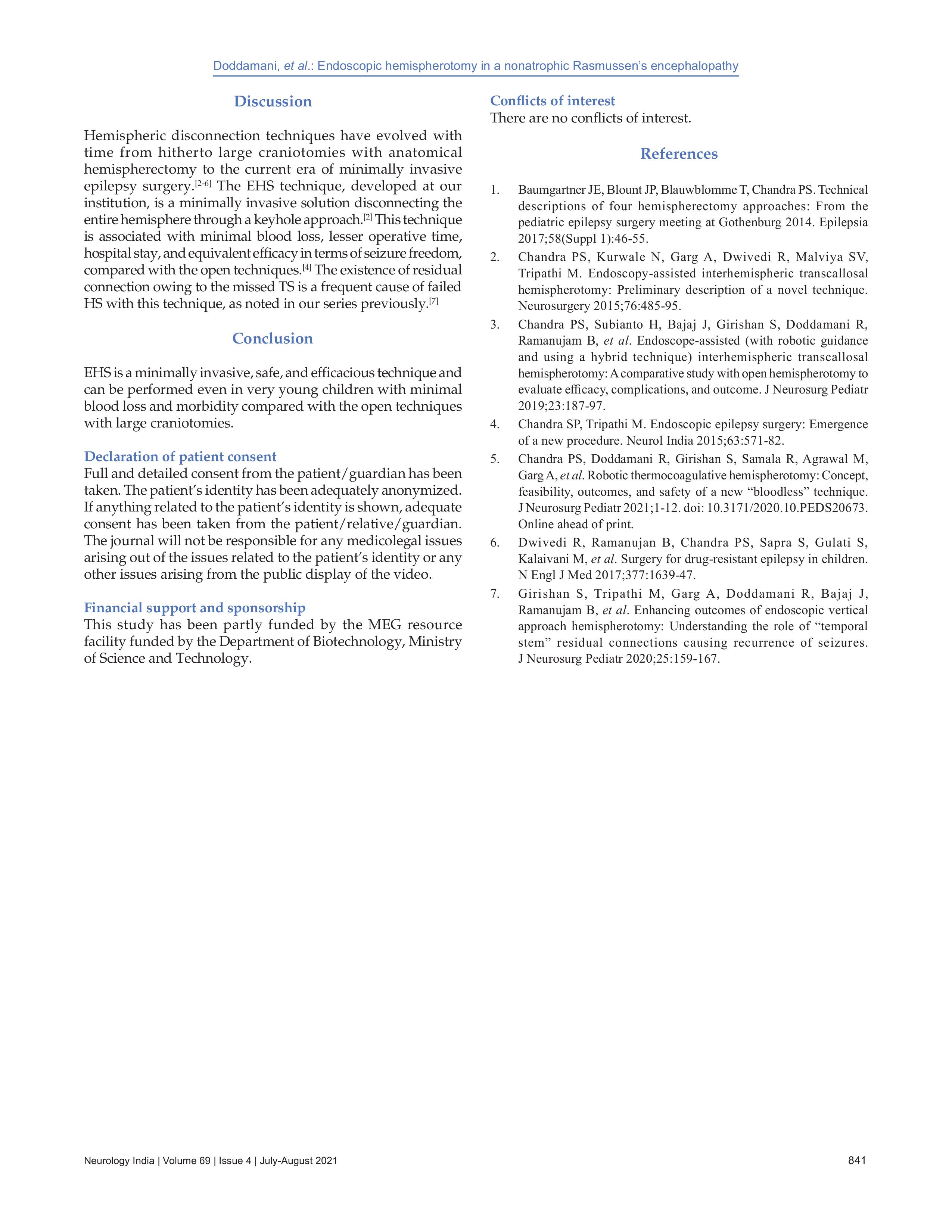
This endoscopic approach allows surgeons to achieve complete functional hemispheric disconnection while minimizing the need for large craniotomies and extensive cortical exposure. By using endoscopic visualization and precise anatomical guidance, the procedure reduces intraoperative blood loss, brain tissue trauma, and postoperative complications, while enabling faster recovery and shorter hospital stays compared to traditional open hemispherotomy.
The technique is particularly suited for nonatrophic Rasmussen’s encephalitis, where the affected hemisphere retains normal volume but is functionally epileptogenic. Clinical outcomes demonstrate significant reduction in seizure frequency and improved quality of life, while preserving the contralateral hemisphere and overall neurological function.
Endoscopic hemispherotomy reflects Dr. Doddamani’s commitment to advanced, minimally invasive functional neurosurgery and represents a significant advancement in the treatment of complex, drug-resistant pediatric and adult epilepsies. By combining precision, safety, and efficacy, this technique provides a modern surgical solution for one of the most challenging epilepsy syndromes.

Add a Comment