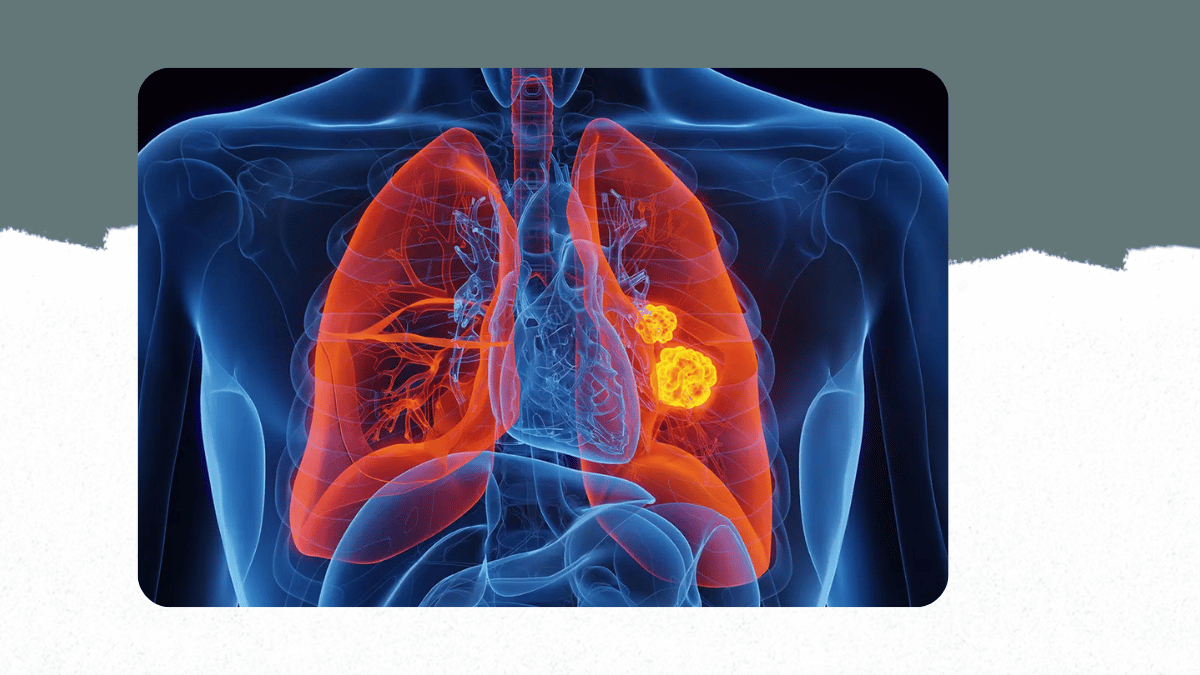
As a medical oncologist, I spend my days navigating the delicate space between devastating diagnoses and cutting-edge science. In my clinic, there has historically been no diagnosis more feared than Stage IV lung cancer. For decades, the medical consensus was grim and absolute. If lung cancer had spread beyond the lungs and nearby lymph nodes to distant organs, like the brain, liver, or bones, the disease was considered systemic and incurable. Our goals shifted entirely to palliative care. We aimed to buy time and reduce suffering using whole-body treatments like traditional chemotherapy, fully accepting that local treatments like surgery or radiation were useless against a fire that had already spread across the forest. But as we sit here in 2026, the landscape of thoracic oncology has been radically transformed. We are no longer treating all Stage IV lung cancers as a single, insurmountable wildfire. We have discovered that sometimes, the cancer only manages to send out a few, isolated sparks. We call this oligometastatic lung cancer, and our ability to identify and precisely target these isolated spots has fundamentally rewritten the rulebook for how we treat, and sometimes functionally cure, advanced lung disease.
The Enigma: What Is Oligometastatic Lung Cancer?
The prefix oligo comes from Greek, meaning few or scant. Oligometastatic lung cancer refers to an intermediate state of disease. The cancer has escaped the lung, but it has not exploded systemically. According to the latest consensus from the International Association for the Study of Lung Cancer (IASLC), we generally define this as having a maximum of five distant metastatic spots in up to three organs. Why does this happen? We now understand that cancer spread is dictated by biology, not just bad luck. Some lung cancers lack the genetic machinery required to easily set up camp in new environments. They might manage to escape into the bloodstream, but they can only survive in one or two highly specific locations, perhaps a single nodule in the adrenal gland, or two small spots in the brain. For a long time, we could not accurately identify these patients because our scans simply were not sensitive enough. We assumed a few visible spots meant hundreds of invisible ones. Today, next-generation molecular PET scans act like high-definition radar, allowing us to see exactly where the cancer is, and just as importantly, where it is not.
The "Zap Everything" Era vs the 2026 Reality
When the concept of oligometastatic cancer first gained traction, the oncology world was buzzing with a simple, seductive idea: If we can see the spots, let's just zap them all. Early trials, like the famous SABR-COMET study, showed that aggressively radiating these few metastatic spots could double survival times for some patients. This ushered in an era where we tried to use SBRT (Stereotactic Body Radiotherapy), a highly precise, high-dose, non-invasive radiation, on almost every oligometastatic patient. But science is a continuous process of refinement, and the reality of lung cancer is incredibly complex.
A massive reality check arrived with the highly anticipated NRG-LU002 trial, which concluded its data analysis recently. This trial looked at patients with oligometastatic non-small cell lung cancer (NSCLC) who were doing well on modern immunotherapy regimens. Half the patients continued their medication, while the other half received medication plus aggressive radiation (LCT) to all their metastatic spots. The results were a sobering but vital lesson: adding aggressive radiation to immunotherapy for every single patient did not significantly improve overall survival. In fact, it sometimes increased severe side effects, like lung inflammation (pneumonitis). This was a watershed moment. It taught us in 2026 that we cannot simply zap our way out of Stage IV lung cancer across the board. Instead, we must be clinical snipers. We must use the distinct biology of the tumor to decide who gets aggressive local therapy and who is better served by medication alone.
Precision Oncology: Who Actually Benefits?
So, if we are not radiating everyone, who is the ideal candidate for this aggressive, potentially curative approach in 2026? It comes down to molecular drivers and metastatic tempo.
1. The Driver Mutation Super-Responders
Roughly 20 to 30% of non-small cell lung cancers are driven by specific genetic typos, such as EGFR mutations or ALK fusions. We treat these not with chemotherapy, but with oral Targeted Tyrosine Kinase Inhibitors (TKIs), like osimertinib or alectinib. These pills are miraculously effective, but eventually, the cancer tries to outsmart them. Often, the cancer does not mutate everywhere at once. It exhibits oligoprogression, where the medication keeps 99% of the cancer asleep, but one single spot in the liver or bone figures out a workaround and starts growing. This is where SBRT shines brilliantly. Instead of taking the patient off a highly tolerable, life-saving pill, we leave them on it and use pinpoint radiation to obliterate the one rebel tumor. By doing this, we are extending the life of these targeted therapies by years, turning a fatal progression into a minor speedbump.
2. The Brain Outposts
Lung cancer has a notorious affinity for the brain. In the past, brain metastases meant whole-brain radiation, which carried devastating cognitive side effects. Today, if a lung cancer patient presents with just a few isolated spots in the brain, we use a specialized form of SBRT called Stereotactic Radiosurgery (SRS). We deliver a lethal dose of radiation directly to the tumors in a single afternoon, sparing the healthy brain tissue entirely. This allows patients to maintain their cognitive function, memory, and personality while systemic drugs, like next-generation ADCs or immunotherapies, go to work on the rest of the body.
3. The "De Novo" Slow Growers
Sometimes we find a patient whose lung cancer has spread to just one other organ, like a single nodule in the adrenal gland, and it is growing very slowly. If their cancer responds beautifully to a few rounds of systemic therapy, proving the microscopic disease is under control, we will bring in the heavy local artillery. We will surgically remove or radiate the lung tumor and the adrenal spot, aiming for a complete eradication of all visible disease.
The Modern Playbook: A Coordinated Strike
When a patient with oligometastatic lung cancer sits in my office today, their treatment is never decided by one doctor. It is orchestrated by a multidisciplinary tumor board, a team of medical oncologists, radiation oncologists, thoracic surgeons, and molecular pathologists. Our playbook relies on a coordinated strike.
Therapy Type | The Weapon | The Goal
Systemic Therapy | Immunotherapy, TKIs, or Antibody-Drug Conjugates (ADCs) | The Shield: circulating through the blood to neutralize microscopic, invisible cancer cells.
Local Therapy | SBRT/SABR or minimally invasive robotic surgery | The Sword: physically obliterating the visible, macroscopic tumors that threaten vital organs.
By combining the systemic shield with the local sword in the right patients, we are achieving outcomes that were considered medical science fiction just ten years ago.
Redefining Cure and Buying Time
Are we curing Stage IV lung cancer? As oncologists, we are terrified of false hope. We know this disease is relentless. But the data from the last few years forces us to redefine what a cure looks like. If a patient with an EGFR mutation and two bone metastases receives targeted pills and SBRT, watches their scans become completely clear, lives a high-quality life for another fifteen years, and ultimately passes away from natural causes in their eighties, we have achieved a functional cure.
And even when the cancer eventually returns, the oligometastatic approach buys us the most precious commodity in oncology: Time. In 2025 and 2026 alone, the FDA approved a wave of entirely new drug classes for lung cancer, including novel Antibody-Drug Conjugates (smart-bombs that deliver chemotherapy directly to cancer cells) and next-generation targeted therapies. If we can use SBRT to keep a patient's cancer at bay for an extra two or three years, we are building a bridge. We are keeping them strong and progression-free just long enough for the next breakthrough drug to clear clinical trials and reach the pharmacy.
A Message of Hope Grounded in Reality
Hearing the words metastatic lung cancer is a trauma that stops time. The fear it induces is profound. But I want patients and their families to understand that the narrative of this disease has fractured. It is no longer a single, predetermined path. We are no longer throwing our hands up in defeat, nor are we blindly radiating every tumor we see. We have entered the era of true precision.
By understanding the unique molecular biology of your tumor, tracking its tempo, and utilizing hyper-precise radiation technologies, we are turning oligometastatic lung cancer from a fatal inevitability into a chronic, manageable, and sometimes entirely clearable condition. Hope in 2026 is not just a comforting sentiment. It is driven by data, delivered by technology, and lived by the thousands of patients who are rewriting what it means to survive Stage IV disease.
To book a lung cancer or oligometastatic cancer consultation with Dr. Swaroop Revannasiddaiah at NiSH Clinic, 48, 7th B Main Road, near Vinayaka Temple, 4th Block, Jayanagar, Bengaluru 560011 (Monday to Thursday, 3:00 PM to 4:00 PM), call +91 9731174360 or visit linqmd.com/doctor/swaroop-r
Written by Dr. Swaroop Revannasiddaiah, MBBS, MD (Radiotherapy and Clinical Oncology), DM (Medical Oncology), MRCP (Medical Oncology, Royal College of Physicians, UK), ESMO Certified, Thoracic Oncology Certification (University of Michigan, USA), Senior Consultant Medical Oncologist, NiSH Clinic, 48, 7th B Main Road, near Vinayaka Temple, 4th Block, Jayanagar, Bengaluru, Karnataka 560011. Phone: +91 9731174360. Clinic: Monday to Thursday, 3:00 PM to 4:00 PM.
Related reading
Curing Metastatic Cancer in the Modern Era: The Enigma Named Oligometastatic Cancer
Curing Metastatic Cancer in the Modern Era: The Phenomenon Named Oligometastatic Breast Cancer
Personalized Cancer Treatment: How Precision Oncology is Changing Cancer Care



Add a Comment