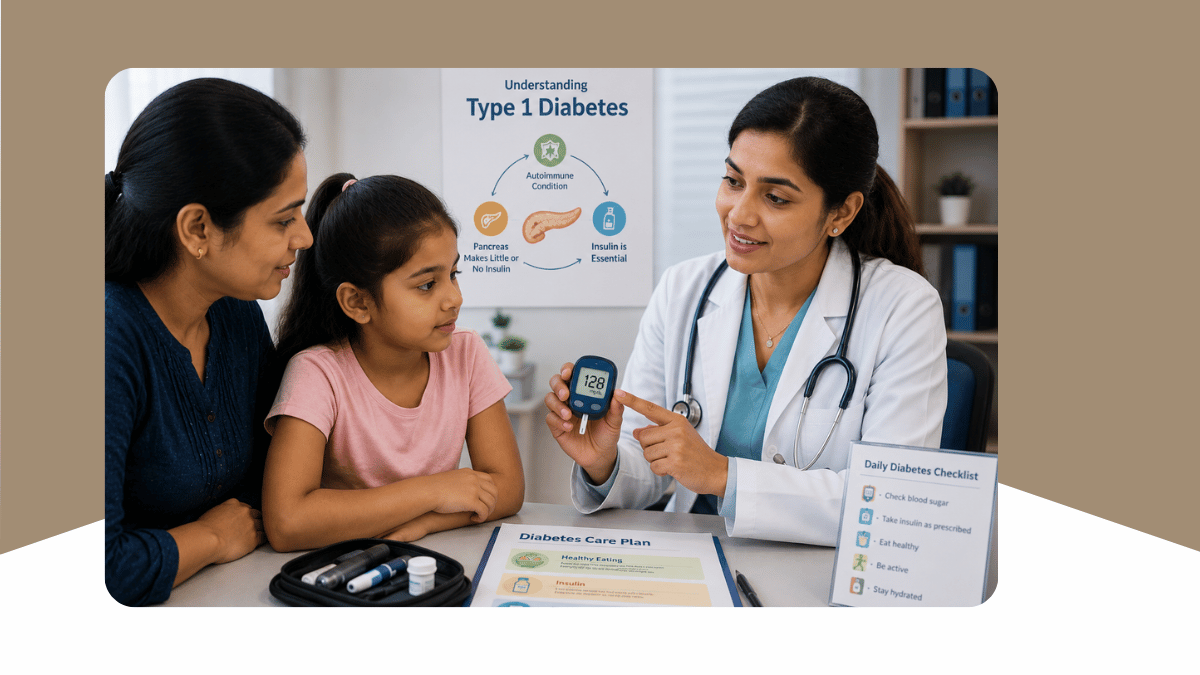
A Type 1 diabetes diagnosis in a child stops a family in its tracks. I see this in clinic at Hulse Clinic, JP Nagar, Bengaluru, every time a family walks in after receiving the news. The questions come quickly: why did this happen, what does it mean for my child's future, and how will we manage this every single day? As a Paediatric Endocrinologist trained at the University of Glasgow and with fellowship experience in diabetes at Sick Kids Hospital, Toronto, I want to give every family facing this diagnosis a clear, honest, and practical guide to Type 1 diabetes in children.
What is Type 1 diabetes and how is it different from Type 2?
Type 1 diabetes is an autoimmune condition in which the body's immune system mistakenly attacks and destroys the insulin-producing beta cells in the pancreas. Insulin is the hormone that allows glucose from food to enter cells and be used for energy. Without it, glucose builds up in the bloodstream rather than being used, which produces the symptoms and risks of uncontrolled diabetes. Because the beta cells are destroyed, Type 1 diabetes management always requires insulin replacement. There is no alternative. This is the most fundamental difference from Type 2 diabetes, where insulin is still produced but is not used effectively, and where lifestyle measures and oral medications can sometimes manage glucose without insulin.
Type 1 diabetes accounts for the majority of childhood diabetes diagnoses, though Type 2 is increasingly being seen in adolescents alongside rising rates of childhood obesity. The two conditions require very different approaches, which is why accurate diagnosis matters as much as fast diagnosis.
What causes Type 1 diabetes in children?
The honest answer is that we do not fully understand what triggers the autoimmune attack on the beta cells. Genetic predisposition plays a role: children with a first-degree relative with Type 1 diabetes have a higher risk than the general population. Certain HLA gene variants are strongly associated with susceptibility. However, genetics alone does not explain it, since many children with Type 1 diabetes causes have no family history and not all genetically susceptible children develop the condition. Environmental factors including viral infections have been proposed as triggers that may initiate the immune process in susceptible individuals, but no single cause has been definitively identified.
What I want families to understand clearly is that nothing they did or failed to do caused their child's diabetes. Type 1 diabetes is not caused by diet, sugar intake, or any parenting decision. It is an autoimmune condition, and the immune system's attack on the beta cells reflects a biological process rather than a lifestyle one.
How does Type 1 diabetes present in children?
The classic symptoms of Type 1 diabetes in children are directly related to the rising blood glucose levels that occur when insulin is absent. The most recognisable symptoms are the four Ts: increased Thirst, frequent Toilet trips, Tiredness, and weight loss described as Thinner. A child who is drinking unusually large amounts of water, needing to urinate frequently including at night when they have previously been dry, losing weight despite eating normally, and appearing unusually fatigued is showing a pattern that should prompt urgent blood glucose testing. Some children also present with blurred vision, recurrent infections particularly of the skin or urinary tract, or a generally unwell appearance. The most serious initial presentation is diabetic ketoacidosis in children, abbreviated DKA, which occurs when the body breaks down fat as an emergency fuel source in the absence of insulin, producing acidic ketone bodies that can be life-threatening.
DKA is the presentation in approximately 30 to 40 percent of newly diagnosed children in India, often because the diagnosis was not made before the condition became critical. Recognising symptoms earlier, before DKA develops, is one of the most important things that awareness in the general population can achieve. If your child has any of the symptoms described above, blood glucose testing should happen the same day, not after a wait-and-see approach.
How is Type 1 diabetes diagnosed?
Diagnosis is typically straightforward when it is considered. A random blood glucose above 11.1 mmol/L or a fasting blood glucose above 7.0 mmol/L in a child with symptoms is diagnostic. HbA1c, which reflects average glucose over the previous two to three months, is also used. In a child presenting with DKA, the diagnosis is confirmed during the emergency management. Antibody testing, specifically for islet cell antibodies, GAD antibodies, and insulin antibodies, can confirm the autoimmune basis of the diabetes and distinguish it from other types, which is relevant in some presentations, particularly in older adolescents where the distinction between Type 1 and Type 2 or MODY can be less straightforward. The diagnosis of childhood diabetes should be made and communicated to the family quickly, since delayed initiation of insulin treatment after diagnosis worsens outcomes.
Starting insulin: what parents need to understand
For most families, starting insulin is the most daunting part of the early diagnosis period. The idea of injecting their child multiple times a day seems overwhelming at first. What I tell every family is the same thing: within a few weeks, this becomes routine. The body and the family adapt. The child adapts. Insulin becomes as unremarkable as any other daily task. The goal of insulin therapy is to mimic the insulin pattern of a functioning pancreas as closely as possible: background insulin that keeps glucose stable between meals and overnight, and fast-acting insulin that covers the glucose rise from meals. This approach, called a basal-bolus insulin regime, is the standard of care for children with Type 1 diabetes and provides the most flexibility and the best glucose control when families are properly supported in using it.
Insulin can be delivered by pen injection, which most families use initially, or by an insulin pump, which delivers insulin continuously through a small cannula under the skin. Pump therapy has significant advantages for young children and for those with variable glucose patterns, and I discuss this option with families once they are settled into their initial management. The choice of insulin delivery is always individualised and discussed together with the family.
Blood glucose monitoring and continuous glucose monitors
Knowing your child's blood glucose at any given moment is fundamental to safe Type 1 diabetes management. Traditional finger-prick testing, while accurate, requires multiple tests a day and is particularly challenging in young children and overnight. Continuous glucose monitoring (CGM) technology has transformed this aspect of diabetes management. A small sensor worn on the skin measures glucose in the fluid beneath the skin every few minutes and displays the reading on a phone or dedicated reader, with alerts when glucose is rising or falling out of range. For children with Type 1 diabetes, CGM reduces both hypoglycaemia and the parental anxiety that comes from not knowing what is happening with glucose overnight. I recommend CGM for all children with Type 1 diabetes in my practice, and access to these devices has improved significantly in India over the past few years.
Understanding hypoglycaemia: low blood glucose
Hypoglycaemia, or low blood glucose, is the most immediate and frightening complication of insulin therapy. It occurs when insulin levels are relatively high compared to glucose availability: after more insulin than needed was given, when a meal was smaller than expected, or when exercise was more intense or prolonged than anticipated. A hypoglycaemia in children episode typically presents with shakiness, sweating, pallor, confusion, headache, or irritability. If not treated promptly, it can progress to loss of consciousness or seizure.
The immediate treatment is fast-acting carbohydrate: glucose tablets, fruit juice, or regular soft drinks, not the diet versions. I provide every family with a written hypoglycaemia action plan and ensure they know how to use glucagon, an emergency injection that raises blood glucose when a child cannot swallow, for severe episodes. Hypoglycaemia is manageable, and families become expert at recognising and treating it quickly. The goal of glucose management is not to avoid all hypoglycaemia at any cost but to achieve a good glucose range while keeping severe episodes rare.
School, sports, and daily life with Type 1 diabetes
One of the questions parents ask most urgently is whether their child's life will be fundamentally restricted. The short answer is no. Children with Type 1 diabetes attend school, play sports, go on school trips, and participate in exactly the same activities as their peers. What changes is the planning and awareness required to do these things safely. Exercise particularly deserves attention: physical activity lowers blood glucose, and understanding this relationship and adjusting insulin or carbohydrate intake accordingly is something families learn over time with guidance from their diabetes team. Type 1 diabetes in school requires communication with teachers and school staff so they understand the condition, can recognise symptoms of hypoglycaemia, and know how to respond. I provide families with a school management plan to share with their child's school.
Sleep is another area of particular concern for parents of young children with Type 1 diabetes. Overnight hypoglycaemia is a genuine risk, and CGM with overnight alerts addresses this far more reliably than waking to check glucose manually. Parents who have been doing hourly overnight checks since diagnosis often find that a CGM with alerts dramatically improves both the child's safety and the family's sleep.
HbA1c and long-term glucose targets
HbA1c reflects the average blood glucose over the previous two to three months and is the primary measure of long-term glucose control. For most children with Type 1 diabetes, the target is below 7.5 percent, though this is individualised based on age, hypoglycaemia risk, and the child's ability to recognise symptoms. HbA1c target children is not the only measure that matters: the proportion of time spent within the glucose target range, called Time in Range, has become an equally important metric with the widespread adoption of CGM. A child who is within range for 70 percent of the time and has minimal time in hypoglycaemia is doing well by modern glucose management standards, even if their HbA1c is not perfect.
Long-term good glucose control reduces the risk of the complications of Type 1 diabetes: kidney disease, eye disease, nerve damage, and cardiovascular disease. These complications develop over decades, and children who achieve good glucose control from early in their diagnosis are significantly less likely to develop them. This is the most important reason to invest in good management from the outset, not to be restrictive in a child's daily life, but to give them the best possible long-term trajectory.
The emotional and family impact of Type 1 diabetes
Type 1 diabetes management is relentless. There is no day off, no holiday from insulin and glucose monitoring, no period of remission in which the condition simply pauses. This is one of the most important things I acknowledge with families, because the emotional burden of that relentlessness is real and should not be minimised. Burnout is common in parents of children with Type 1 diabetes, particularly in the first year. diabetes burnout in children and their parents is a recognised clinical issue, and addressing it proactively is as much a part of my care as adjusting insulin doses.
I make time in every consultation to ask how the family is coping, not just how the glucose levels are. I connect families with peer support groups where parents who have been managing Type 1 diabetes for five or ten years can offer the kind of lived knowledge and reassurance that no clinician can fully replicate. The child's psychological wellbeing, their relationship with their diabetes and with food, and their social experience with the condition all require attention alongside the purely medical aspects of management.
Advances in Type 1 diabetes management
Type 1 diabetes is one of the conditions where technology has genuinely transformed what is possible in everyday management over the past decade. Beyond CGM, the most significant advance is the closed-loop insulin system, sometimes called an artificial pancreas. This combines a CGM with an insulin pump and an algorithm that automatically adjusts insulin delivery based on real-time glucose readings, dramatically reducing both high and low glucose excursions and improving time in range without requiring constant manual input from the family. Closed-loop systems are available in India, and I discuss them with appropriate families during our consultations.
Research into disease-modifying therapies, approaches that target the autoimmune process rather than simply replacing missing insulin, is progressing. Teplizumab, an antibody that delays the onset of clinical Type 1 diabetes in high-risk individuals, was approved in the United States in 2022, and trials of other immune-modulating therapies are ongoing. We are not at a stage where these approaches offer a cure, but the direction of research is meaningful and I update families about relevant developments as they emerge.
Questions parents ask me most often
Will my child always need insulin?
Yes. There is a period shortly after diagnosis, sometimes called the honeymoon phase, during which the remaining beta cells recover briefly and insulin requirements fall, sometimes dramatically. This phase typically lasts weeks to months before the autoimmune destruction is complete and insulin requirements stabilise or rise again. The honeymoon phase can be reassuring but is temporary. insulin dependence Type 1 diabetes is lifelong with current treatments, though the technologies available to manage that dependency are improving rapidly.
Can my child eat normally with Type 1 diabetes?
Yes. There is no food that a child with Type 1 diabetes cannot eat. What changes is the need to match insulin to carbohydrate intake, which means counting or estimating the carbohydrate content of meals rather than avoiding any specific food. The goal of dietary guidance in Type 1 diabetes is not restriction but awareness and flexibility. A child who can eat normally and participate fully in birthday parties, school lunches, and family meals has a better quality of life and a healthier relationship with food and their diabetes.
What happens to my child's diabetes at puberty?
Puberty significantly increases insulin resistance because of the hormonal changes involved. Children who have had well-controlled diabetes before puberty frequently see their glucose control worsen during the pubertal years despite no change in their adherence or effort. This is a normal physiological response and not a failure of management. Type 1 diabetes puberty insulin requirements typically increase substantially, and I adjust insulin doses accordingly at every consultation during this period. Understanding this in advance helps families avoid the guilt and distress that often accompanies the perception that their management has deteriorated.
When should I bring my child to a paediatric endocrinologist rather than a general paediatrician?
At diagnosis, a paediatric endocrinologist should ideally be involved from the beginning. An endocrinologist with specific experience in paediatric diabetes will manage insulin initiation, education, and follow-up using the most current protocols, and will be familiar with the technology options including CGM and pump therapy. At Hulse Clinic, JP Nagar, Bengaluru, I see children from across the city and beyond for both newly diagnosed diabetes and for ongoing management where families feel their child's glucose control could be better supported.
If your child has been diagnosed with Type 1 diabetes, or if you are concerned about symptoms that might suggest diabetes, an early consultation with a paediatric endocrinologist makes a meaningful difference to how quickly your family adapts and how confidently you manage the condition.
To book a consultation with Dr Anjana Hulse at Hulse Clinic, 635, 8th Main Road, Near Delmia Circle, Jeewan Griha Colony Phase 2, JP Nagar, Bengaluru 560078, call +91 94802 60001.
Written by Dr Anjana Hulse, MBBS (Rajiv Gandhi University), MRCPCH (Royal College of Paediatrics and Child Health, UK), MSc Paediatric Endocrinology (University of Glasgow, passed with distinction), Consultant Paediatrician and Paediatric Endocrinologist, Hulse Clinic, JP Nagar, Bengaluru.
Related reading
Understanding Childhood Obesity and When to Seek Help
Hormone Testing in Children: What to Expect and Why It Matters
Is Your Child Growing Normally What Parents Should Know About Growth Disorders


Add a Comment