
Every 29 July on World ORS Day, the conversation about Oral Rehydration Solution tends to focus on acute diarrhoea in otherwise healthy children, and rightly so - it is one of the most effective public health interventions ever developed. But as a Paediatric Endocrinologist at Hulse Clinic, JP Nagar, Bengaluru, I want to talk about a group of children whose parents rarely hear this story: the children who already have a metabolic or hormonal condition, and for whom dehydration and electrolyte imbalance carry a different and more complex risk than for healthy children.
Why electrolytes are not just a background detail
Most parents understand that diarrhoea causes fluid loss. What is less widely understood is that the loss is not simply water. Diarrhoeal illness causes simultaneous losses of sodium, potassium, bicarbonate, and in some cases chloride - electrolytes that regulate not just hydration but the electrical activity of cells, the acid-base balance of the blood, and the function of the kidneys. ORS works because it replaces these electrolytes in the specific proportions that allow the gut to actively absorb both fluid and sodium together, using the sodium-glucose co-transport mechanism. This is why plain water, coconut water, sports drinks, or diluted fruit juices cannot do what ORS does. They either lack the precise electrolyte concentration needed, or they contain the wrong balance of sugars, or both. In a healthy child, this distinction matters. In a child with Type 1 diabetes, or with a metabolic condition that already disrupts electrolyte balance, it matters considerably more.
What I see in my clinic on the other side of acute illness
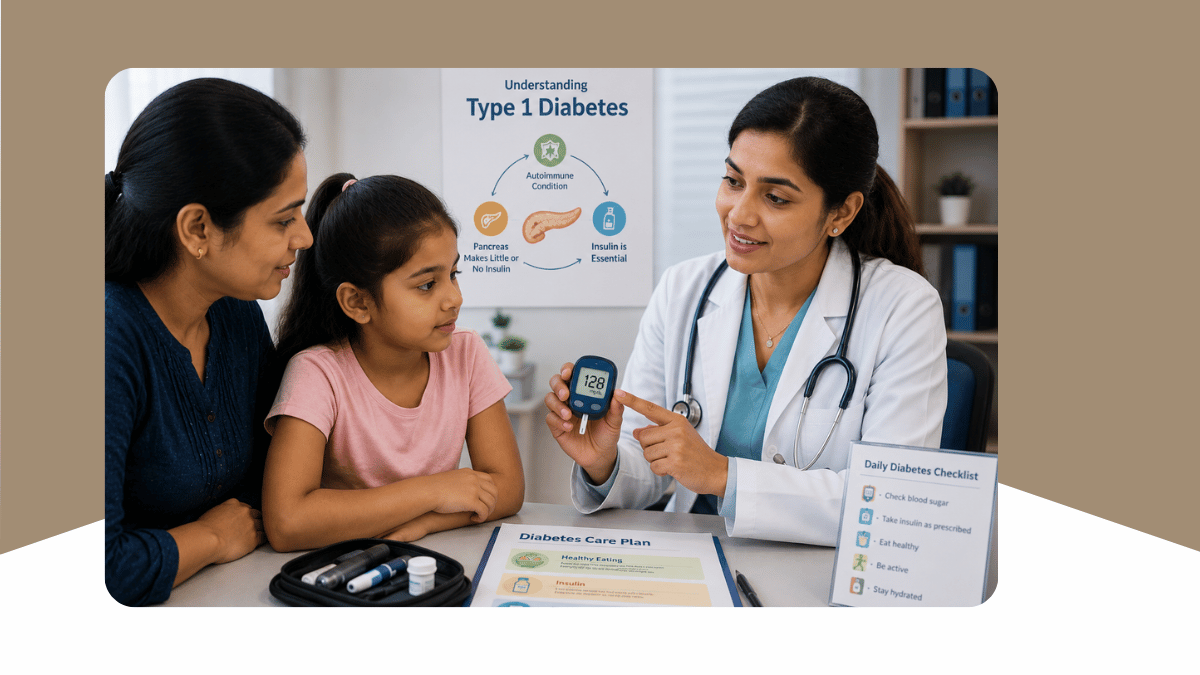
I trained in metabolic bone disease and Type 1 diabetes management at Sick Kids' Hospital in Toronto, and one of the things that training taught me is that diarrhoeal illness in children with pre-existing metabolic conditions is never a simple event to manage at home. A child with Type 1 diabetes who develops acute gastroenteritis faces a particularly complex situation: the illness typically raises blood glucose through the stress response, even when the child is vomiting and cannot eat. At the same time, fluid losses deplete the reserves that the kidneys need to handle a rising glucose load. If the family gives plain water or nothing at all, the situation worsens on both fronts simultaneously. If they give a standard glucose-heavy fluid, they may worsen glycaemia. What these children need is a carefully measured ORS solution, small and frequent sips, continued insulin as guided by their diabetes care plan, and close monitoring. This is not information most families have, because the intersection of acute illness management and chronic disease management is rarely explained proactively.
Children with adrenal insufficiency, a condition I manage at Hulse Clinic, face an additional risk during diarrhoeal illness that families need to know about in advance. Cortisol is essential for maintaining blood glucose and blood pressure during physiological stress, and a child who cannot produce adequate cortisol during an acute illness needs a sick-day rule involving a stress dose of hydrocortisone alongside ORS. Missing this can produce an adrenal crisis, which is a genuine medical emergency.
The message I give every family at diagnosis
When I diagnose a child with Type 1 diabetes, adrenal insufficiency, or any condition that affects fluid and electrolyte regulation, I spend time at that first consultation on sick-day rules. I explain what ORS is and why it is the correct oral fluid during any acute illness that causes vomiting or diarrhoea. I explain how to prepare it correctly - one sachet dissolved in exactly one litre of clean water, no additions, small sips every few minutes rather than large volumes at once. I explain which symptoms require the family to call me or go to the emergency department rather than managing at home: persistent vomiting preventing ORS absorption, signs of significant dehydration, blood glucose that is not responding to management, or a child who appears unusually drowsy or confused.
World ORS Day is a moment to acknowledge one of medicine's most elegant solutions - a precise and inexpensive combination of salts and glucose that has saved tens of millions of lives. For children with metabolic and hormonal conditions, it is not just a useful tool during acute illness. It is part of a safety framework that, when understood by families in advance, can prevent hospitalisations and keep children safe at home. If your child has a chronic hormonal or metabolic condition and you have never discussed sick-day management with your specialist, that conversation is worth having before the next illness arrives, not during it.
To book a consultation with Dr. Anjana Hulse at Hulse Clinic, 635, 8th Main Road, JP Nagar, Bengaluru 560078 (Monday to Friday, 10:30 AM to 1 PM and 6 PM to 9 PM), call +91 94802 60001 / +91 73384 82504
Written by Dr. Anjana Hulse, MBBS (Rajiv Gandhi University of Health Sciences, Bengaluru, 2002), MRCPCH (Royal College of Paediatrics and Child Health, London, 2007), MSc Paediatric Endocrinology - Distinction (University of Glasgow and Royal Hospital for Sick Children, Glasgow, 2009), Fellowship in Metabolic Bone Disorders and Type 1 Diabetes (Sick Kids' Hospital, Toronto, Canada), Consultant Paediatrician and Paediatric Endocrinologist, Hulse Clinic, JP Nagar, Bengaluru.
Related reading
Understanding Childhood Obesity and When to Seek Help
Hormone Testing in Children: What to Expect and Why It Matters
Is Your Child Growing Normally What Parents Should Know About Growth Disorders

Add a Comment