"I have sinus" is one of the commonest complaints I hear during my daily practice and it is also one of the most frequently misattributed. The patient who arrives having been told they have sinusitis and treated with multiple antibiotic courses that provide temporary relief before the symptoms return is one of the most common presentations in my ENT and allergy practice. In many of these cases, the diagnosis is not sinusitis. It is allergic rhinitis, either on its own or as the underlying driver of secondary sinus involvement that recurs because the allergic mechanism producing it has never been identified or treated. The two conditions are closely related, frequently co-exist, and are often confused with each other because they share many symptoms. But they are different conditions with different mechanisms, different management approaches, and different long-term implications. Many sinus and nasal problems are ENT presentations with allergy at their root. Understanding both is what allows the right answer to be found.
What Allergic Rhinitis Is and How It Presents
Allergic rhinitis is an IgE-mediated inflammatory condition of the nasal mucosa triggered by specific inhaled allergens, meaning the immune system has developed antibody-based sensitivity to a particular substance in the air, and each time that substance is encountered, an inflammatory cascade is triggered in the nasal lining. The most common allergen in Bengaluru's urban environment is house dust mite, which is the dominant perennial sensitiser and thrives in the city's climate. Other allergens like cockroach and grass, weed and tree pollens are also common sensitisers.
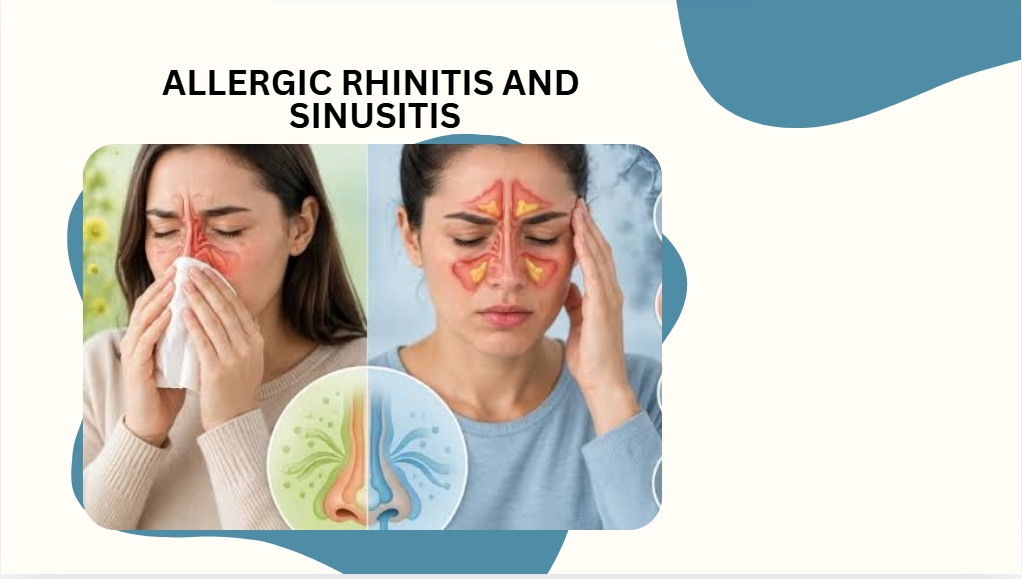
The classic symptoms of allergic rhinitis are sneezing, itching inside the nose, a watery runny nose, and nasal congestion. The itching is particularly characteristic: the nasal itch of allergic rhinitis extends beyond the nose to the eyes, the roof of the mouth, and the throat. Eye redness and watering (allergic conjunctivitis) accompanies the nasal symptoms in many patients, particularly when the trigger is airborne pollen. The nasal congestion in allergic rhinitis tends to alternate between sides, may be worse on waking, and often improves with antihistamine treatment. Importantly, allergic rhinitis does not typically produce fever, and the nasal discharge is watery rather than thick, green, or blood-tinged. The absence of pain, the itching quality of the symptoms, and the pattern of improvement with antihistamines are all useful distinguishing features.
What Sinusitis Is and How It Presents
Sinusitis is inflammation of the mucous membrane lining the paranasal sinuses, the air-filled spaces in the bones around the nose that drain into the nasal cavity through narrow openings. The paranasal sinuses include the maxillary sinuses (in the cheekbones), the ethmoid sinuses (between the nose and the inner corners of the eyes), the frontal sinuses (above the eyebrows), and the sphenoid sinuses (deeper in the skull behind the nose). Acute sinusitis typically follows a viral upper respiratory infection: the viral inflammation of the nasal mucosa extends into the sinus openings and obstructs drainage. The symptoms of sinusitis include nasal blockage, discharge, facial pain or pressure, decreased smell sensation, and in many patients a low-grade fever. The pain is typically worsened by bending forward, and the congestion does not alternate between sides in the characteristic way of allergic rhinitis but tends to affect the side of the most involved sinus.
Sinusitis lasting more than twelve weeks is called chronic sinusitis. It is a distinct condition from acute sinusitis and can have allergic rhinitis as an underlying driver. Chronic sinusitis can have frequent exacerbations that respond to antibiotics but recur once the antibiotic is stopped. This recurrent pattern should always prompt further evaluation.
The Overlapping Symptoms: Why the Two Conditions Are So Often Confused
The reason patients and even clinicians frequently confuse allergic rhinitis and sinusitis is that the two conditions share a set of core symptoms: blocked nose, runny nose, postnasal drip, and cough. Both can impair sleep through nasal obstruction. Both can reduce the sense of smell. And critically, both can produce thick nasal discharge at certain stages: the acute phase of allergic rhinitis during heavy allergen exposure produces profuse watery discharge, but secondary infections can produce the thick discharge of sinusitis.
The key distinguishing features are the presence of itching (allergic rhinitis) versus facial pain (sinusitis), the timing and triggers of symptoms, and the response to different treatments. Allergic rhinitis symptoms are characteristically worse in specific environments or at specific times of day because of allergen exposure patterns -- worse in the bedroom in the morning for the house dust mite-sensitised patient, worse outdoors or near vegetation for the pollen-sensitised patient. Sinusitis symptoms are more constant and less environmentally triggered. Allergic rhinitis responds to antihistamines whereas sinusitis symptoms may not or may only partially reduce with antihistamines.
When to See an ENT and Allergy Specialist in Bengaluru: A Practical Guide
Recurrent sinusitis requiring antibiotics two or more times per year, particularly if the episodes follow a predictable seasonal or environmental pattern. The pattern often indicates an allergic trigger that is generating the sinus involvement. Identifying and treating the allergen breaks the cycle.
Nasal obstruction that has not responded to antihistamines, suggesting structural disease (deviated nasal septum, inferior turbinate hypertrophy, nasal polyps) alongside or instead of allergic disease.
Loss of smell, which may indicate nasal polyp formation and requires endoscopic assessment.
Symptoms that are worst in the morning at home, suggesting house dust mite sensitisation from the sleeping environment, or that are worst outdoors or near green spaces, suggesting pollen sensitisation. In either case, allergy testing identifies the target and guides the management.
Nasal symptoms combined with asthma, eczema, or a strong family history of allergy, which indicates the atopic constitution that makes allergen identification and treatment particularly important because untreated allergic rhinitis in an atopic patient is a significant risk factor for developing or worsening asthma. Forty percent of patients with allergic rhinitis also develop asthma, and managing the rhinitis is managing the lower airway risk.
At Allergy Central, Indiranagar and Chirayu Multi-Speciality Clinic, Kasturi Nagar, the ENT and allergy evaluation I provide covers nasal endoscopy, skin prick testing, and clinical assessment in a single specialist setting that addresses both dimensions of the rhinosinusitis problem. For patients who have been told they have sinusitis, or who have been managing recurring nasal symptoms without a clear diagnosis, this assessment often provides both the explanation and the treatment path that previous management has missed.
Written by: Dr. Arathi Karat, MBBS, MS ENT, DNB ENT, Consultant ENT Specialist and Allergy Expert, Allergy Central, Indiranagar and Chirayu Multi-Speciality Clinic, Kasturi Nagar, Bengaluru.



Add a Comment